Niki Lauda Wins 1974 Spanish Grand Prix: A Maiden Ferrari Victory
On April 28, 1974, Niki Lauda claimed his first career victory at the Spanish Grand Prix, marking the start of a legendary era for Ferrari and the Austrian.
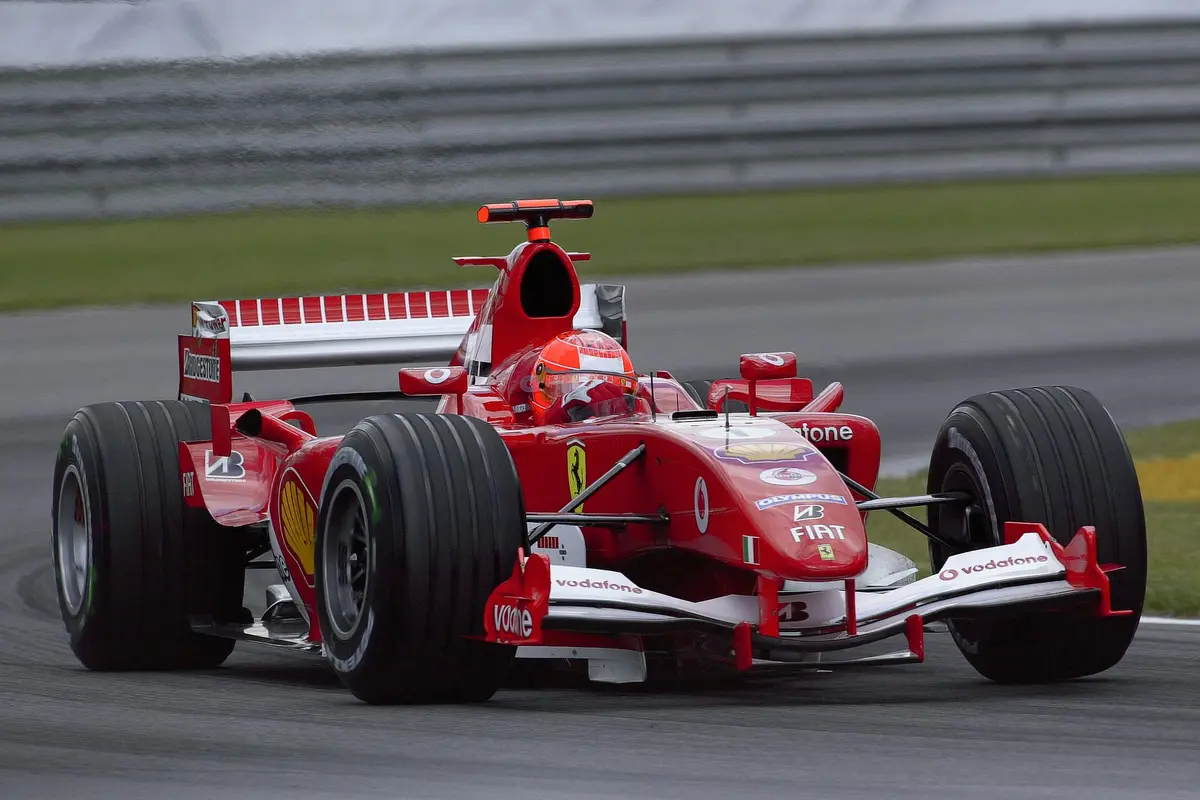
On This Day, April 28, 1974, Niki Lauda secured his first career Formula 1 victory at the Spanish Grand Prix at the Jarama circuit. Driving the Ferrari 312B3, the Austrian dominated a rain-affected race to claim a historic win, marking the end of a long dry spell for the Scuderia and signaling his ascent to legendary status.
The Dawn of a New Era at Maranello
To understand the magnitude of the 1974 Spanish Grand Prix, one must first look at the state of Scuderia Ferrari in the years immediately preceding it. The early 1970s had been a period of relative stagnation for the Italian outfit. After the promise of the 1970 season with Jacky Ickx, the team had fallen into a deep slump. By 1973, Ferrari was often a midfield runner, a situation that was intolerable for Enzo Ferrari. The 1973 season was so disastrous that the team famously skipped several races to refocus on car development. Changes were mandatory, and they arrived in the form of a young, ambitious manager named Luca di Montezemolo and the return of the brilliant engineer Mauro Forghieri.
Forghieri’s return led to the refinement of the Ferrari 312B3. While the initial B3 chassis had been problematic, Forghieri’s evolution turned it into a low-slung, wide-track machine that optimized the power of the Flat-12 engine. More importantly, Ferrari signed two drivers who would change their fortunes: the experienced Clay Regazzoni and a clinical, fast, and technically-minded young Austrian named Niki Lauda. While Clay Regazzoni was the established star, Niki Lauda arrived with a reputation for intense technical feedback and an unsentimental approach to racing. By the time the circus arrived at Jarama for the fourth round of the 1974 season, the red cars were no longer also-rans; they were the class of the field.
Qualifying: The Ferrari Front Row Lockout
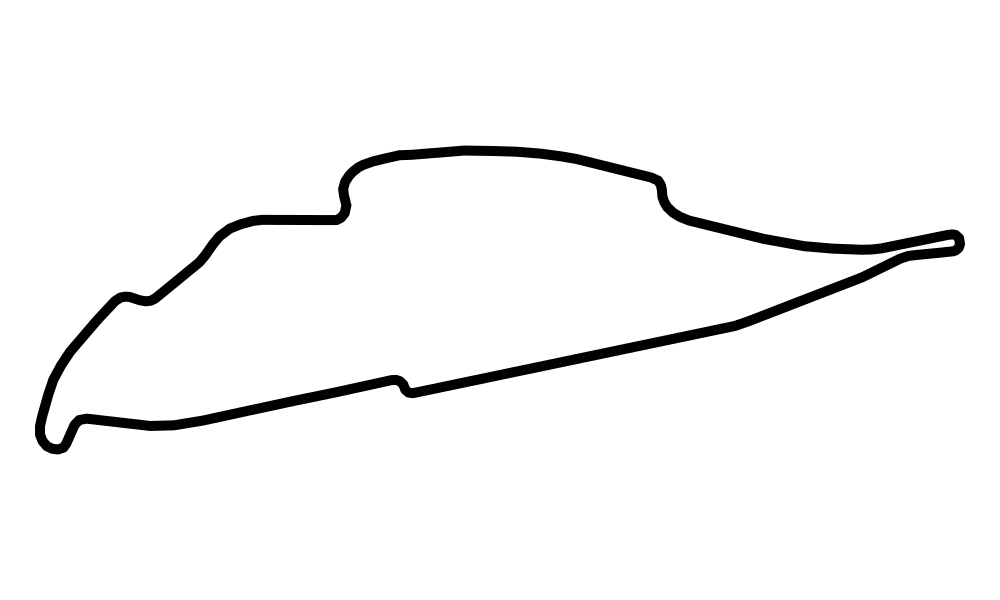
The Jarama circuit, located near Madrid, was a technical and twisty track that demanded mechanical grip and precise throttle control. It was not a high-speed power circuit like Monza or Silverstone, but rather a place where the balance of the chassis was paramount. During the qualifying sessions, Niki Lauda demonstrated the sheer speed of the Ferrari 312B3. He snatched pole position with a time of 1:18.44, narrowly edging out his teammate Clay Regazzoni. It was a clear statement of intent: Ferrari had locked out the front row for the first time in years.
Behind the Ferraris, the competition was fierce. Emerson Fittipaldi, driving the McLaren M23, and Ronnie Peterson in the iconic black-and-gold Lotus 72E, were lurking. The 1974 grid was a showcase of mechanical diversity, featuring the dominant Ford Cosworth DFV V8 engines against the unique symphony of the Ferrari Flat-12. However, the weather was about to become the primary protagonist. As race day approached, heavy clouds gathered over the Spanish plateau, turning the technical Jarama layout into a slippery, treacherous challenge that would reward only the most disciplined drivers.
Race Narrative: Mastery in the Spanish Rain
The race began under heavy rain, a condition that usually favored the brave but often punished the reckless. At the start, Ronnie Peterson used the agility of his Lotus 72E to jump both Ferraris, taking the lead into the first corner. Niki Lauda, ever the pragmatist, did not engage in a high-risk duel immediately. He settled into a rhythm, trailing Ronnie Peterson and keeping an eye on the spray and the track conditions. Clay Regazzoni followed closely in third. The opening laps were a test of vision and nerve, with the V12 and V8 engines howling through the mist.
As the race progressed, the track began to dry, creating a tactical dilemma. In this era, tire changes were far slower and more chaotic than the synchronized pit stops of the future. Drivers had to judge the exact moment when the wet-weather treaded tires would begin to disintegrate on the drying asphalt. Ronnie Peterson was the first of the leaders to suffer, as his Lotus struggled with brake issues and fading grip. Niki Lauda, sensing the opportunity, closed the gap. When the leaders eventually peeled into the pits for slick tires, the race became a strategic gamble.
The Ferrari pit crew, revitalized under the leadership of Luca di Montezemolo, performed admirably. Niki Lauda emerged from the pits with a commanding lead. While others struggled to find grip on the damp patches of the track, Niki Lauda was a metronome. His driving style—smooth, efficient, and devoid of unnecessary sliding—was perfectly suited to the drying Jarama surface. He managed his tires with the precision of a surgeon, maintaining a gap over Clay Regazzoni. Emerson Fittipaldi moved up into third, but the McLarens were unable to match the pace of the Ferraris on this day. By the time the checkered flag waved after two hours of grueling competition, Niki Lauda crossed the line 35 seconds ahead of his teammate. It was a 1-2 finish for the Scuderia, and more importantly, it was the first time Niki Lauda stood on the top step of a Formula 1 podium.
The Legacy of the 1974 Spanish Grand Prix
This victory was more than just a single race result; it was the birth of the "Lauda Era." For Ferrari, it was their first win since the 1972 German Grand Prix, ending a painful two-year drought. The 1974 Spanish Grand Prix proved that the structural changes within the team were working. The partnership between Niki Lauda and Mauro Forghieri would go on to define the mid-70s, leading to World Championships in 1975 and 1977. The victory also vindicated Enzo Ferrari’s decision to put his faith in a driver who many in the Italian press had initially dismissed as a "pay driver" when he first entered the sport.
For Niki Lauda personally, this win was the validation of his analytical approach to the sport. He had spent countless hours testing at Fiorano, perfecting the 312B3's setup, and it had paid off in the most difficult conditions imaginable. The 1974 season would remain a close-fought battle, eventually won by Emerson Fittipaldi, but the momentum had shifted toward Maranello. The sight of the red Ferrari 312B3 leading the pack became a common occurrence, and the rivalry between Niki Lauda and the rest of the grid would become the stuff of legend. This day in April 1974 remains a cornerstone in the history of the sport, representing the moment a calculated technician transformed into a Grand Prix winner.
Key Takeaways from Jarama 1974
- Maiden Victory: April 28, 1974, marked the first of Niki Lauda's 25 career Grand Prix wins.
- Ferrari Resurgence: The win ended a 20-month victory drought for Scuderia Ferrari, signaling their return to the top of F1.
- Chassis Excellence: The Ferrari 312B3, designed by Mauro Forghieri, proved its versatility in both wet and dry conditions.
- Tactical Mastery: Niki Lauda's ability to manage the transition from wet to slick tires was the deciding factor in the race.
- Ferrari 1-2: Clay Regazzoni’s second-place finish confirmed the dominance of the Italian cars at the Jarama circuit.
Frequently Asked Questions
What made the Ferrari 312B3 different from its predecessors?
The 312B3 featured a "wide-body" design and a low center of gravity, utilizing the Flat-12 engine to improve mechanical grip and aerodynamic stability compared to the narrow-track cars of 1972-1973.
How many wins did Niki Lauda achieve in the 1974 season?
Niki Lauda won two races in 1974: the Spanish Grand Prix at Jarama and the Dutch Grand Prix at Zandvoort. Despite his speed and nine pole positions, reliability issues and mid-season accidents kept him from the title that year.
Who were Niki Lauda's main rivals in 1974?
His primary rivals were Emerson Fittipaldi (McLaren), Ronnie Peterson (Lotus), and his own teammate Clay Regazzoni, who eventually took the title fight to the final round at Watkins Glen.
What was the significance of the Jarama circuit?
Jarama was a tight, twisty circuit that emphasized mechanical handling over pure top speed. It was often a venue where driver skill and car balance outweighed sheer horsepower.
Conclusion
The 1974 Spanish Grand Prix remains a pivotal moment in the annals of Grand Prix history. It was the day the world witnessed the full potential of Niki Lauda, a driver who treated racing not just as a sport, but as a technical puzzle to be solved. In the damp and difficult conditions of Jarama, he out-thought and out-drove a field of legendary champions, bringing Ferrari back to the winner's circle in the process. The image of the slender Austrian standing atop the podium, trophy in hand, marked the beginning of a journey that would see him become one of the most respected and influential figures the sport has ever known. As we look back from the perspective of the late 20th century, the 1974 season stands as a transition point where the raw, mechanical era of the 60s gave way to the more professional, technically-driven approach that Niki Lauda pioneered. On this day, the legend of "The Rat" was truly born. #F1 #F1History #RetroF1 #Tifosi
In this article
Written with AI assistance. How this site works
 Canadian Grand Prix