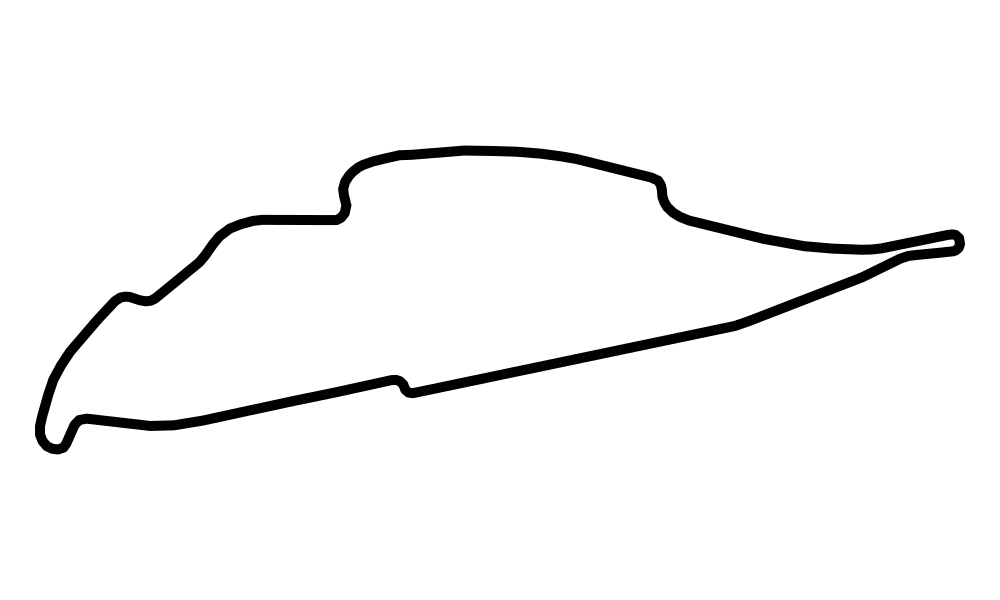
Michele Alboreto Wins 1984 Belgian Grand Prix at Zolder
Michele Alboreto dominated the 1984 Belgian Grand Prix at Zolder, leading a Ferrari front-row sweep to secure his first victory for the Maranello squad.
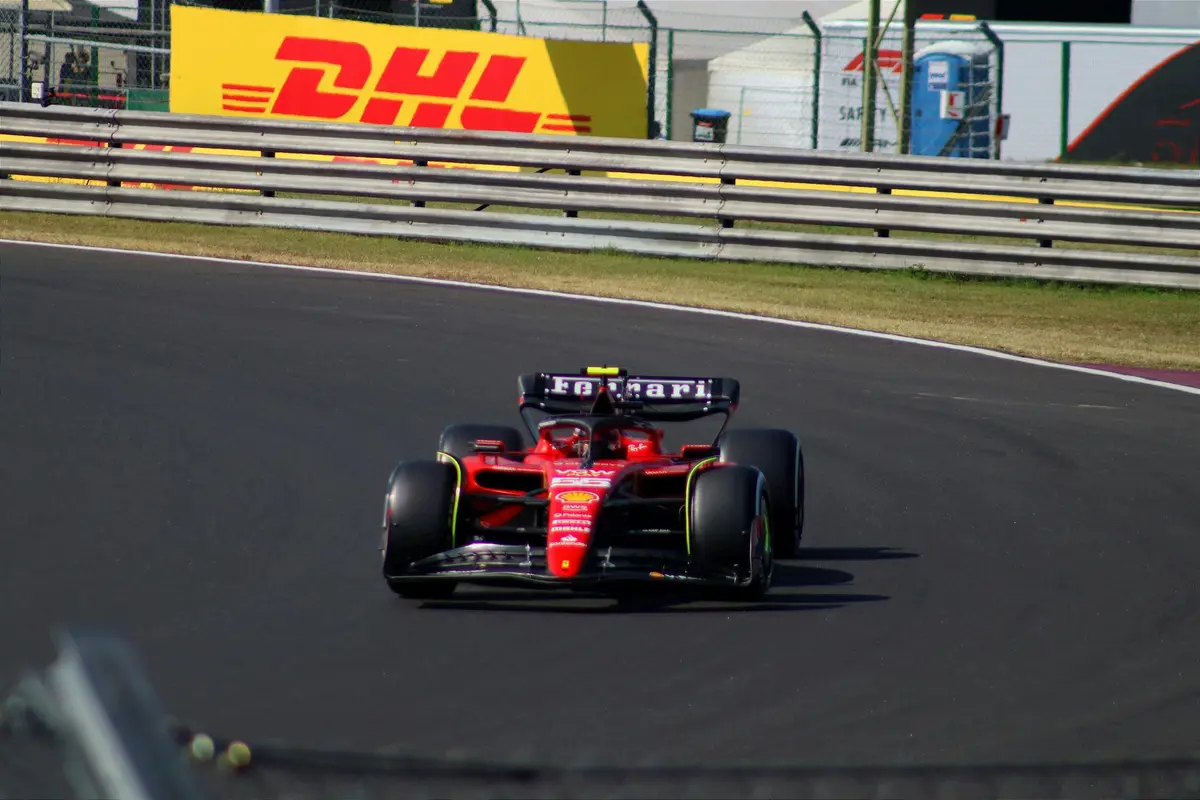
On This Day, April 29, 1984, the Italian driver Michele Alboreto achieved a career-defining victory at the Belgian Grand Prix. Driving the Ferrari 126C4, Alboreto dominated the weekend at Zolder, claiming pole position and leading every lap to secure his first win for the Scuderia, ending a long drought for Italian drivers at Ferrari.
The Arrival of the New 'Great Italian Hope'
In the early 1980s, the pressure on any driver wearing the scarlet overalls of Scuderia Ferrari was immense, but for an Italian driver, it was almost unbearable. Not since Ludovico Scarfiotti at Monza in 1966 had an Italian won a Grand Prix behind the wheel of a Ferrari. When Enzo Ferrari signed Michele Alboreto from the Tyrrell team for the 1984 season, the Tifosi believed they had finally found the man to carry the weight of a nation. Alboreto, known for his calm demeanor and precise driving style, was the antithesis of the wild, flamboyant chargers that had often occupied the Maranello cockpits. The 1984 Belgian Grand Prix was the third round of the season. The Formula 1 circus arrived at the Circuit Zolder, a track that carried a somber shadow following the tragic death of Gilles Villeneuve during qualifying two years earlier. For Ferrari, returning to Zolder was always an emotional journey, and the 1984 event would provide a much-needed moment of catharsis. The season had begun with the dominance of the McLaren MP4/2 cars powered by the TAG-Porsche engines, but Zolder’s tight and twisty nature offered a glimmer of hope for the 1.5-liter V6 Turbo of the Ferrari 126C4.Qualifying: A Ferrari Front-Row Lockout
During the practice and qualifying sessions, it became clear that the Ferrari 126C4 was perfectly suited to the demands of the Belgian circuit. The car, designed under the direction of Harvey Postlethwaite, featured the Tipo 031 V6 engine, which was capable of producing immense power in qualifying trim. In the era of 'grenade' engines—units designed to last only a few flying laps with massive turbo boost—Michele Alboreto demonstrated masterful control. Alboreto claimed pole position with a blistering lap of 1:14.846, narrowly edging out his teammate, René Arnoux. It was a statement of intent from the Maranello squad, locking out the front row of the grid. Behind them sat the Renault RE50 of Derek Warwick and the Williams FW09 of Keke Rosberg. Interestingly, the dominant McLarens of Niki Lauda and Alain Prost struggled to find the same ultimate pace in qualifying, starting 14th and 8th respectively. This left the door wide open for Alboreto to dictate the pace of the race from the front, provided the temperamental Ferrari electronics and turbochargers held together.Race Narrative: Dominance Amidst Mechanical Attrition
As the green flag dropped on April 29, Michele Alboreto made a flawless start, defending his line into the first corner and immediately beginning to build a gap. His teammate, René Arnoux, initially followed but soon found himself under pressure from Derek Warwick’s Renault. The early laps of the race were a testament to the raw, mechanical brutality of the mid-80s. Drivers wrestled with manual gearboxes, heavy steering, and the sudden, violent onset of turbo lag as they navigated Zolder’s chicanes. By lap 10, Alboreto had established a comfortable rhythm. The primary concern for all teams in 1984 was the new fuel regulation, which limited cars to just 220 liters for the entire race distance. This forced drivers to become tactical masters, balancing outright speed with fuel conservation. Michele Alboreto, however, seemed to have the Ferrari 126C4 in a perfect 'window.' While others struggled with tire degradation and fuel consumption, Alboreto maintained a consistent gap over Derek Warwick, who had moved into second place after René Arnoux began to fade with handling issues. The middle stages of the race saw several high-profile retirements. Nelson Piquet’s Brabham-BMW suffered engine failure, and the McLaren of Alain Prost was sidelined by a broken distributor. This attrition played into Alboreto's hands. He remained focused, his Goodyear Eagles providing sufficient grip on the abrasive Zolder surface. Behind him, a young Ayrton Senna, in his debut season with the Toleman TG183B, was putting in a gritty performance, hovering just outside the points and demonstrating the wet-weather skill and tenacity that would later define his career. As the race entered its final ten laps, the only threat to Michele Alboreto was his own machinery. The Ferrari mechanics watched the telemetry (rudimentary by today's standards) with bated breath. But the 126C4 held firm. Alboreto crossed the finish line after 70 laps, 42 seconds ahead of Derek Warwick. René Arnoux completed the podium in third, making it a spectacular day for the Scuderia.Aftermath and the Legacy of Alboreto
The victory was greeted with jubilant scenes in the pit lane. For Michele Alboreto, it was his third career win but his first in the colors of Ferrari. More importantly, it silenced the critics who questioned whether an Italian could handle the pressure of racing for 'The Old Man.' Enzo Ferrari himself was said to be delighted, seeing in Alboreto a driver who possessed the technical intelligence and mechanical sympathy required to win in the turbo era. While 1984 would ultimately be the year of the McLaren-TAG Porsche duel between Lauda and Prost, Alboreto’s win at Zolder remained a highlight of the season. It proved that the Ferrari 126C4 was a race-winning machine when reliability and track conditions aligned. This victory also laid the groundwork for Alboreto’s 1985 campaign, where he would push Alain Prost to the limit in the fight for the World Championship. Tragically, Michele Alboreto would never win a World Title, but his triumph on April 29, 1984, remains etched in the history of the sport as a moment of pure Italian pride. It was a race won not through gadgets or electronics, but through the courage and skill of a man who could tame a 600-horsepower turbo monster on one of Europe's most challenging circuits.Key Takeaways of the 1984 Belgian Grand Prix
- First Italian Ferrari Winner: Michele Alboreto became the first Italian to win for Ferrari since 1966, a gap of 18 years.
- Grand Slam Weekend: Alboreto achieved a rare feat by taking pole position, leading every lap, and winning the race.
- The Zolder Farewell: This was the final Belgian Grand Prix held at Zolder before the event returned permanently to the renovated Spa-Francorchamps.
- Fuel Management: The race highlighted the tactical complexity of the 220-liter fuel limit introduced for the 1984 season.
- Ferrari 126C4 Potential: The win proved the Ferrari was the primary challenger to the dominant McLaren-TAG Porsche tandem during the early part of the season.
Frequently Asked Questions
Why was the Belgian Grand Prix held at Zolder instead of Spa?
During the 1970s and early 1980s, the original 14km Spa-Francorchamps circuit was deemed too dangerous for modern Formula 1 cars. The race rotated between Nivelles and Zolder while a shorter, safer version of Spa was constructed. 1984 was the final year of this interim period at Zolder.What made the Ferrari 126C4 different from its predecessors?
While it evolved from the championship-winning 126C2 and 126C3, the 126C4 featured revised aerodynamics designed by Harvey Postlethwaite to comply with the flat-bottom regulations and a more compact Tipo 031 V6 engine designed to improve reliability and fuel efficiency.How did Ayrton Senna perform in this race?
Driving the underpowered Toleman-Hart TG183B, Ayrton Senna finished 7th on the road. However, he was later promoted to 6th place following the disqualification of the Tyrrell team for technical infringements, earning a hard-fought point in his debut season.Conclusion
Looking back from the perspective of the late 1990s, the 1984 Belgian Grand Prix represents the quintessential 'Turbo Era' race. It was a time of immense mechanical variety, where the shrill scream of a V6 Renault competed against the roar of a BMW inline-four and the sophisticated hum of the TAG-Porsche. Michele Alboreto’s victory was a reminder that even in an era increasingly dominated by technology, the human element—the ability to manage a car’s limits over 300 kilometers—remained the deciding factor. Alboreto’s elegance in the cockpit and his technical partnership with Ferrari provided a blueprint for the modern professional driver, making April 29 a day of profound significance for the history of Scuderia Ferrari. #F1 #F1History #Tifosi #F1TechIn this article
Written with AI assistance. How this site works
 Canadian Grand Prix