Zak Brown Reveals McLaren's Rise From Honda Era Ashes
McLaren CEO Zak Brown has lifted the lid on how the Woking outfit clawed its way back from the disastrous Honda partnership to claim back-to-back F1 constructors' titles in 2024 and 2025.
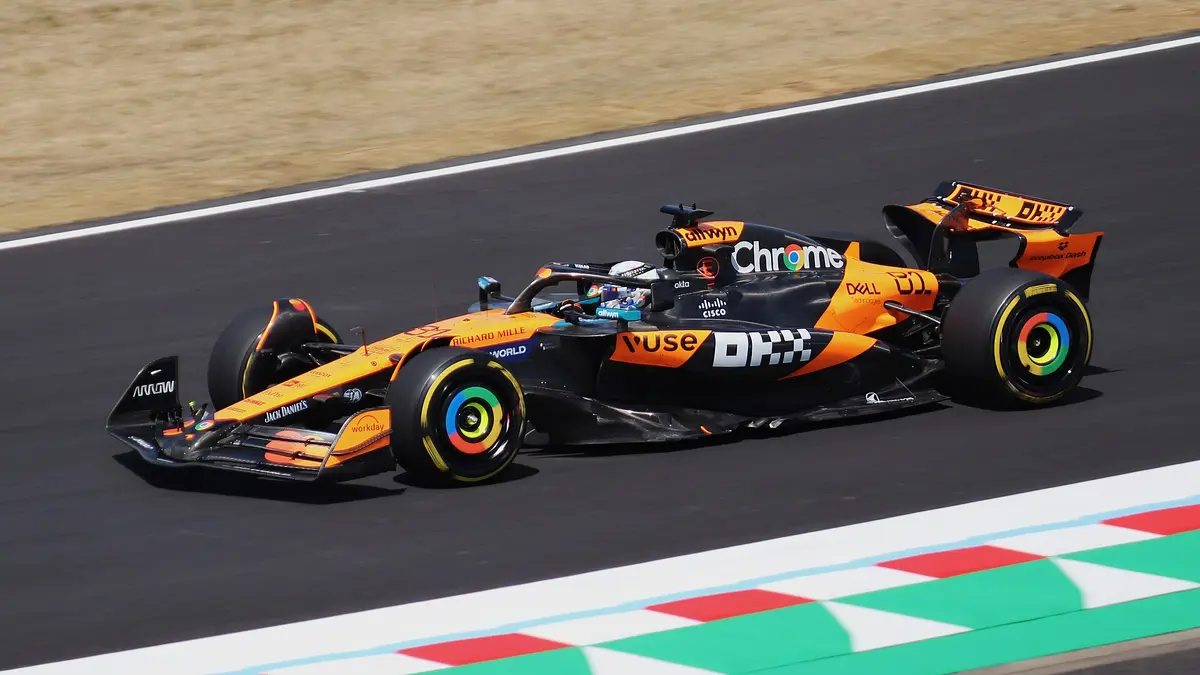
Photo: Liauzh / CC-BY-SA-4.0
Few turnaround stories in modern Formula 1 carry the emotional weight and sheer organisational complexity of McLaren's. From the humiliation of the Honda partnership years — a period that threatened to permanently relegate the Woking marque to mid-field mediocrity — to consecutive constructors' championships in 2024 and 2025, the transformation has been nothing short of extraordinary. Now, McLaren CEO Zak Brown has stepped forward to reveal exactly how the team engineered one of sport's most celebrated comebacks, offering a candid account of the cultural, technical, and strategic decisions that turned a fallen giant back into the dominant force in Formula 1.
As McLaren enters the 2026 season defending those McLaren back-to-back constructors titles, the story of how they got there deserves a thorough examination — not just as a celebration, but as a masterclass in long-term sporting management that the rest of the paddock continues to study.
The Honda Years: Understanding the Depth of the Crisis
To appreciate the scale of McLaren's revival, one must first understand just how bad things became during the Honda partnership era. The collaboration, which began with enormous fanfare given McLaren's legendary success with Honda power in the late 1980s and early 1990s, devolved rapidly into one of the most painful episodes in the team's history. Chronic power unit reliability failures, catastrophic qualifying deficits to rivals, and a string of public disputes between the two parties painted a picture of institutional dysfunction that shook confidence in McLaren from investors, sponsors, and fans alike.
Drivers of Fernando Alonso's calibre — a two-time world champion — found themselves lapping circuits well off the pace, delivering damning radio messages that became infamous in F1 folklore. The brand damage was severe, and the financial consequences of diminished commercial returns compounded the technical misery on track. Morale inside the Woking factory, by most accounts from those who lived through it, reached a historic low.
It is against this backdrop that Zak Brown's revelations carry such significance. As CEO during what he himself has acknowledged were the darkest chapters, Brown was at the epicentre of the decisions that ultimately charted a new course — and now, with back-to-back championships secured, he has begun to explain how those decisions were made.
The Structural Rebuild: Culture, Leadership, and Long-Term Vision
Brown's account of McLaren's resurgence points to a fundamental truth in elite sport: championships are won in the factory years before they are decided on track. The decision to part ways with Honda and pivot to a new power unit supplier was only the first step in a far more comprehensive overhaul that touched every layer of the organisation.
Central to the rebuild was a cultural reset. Brown has spoken extensively in recent years about the importance of psychological safety within teams — the idea that engineers, strategists, and mechanics must feel empowered to speak honestly about problems rather than hiding them within hierarchies. This shift in internal culture, combined with significant investment in infrastructure at the MTC (McLaren Technology Centre), laid the groundwork for sustained competitiveness rather than short-term fixes.
Crucially, Brown and the leadership team resisted the temptation to chase quick results at the expense of structural integrity. In an era where rival teams were spending enormous sums and making sweeping mid-season changes, McLaren opted for a disciplined, phased approach. The driver lineup decisions also reflected this long-termism: nurturing young talent alongside experienced hands, building a team ethos rather than simply assembling individual star power.
By the time Lando Norris — a McLaren driver since 2019 and the heartbeat of the team's modern identity — and Oscar Piastri, who joined in 2023, were delivering podiums and ultimately race victories with consistency, the infrastructure built during those painful years was finally bearing fruit. The McLaren back-to-back constructors titles of 2024 and 2025 were not accidents; they were the natural output of a system that had been methodically reconstructed from the ground up.
Technical Renaissance: From Deficit to Dominance
On the purely technical side, McLaren's transformation involved substantial reinvestment in aerodynamic development capacity, simulation technology, and the calibre of engineering talent recruited to Woking. While the specifics of internal technical decisions remain commercially sensitive, the on-track evidence between the Honda low point and the 2024 championship triumph tells its own compelling story.
The team progressively closed what had once been a multi-second-per-lap gap to the frontrunners, eventually developing a car capable not merely of competing at the sharp end but of setting the benchmark that rivals were forced to chase. That arc — from backmarker to pacesetter — is a testament to the quality of the technical team Brown assembled and the stability he provided at the top to allow that team the time needed to execute.
In the context of the 2026 season, where sweeping new technical regulations have once again reshuffled the order — introducing active aerodynamics, revised power unit architecture, and a new overtake boost system — McLaren's institutional experience in navigating regulatory transitions is now a genuine competitive asset. Teams that have lived through reinvention, as McLaren has, carry a form of organisational muscle memory that newer or less battle-tested operations simply cannot replicate.
Context and Background: Why the Honda Partnership Failed
It would be reductive to lay the entirety of the Honda-era failure at any single door. The partnership collapsed under the weight of misaligned expectations, miscommunication between two organisations with very different engineering philosophies, and the sheer technical complexity of Formula 1's hybrid power unit regulations, which caught multiple manufacturers off guard in the mid-2010s.
Honda themselves went on to demonstrate their underlying engineering capability after leaving McLaren, eventually delivering championship-winning power to Red Bull Racing — a fact that underscores just how much the collaboration dynamic, rather than raw technical ability on either side, was a root cause of the dysfunction.
For McLaren, the experience was ultimately instructive. It forced a level of internal examination that comfortable, successful organisations rarely undertake. Brown has acknowledged this publicly: the Honda years, painful as they were, accelerated changes that might otherwise have taken a decade to implement. In a brutally competitive sport, sometimes crisis is the only catalyst powerful enough to drive genuine transformation.
The narrative that Brown is now sharing publicly — of how McLaren rose from those ashes — also serves an important strategic communication function. As the team defends its McLaren back-to-back constructors titles into 2026, articulating that journey reinforces the brand's identity, attracts commercial partners, and communicates to the paddock that this is not a team riding a regulatory wave but one with deep structural foundations.
Technical and Strategic Implications for 2026
McLaren enters the 2026 season in the position every team covets and few manage to sustain: reigning champion. History shows that defending back-to-back titles while simultaneously adapting to a major regulatory overhaul is among the most demanding challenges in motorsport management. The 2026 regulations — featuring active aerodynamic systems and revised power unit specifications — represent exactly the kind of inflection point that has historically disrupted dominant teams.
Yet Brown's revelations about McLaren's institutional rebuild suggest the team may be better equipped than most to navigate this disruption. Organisations that have learned to rebuild from adversity tend to be more agile in the face of change. The cultural and technical infrastructure that produced McLaren back-to-back constructors titles in 2024 and 2025 is now being tested at the highest level: can it adapt quickly enough to remain at the front under an entirely new technical framework?
With Norris and Piastri forming arguably the most cohesive and high-performing driver pairing in the current field, and with the institutional knowledge built over years of patient reconstruction, McLaren's prospects are credible. But the 2026 grid has never been more competitive, with Ferrari's Lewis Hamilton seeking championship glory in his second year with the Scuderia, Red Bull's Max Verstappen hunting a fifth title, and an array of resurgent teams eager to seize upon any early-season weakness.
Key Takeaways
- McLaren's renaissance was structural, not accidental: Zak Brown has confirmed that the path from Honda-era failure to back-to-back constructors titles was the result of deliberate, long-term organisational rebuilding rather than circumstantial good fortune.
- Cultural change was as important as technical investment: The internal reset — fostering honesty, accountability, and psychological safety — was foundational to McLaren's return to championship-level performance.
- The Honda years, though damaging, accelerated necessary reform: Brown acknowledges that the painful partnership forced changes McLaren might never have made during a period of comfort, ultimately strengthening the organisation.
- Lando Norris and Oscar Piastri are the human embodiment of the project: Both drivers have grown within a McLaren system rebuilt around them, giving the team a rare alignment between driver talent and team structure.
- The 2026 regulatory reset is McLaren's next great test: Defending titles under sweeping new technical rules will determine whether the Woking team's resurgence is a dynasty in the making or a two-year peak.
- Brown's public narrative serves both historical and strategic purposes: Communicating the turnaround story reinforces McLaren's brand, attracts partners, and signals institutional depth to the paddock.
Frequently Asked Questions
How did McLaren recover from the Honda partnership era?
According to McLaren CEO Zak Brown, the recovery involved a comprehensive structural and cultural rebuild of the organisation rather than any single technical fix. Leadership changes, investment in infrastructure, and a long-term strategic approach replaced short-termism, eventually producing the conditions for back-to-back constructors' championships in 2024 and 2025.
Who drives for McLaren in the 2026 F1 season?
McLaren's 2026 driver lineup consists of Lando Norris, who has been with the team since 2019, and Oscar Piastri, who joined in 2023. Both drivers were central to the team's championship-winning campaigns in 2024 and 2025 and continue to represent one of the strongest pairings on the current grid.
What makes McLaren's back-to-back constructors titles significant in F1 history?
Winning consecutive constructors' championships in Formula 1 is extraordinarily difficult, requiring a team to maintain excellence across an entire season while rivals intensify their development efforts. For McLaren specifically, achieving this feat after the nadir of the Honda years makes it one of the sport's most dramatic and complete sporting turnarounds in the modern era.
How does the 2026 regulatory change affect McLaren's chances of a third title?
The 2026 regulations introduce major changes including active aerodynamic systems and revised power unit architecture, creating a genuine opportunity for rivals to close the gap. However, McLaren's experience navigating past adversity and regulatory transitions — combined with a strong driver pairing and institutional depth — positions the team as a credible contender to extend its dominance into a third consecutive season.
Conclusion
The story Zak Brown is telling about McLaren's rise from the Honda era ashes is more than a corporate retrospective — it is a living document of how elite sporting organisations are built, broken, and rebuilt. The McLaren back-to-back constructors titles of 2024 and 2025 represent the vindication of every painful decision made during the years when the Woking team was a byword for underperformance rather than championship pedigree.
As 2026 unfolds with its sweeping regulatory changes and an intensely competitive grid, McLaren's task is to prove that what Brown built is not merely a peak but a plateau — a sustained level of excellence that defines an era rather than a moment. The foundations, by Brown's own account, have never been stronger. The question the rest of the paddock is asking is whether those foundations are strong enough to withstand the most disruptive regulatory overhaul the sport has seen in years.
For now, McLaren stands at the summit. How they defend it will be one of the defining narratives of the 2026 Formula 1 season and, potentially, of the decade ahead.
In this article
Written with AI assistance. How this site works
 Canadian Grand Prix