Williams F1: Vowles Reveals Plan for Energy Management
The Energy Crisis in Grove: Williams F1’s Australian GP Post-Mortem As the dust settles on the 2026 Australian Grand Prix, the Williams F1 Team finds itself...
The Energy Crisis in Grove: Williams F1’s Australian GP Post-Mortem
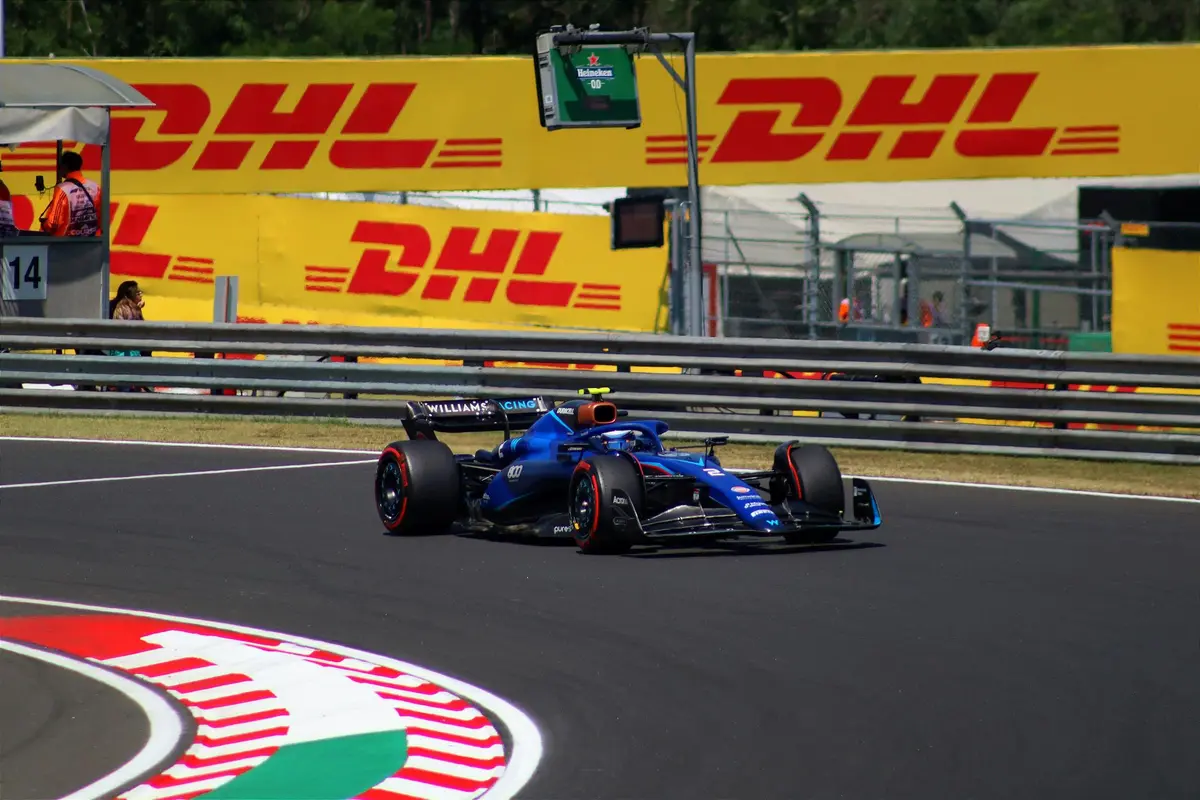
As the dust settles on the 2026 Australian Grand Prix, the Williams F1 Team finds itself at a critical crossroads. While the new era of Formula 1 regulations promised a reset for the midfield, the opening salvos in Melbourne have exposed a significant technical vulnerability for the Grove-based outfit. Team Principal James Vowles has officially confirmed that the team is grappling with severe energy management issues, describing the FW48 as “energy-starved” during the race weekend. This admission comes at a time when the 2026 Power Unit (PU) regulations—which demand a 50/50 split between internal combustion and electrical power—are punishing any inefficiency in harvesting or deployment.
The Australian Grand Prix served as a harsh laboratory for Williams. In a season where the competitive order is tighter than ever, being unable to utilize the full 350kW of electrical assistance is the equivalent of racing with one hand tied behind the back. Vowles, known for his data-driven transparency, has made it clear that the team is not standing still. With multiple options now on the table to rectify these deficits, the coming weeks will define whether Williams can remain a points-scoring threat or if they will be swallowed by a revitalized midfield featuring the likes of Audi and Cadillac.
Technical Breakdown: Why the FW48 is ‘Energy-Starved’
To understand the gravity of Williams’ situation, one must look at the unique demands of the 2026 technical regulations. The current cars rely heavily on the MGU-K to provide nearly half of their total propulsion. When a car is described as “energy-starved,” it typically refers to a failure in the ERS (Energy Recovery System) to maintain a state of charge that allows for consistent deployment across a full lap. At Albert Park, a circuit characterized by high-speed bursts followed by heavy braking zones, the FW48 appeared to hit the “clipping” point—where the electrical motor stops providing boost—much earlier on the straights than its rivals.
James Vowles has indicated that the team is exploring “multiple options” to solve this. These options likely fall into three categories: software mapping, thermal management, and aerodynamic interaction. In the 2026 era, Manual Override (a driver-activated power boost available at high speeds to aid overtaking) is a vital tool. If Williams cannot harvest enough energy to fuel this override, their drivers are defenseless against the likes of George Russell’s Mercedes or the charging Cadillac of Sergio Pérez. Furthermore, the Active Aero systems—movable front and rear wings that adjust to reduce drag on straights—must be perfectly synchronized with energy deployment. If the drag reduction isn’t optimized, the MGU-K has to work harder, leading to the “starvation” Vowles mentioned.
The analysis suggests that Williams may be struggling with the efficiency of their cooling package. If the battery or the MGU-K exceeds optimal temperature windows, the control electronics will automatically derate the power to prevent hardware failure. Vowles’ mention of “multiple options” suggests that a hardware redesign of the cooling ducts or a total recalibration of the deployment software is currently being simulated back at the factory in Grove.
The 2026 Landscape: Williams in the New Era
The 2026 season has already proven to be a volatile one. With Audi entering the fray with Nico Hülkenberg and Gabriel Bortoleto, and Cadillac making their presence felt with the veteran pairing of Sergio Pérez and Valtteri Bottas, the margin for error has vanished. Williams is currently fighting in a pack where a tenth of a second per lap can be the difference between Q3 and a double-knockout in Q1. The energy management issues seen in Australia are particularly concerning because they impact race pace more than single-lap qualifying speed. Over a 58-lap race, an energy deficit compounds, leaving the drivers vulnerable to the “train” effect where they cannot pass even with the aid of the Manual Override.
Contextually, Williams is also measuring itself against other customer teams. With McLaren (Norris/Piastri) and Mercedes (Russell/Antonelli) showing strong early-season form, the pressure is on Vowles to prove that the Williams chassis can maximize the potential of the power unit. The 2026 narrative is one of efficiency; it is no longer just about raw horsepower, but about how intelligently that power is managed. For Williams, the Australian GP was a wake-up call that their current energy strategy is insufficient for the demands of the new regulations.
Key Takeaways
- Energy Deficit: Williams has officially identified energy management as the primary performance bottleneck for the FW48 following the Australian Grand Prix.
- Vowles’ Strategy: The Team Principal has confirmed that multiple technical solutions are being evaluated, ranging from software recalibration to potential cooling adjustments.
- 2026 Regulation Impact: The 50/50 power split of the new PUs makes ERS efficiency critical; Williams is currently “clipping” too early on straights, losing vital lap time.
- Competitive Pressure: With new entrants like Audi and Cadillac showing immediate competitiveness, Williams must fast-track their updates to avoid falling to the back of the grid.
Frequently Asked Questions
How is Williams F1 addressing energy deployment issues in 2026?
Williams F1 is currently evaluating multiple options, including software updates to their Energy Recovery System (ERS) mapping and potential changes to the car’s cooling configuration to prevent power derating during high-speed sessions.
What did James Vowles say about the Williams FW48 performance in Australia?
James Vowles described the FW48 as “energy-starved” during the Australian Grand Prix, confirming that the team struggled to maintain consistent electrical power deployment throughout the race distance.
Will Williams F1 introduce power unit upgrades for the next race?
While the power unit hardware is largely frozen, Williams is looking at “multiple options” which likely involve software optimizations and aerodynamic tweaks to improve how they harvest and deploy energy from the MGU-K.
Conclusion: The Road Recovery
The road ahead for Williams F1 is challenging but not insurmountable. James Vowles has a reputation for clinical problem-solving, and identifying the “energy-starved” nature of the FW48 is the first step toward a cure. However, in the fast-paced world of 2026 Formula 1, time is the one luxury the team does not have. As the paddock moves away from Australia, the focus shifts to how quickly the engineering team in Grove can translate their “multiple options” into tangible on-track performance. If they can unlock the energy management puzzle, Williams may yet find themselves back in the hunt for consistent points. If not, the 2026 season could become a long, difficult lesson in the complexities of modern hybrid racing.
In this article
Written with AI assistance. How this site works
 Canadian Grand Prix