Vettel Criticises F1 2026 Regulations: 'Don't Lose the DNA'
Sebastian Vettel has criticised F1's new-for-2026 regulations on Swedish TV, warning the sport risks losing its DNA as 'the fastest driver in the fastest machine.'
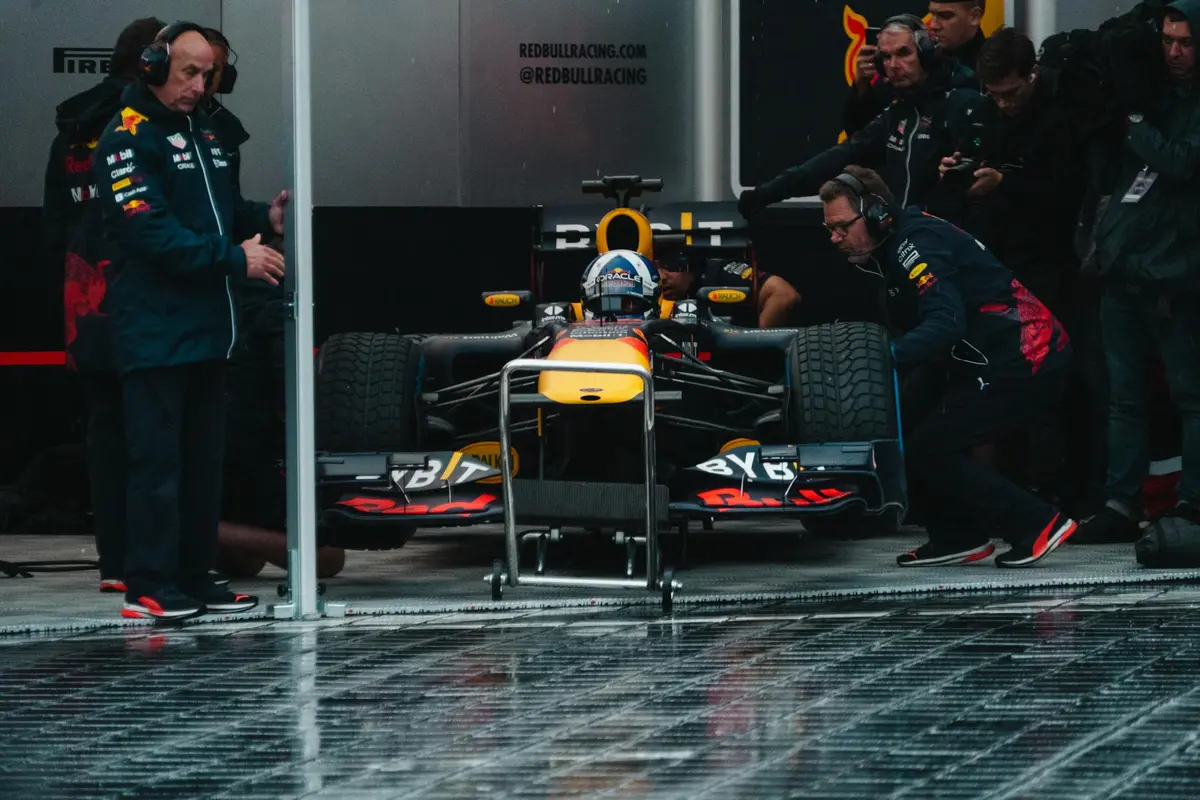
Sebastian Vettel, one of Formula 1's most decorated champions, has voiced serious concerns about the sport's sweeping new-for-2026 regulations, warning that the changes risk stripping away the fundamental identity of grand prix racing. Speaking on Swedish television channel SVT, the four-time world champion made clear that he is not alone in his scepticism — and that his criticism is pointed, principled, and deeply rooted in what he believes makes Formula 1 worth watching in the first place.
"I sympathise with the drivers; I'm very critical not to lose the DNA and the heart of the sport, which is finding the fastest driver in the fastest machine to win the race," Vettel said, in remarks that have quickly resonated across the F1 paddock. It is a sentiment that captures a broader anxiety within the sport: that in pursuing closer racing, greater spectacle, and commercial accessibility, Formula 1 may be trading away the very essence that has defined it for decades.
Vettel's voice carries particular weight. He won four consecutive Drivers' World Championships between 2010 and 2013, and throughout his career he developed a reputation for technical precision and a deep philosophical engagement with what motorsport means. His retirement from racing has not dimmed his willingness to speak frankly about the sport's direction — and his comments on SVT represent one of his most direct interventions yet on the 2026 rule set.
What Are the F1 2026 Regulations and Why Are They Controversial?
The 2026 Formula 1 technical regulations represent the most significant overhaul of the sport's rulebook in years. The new framework introduces a substantially revised power unit structure, placing far greater emphasis on electrical energy deployment, with the energy recovery systems now contributing a higher proportion of total power output than at any previous point in the sport's history. Alongside the power unit changes, the aerodynamic regulations have been fundamentally restructured, introducing concepts such as active aerodynamics — where cars can adjust wing angles on the fly — and a so-called "overtake boost" mechanism designed to facilitate easier passing.
The stated ambition of the 2026 regulations is to produce closer, more entertaining racing. Regulatory architects have also sought to reduce the aerodynamic "dirty air" effect that has historically made it difficult for cars to follow closely through high-speed corners. In theory, this should make overtaking more frequent and the racing more unpredictable.
Yet it is precisely this engineering-directed approach to entertainment that troubles critics like Vettel. The concern is not that the regulations are technically unsound — it is that they fundamentally redefine what winning in Formula 1 means. If the racing becomes more equalised through regulatory intervention, the argument goes, then the margin between the fastest driver in the fastest machine and the rest of the field becomes artificially compressed. The sport's traditional hierarchy — raw talent married to engineering excellence — is replaced by something more managed, more controlled, and ultimately less authentic.
The 'Fastest Driver in the Fastest Machine' Principle
Vettel's phrase — "the fastest driver in the fastest machine" — is deceptively simple but philosophically loaded. It encapsulates a purist view of what Formula 1 competition should represent. Under this framework, the champion is the driver who, week after week, extracts the maximum from a car built by the most talented engineers using the most advanced technology available. The drama comes not from artificial balancing mechanisms but from the interplay between human talent and mechanical supremacy.
Vettel himself was the beneficiary of this philosophy during his dominant Red Bull years. His critics argued at the time that the car did much of the work. But his broader point now is not about his own legacy — it is about the structural identity of the sport. When regulations become so interventionist that the relationship between driver skill, engineer ingenuity, and constructor investment is obscured, something fundamental is lost.
This tension is not new to Formula 1. The debate between "pure racing" and "engineered entertainment" has surfaced at every major regulatory transition in the sport's history. But the 2026 changes, with their active aero systems and power-boosting mechanisms, feel to many observers like the most aggressive push yet towards the latter.
The Paddock's Broader Unease with 2026 Rules
Vettel himself acknowledged that his scepticism is widely shared. "Like many in the paddock," as the original report notes, he is not a lone voice in this conversation. While the teams have committed enormous resources to the new framework — every constructor has been developing 2026-spec power units and chassis for years — that financial commitment does not necessarily translate into enthusiasm for the philosophy underpinning the rules.
The 2026 season has brought new entrants and fresh storylines to the grid. Audi's debut season has arrived under the new regulations, with Nico Hulkenberg and Gabriel Bortoleto representing the German manufacturer's long-awaited return to the sport. Cadillac, Formula 1's eleventh team, has also made its debut, with Sergio Perez and Valtteri Bottas joining the grid. These arrivals have been celebrated as evidence of the sport's growing global appeal — but they also raise questions about whether the competitive pyramid that Vettel describes is being deliberately flattened to accommodate more participants.
Meanwhile, established stars are navigating the new regulations with varying degrees of confidence. Lewis Hamilton, now in his second year with Ferrari, is pursuing a first championship with the Scuderia under a ruleset that represents both opportunity and uncertainty. Max Verstappen, already a four-time champion with Red Bull, enters 2026 alongside new team-mate Isack Hadjar, who was promoted from Racing Bulls for this season. The new regulations reset several of the performance hierarchies that had become entrenched under previous rules — which is, in part, the point. But it also means that the "fastest machine" element of Vettel's equation is temporarily in flux, determined as much by who interpreted the new rules best as by who has the deepest engineering talent base.
Active Aerodynamics and the Overtake Boost: Entertainment or Artifice?
Two specific elements of the 2026 technical regulations have attracted the most criticism from purists: the active aerodynamic systems and the overtake boost. The active aero concept allows cars to adjust their aerodynamic configurations during a lap — reducing drag on straights to increase top speed and generating greater downforce through corners. While this is an impressive engineering achievement, critics argue that it introduces a layer of automated performance management that distances the driver from the raw mechanical challenge that has historically defined Formula 1.
The overtake boost — which allows drivers to deploy additional electrical power when attempting to overtake — draws the most pointed comparisons to the Drag Reduction System (DRS) that has divided opinion since its introduction in 2011. Proponents argue it creates passing opportunities that would otherwise not exist. Opponents, including many in the driver community and the broader paddock, suggest it produces artificial moves that neither the attacking driver nor the defending driver fully controls. For Vettel, whose sympathies clearly lie with the drivers, this is precisely the kind of mechanism that erodes the human element at the heart of the sport.
Technical and Strategic Implications of the 2026 Framework
Beyond the philosophical debate, the 2026 regulations carry concrete technical and strategic implications that will shape the competitive landscape throughout the season. The increased electrical energy contribution from the power unit means that energy management has become even more central to race strategy. Teams that have invested most heavily in their hybrid systems and battery technology will enjoy advantages that may persist for several seasons — assuming the regulations remain stable.
For the constructor battle, the 2026 regulations effectively handed every team a clean-sheet opportunity. Early-season results will be closely watched as indicators of who has best understood the new aerodynamic philosophy. The active aero systems, in particular, require sophisticated software and control systems in addition to the traditional mechanical engineering competence — opening new axes of competition but also new risks of failure or underperformance.
Driver adaptation to the new car characteristics will also be critical. The feedback from the paddock suggests that the new cars behave differently at the limit compared to their predecessors — a factor that may advantage drivers with specific stylistic traits and disadvantage others who thrived under the previous generation of machinery.
Key Takeaways
- Sebastian Vettel has publicly criticised the F1 2026 regulations on Swedish TV channel SVT, warning against losing the sport's core identity.
- His central concern is that the new rules risk obscuring the principle of "the fastest driver in the fastest machine" winning the race.
- Vettel stated his scepticism is shared by "many in the paddock," indicating widespread unease beyond his individual view.
- The 2026 regulations introduce active aerodynamics and an overtake boost mechanism, both of which have attracted criticism from purists as overly artificial.
- The new framework coincides with major grid changes including Audi's debut season and Cadillac's arrival as an eleventh team, raising questions about competitive equalisation.
- The tension between engineered entertainment and pure racing performance is at the heart of the ongoing debate about Formula 1's 2026 direction.
Frequently Asked Questions
What did Sebastian Vettel say about the F1 2026 regulations?
Speaking on Swedish TV channel SVT, Vettel said he is "very critical not to lose the DNA and the heart of the sport, which is finding the fastest driver in the fastest machine to win the race." He expressed sympathy for the drivers and indicated that his concerns are widely shared across the paddock. His remarks represent one of his most direct public interventions on the subject of Formula 1's regulatory direction.
What are the main changes introduced by the F1 2026 regulations?
The 2026 regulations introduce a revised power unit structure with a significantly increased role for electrical energy recovery, along with active aerodynamic systems that allow cars to adjust their wings during a lap. An overtake boost mechanism has also been introduced, enabling drivers to deploy additional electrical power when attempting to pass a rival. These changes form the most substantial overhaul of F1's technical rulebook in several years.
Why do some in the F1 paddock oppose the 2026 rule changes?
Critics of the 2026 regulations argue that mechanisms like the overtake boost and active aerodynamics artificially manage on-track action in ways that undermine the purity of competition. The concern, as articulated by Vettel, is that Formula 1's identity is built on the contest between the most talented driver and the most capable machine — and that overly interventionist rules compromise that fundamental dynamic. Many within the paddock share this concern, even if they have committed commercially to the new framework.
Does Vettel's criticism reflect a wider trend in Formula 1?
Yes — Vettel himself noted that his scepticism is shared by "many in the paddock," suggesting the concerns extend beyond his individual perspective. The debate over engineered entertainment versus sporting purity is longstanding in Formula 1 and has resurfaced with particular intensity around the 2026 rules. As the season progresses and on-track results accumulate, the argument about whether the new regulations have enhanced or diminished the sport will continue to evolve.
Conclusion
Sebastian Vettel's intervention on Swedish television is more than a retired champion airing nostalgic grievances. It is a carefully articulated warning from one of the sport's most analytical minds that Formula 1 is at a crossroads — one where the decisions made now about the balance between spectacle and sporting authenticity will shape its identity for years to come.
The 2026 regulations are already in motion. The cars are on the grid, the new teams are racing, and the results are accumulating. But the philosophical question Vettel raises — what is Formula 1 actually for, and what should winning it mean? — does not have an easy answer. As the season develops and the full implications of the new rules become clear in competitive terms, that question will only grow louder.
For fans, analysts, and everyone invested in the sport's long-term health, it is a question worth taking seriously. Vettel, for one, has made clear he will not stop asking it.
In this article
Written with AI assistance. How this site works
 Canadian Grand Prix