Toto Wolff Warning to Russell and Antonelli: Mercedes' 2026 Title Fight Message
Toto Wolff has issued a stern warning to George Russell and Kimi Antonelli over intra-team conflict should the 2026 Mercedes title fight turn fiery.
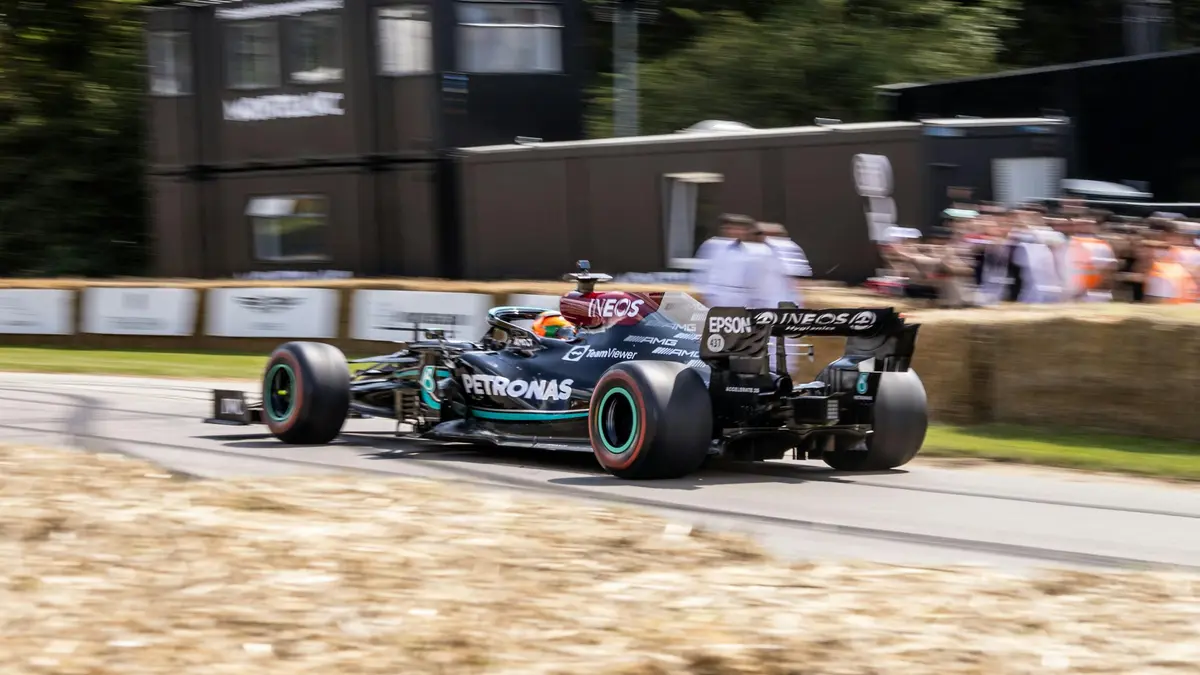
Toto Wolff has issued a clear and unambiguous message to his Mercedes drivers George Russell and Andrea Kimi Antonelli: if the 2026 Formula 1 title fight turns fiery between the two Silver Arrows teammates, there will be consequences. The Mercedes team principal's stern warning signals that, as the new-era cars continue to evolve under the sweeping 2026 technical regulations, Wolff is determined not to let intra-team conflict derail what could be one of the most significant championship opportunities Mercedes has had in recent seasons. In a paddock already buzzing with anticipation over the new active aerodynamic systems and the overtake boost mechanism redefining on-track battles, the last thing the Brackley-based outfit can afford is a war within its own garage.
The warning carries particular weight given the individual trajectories of both drivers. Russell is a proven race winner entering what many consider his prime years, while Antonelli — now in his second season in Formula 1 after a headline-grabbing rookie campaign — is widely regarded as one of the most electrifying young talents the sport has seen in years. With both men theoretically capable of fighting at the very front of the grid, the conditions for a fierce internal rivalry are very much present, and Wolff clearly wants to get ahead of it before it becomes a crisis.
Wolff's Warning: What It Means for the Mercedes Camp
When a team principal of Toto Wolff's stature issues a public warning to his own drivers, the F1 world takes notice. Wolff has navigated some of the sport's most complex intra-team dynamics, most notably during the era of the Hamilton–Rosberg rivalry that culminated in the explosive 2016 season. That episode left scars on the team and served as a formative lesson in how a championship-winning machine can be destabilised from within. His message to Russell and Antonelli, therefore, is not merely procedural — it is rooted in hard-won experience.
The 2026 season represents a genuine reset moment for the entire grid. The introduction of radically new technical regulations — including the fully revised active aerodynamic philosophy and the new power unit formula — means the competitive order is far less predictable than in previous hybrid eras. Mercedes, historically one of the benchmark teams for adapting to regulation changes, will be hoping to capitalise on this reset. But capitalising requires both drivers to be pulling in the same direction, and Wolff's warning reflects a clear-eyed understanding that the temptation to prioritise personal glory over team success could be significant when championship points are genuinely within reach.
It is also worth reading the warning as a statement of intent about Mercedes' own confidence. Teams don't worry about internal title fights unless they believe both drivers are capable of competing for the championship. The fact that Wolff is already addressing this scenario publicly suggests Mercedes has reason to believe it could have not one but two drivers firmly in contention as the 2026 season develops.
Russell vs Antonelli: The Dynamic That Makes This Warning Necessary
George Russell's Position in 2026
George Russell has been a Mercedes driver since 2022, having made his full-time debut with the team after a distinguished loan spell elsewhere on the grid. By 2026, he is an established race winner and a driver who has shown the tactical and technical intelligence to be a genuine title contender when the machinery permits. Russell's relationship with the team is deep and well-developed — he understands how Mercedes operates, how to extract performance across a race weekend, and how to communicate feedback that drives car development.
In many ways, Russell represents the experienced, senior half of this driver pairing. He will be acutely aware of the pressure that comes with Antonelli's emergence. The young Italian's ascent through the junior ranks was meteoric, and his first season in Formula 1 with Mercedes immediately demonstrated his raw pace and composure under pressure. For Russell, maintaining his status as the team's leading driver while managing a teammate who may well be quicker on raw pace in certain conditions is a delicate balancing act — one that requires both focus and professionalism.
Antonelli's Growing Threat
Andrea Kimi Antonelli's presence in Formula 1 continues to generate enormous excitement, and entering his second season with Mercedes, the expectation is that the Italian prodigy will take another significant step forward. Second seasons in Formula 1 are often where true talent separates itself from mere promise — the learning curve flattens, the track knowledge accumulates, and the mental resilience that comes from navigating a full campaign's worth of pressure begins to manifest in consistent performance.
Antonelli's rapid development makes him a genuine wildcard in the 2026 title equation. Should the Mercedes W16 — or whatever chassis designation the team uses under the new formula — prove to be genuinely competitive, the scenario of both Mercedes drivers fighting for the drivers' championship is far from fanciful. And it is precisely that scenario that Wolff appears to be preparing for with his public warning.
The Broader 2026 Context: Why Team Harmony Is Paramount
The 2026 Formula 1 season is unlike any that has come before it in the modern era. The simultaneous overhaul of both the chassis and power unit regulations represents the most dramatic reset the sport has undertaken in over a decade. Active aerodynamics — where elements of the car's bodywork adjust dynamically to optimise either downforce or drag reduction — fundamentally changes how overtaking happens and how races are strategically structured. The overtake boost system adds an additional layer of tactical complexity to every wheel-to-wheel battle.
In this environment, the importance of clean, coordinated team strategy cannot be overstated. Every decision made on the pit wall — when to pit, when to deploy the boost, how to manage tyre degradation — requires trust and cooperation between both sides of the garage. If Russell and Antonelli are locked in personal combat, the risk of strategic miscommunication, disobeyed team orders, or simple on-track contact rises dramatically. Any of those outcomes could cost Mercedes crucial constructors' championship points at a time when the margins between the top teams may be exceptionally tight as everyone adapts to the new regulations.
Consider what is happening across the rest of the grid in 2026. McLaren continues to field one of the most dangerous driver pairings in the sport with Lando Norris and Oscar Piastri. Ferrari — now with Lewis Hamilton in his second season at Maranello alongside Charles Leclerc — represents a formidable and motivated rival. Red Bull has Max Verstappen, the four-time world champion, partnered with the highly-rated Isack Hadjar in what is one of the most intriguing new pairings of the season. Meanwhile, Audi's debut as a works team and Cadillac's entry as the eleventh team add fresh competitive intrigue to the midfield and beyond.
In a season already rich with storylines, Mercedes cannot afford to generate negative headlines from within its own camp. Wolff's pre-emptive warning is, in that sense, as much a piece of team management strategy as it is a public statement.
Technical and Strategic Implications for Mercedes
From a purely technical standpoint, intra-team driver conflict creates measurable performance costs that extend beyond the obvious risk of on-track contact. When drivers are competing against each other rather than collaborating, data sharing suffers. Setup directions can diverge unhelpfully. Simulator time and development priorities can become fractious points of negotiation rather than straightforward technical decisions. In the context of the 2026 regulations — where teams are still in the process of fully understanding the behaviour of active aero systems and extracting the maximum from the new power units — this kind of internal friction is potentially devastating to development pace.
Wolff's message, therefore, is also a signal to his engineering team and broader organisation that the structure of the 2026 campaign will be one of coordinated effort. Both Russell and Antonelli will be expected to serve the team's collective ambitions, and any deviation from that principle will not be tolerated. This clarity of purpose, established early in the season, is exactly the kind of leadership that has historically distinguished the best-run teams in Formula 1 from those that stumble despite having competitive machinery.
Key Takeaways
- Toto Wolff has issued a stern, pre-emptive warning to George Russell and Kimi Antonelli about managing intra-team rivalry if the 2026 title fight intensifies.
- The warning reflects Mercedes' genuine belief that both drivers could be in championship contention, underscoring confidence in their 2026 car.
- Antonelli, now in his second F1 season, is expected to take a significant developmental step, making the intra-team dynamic more competitive than ever.
- The 2026 regulation reset — with active aerodynamics and a new power unit formula — makes team coordination more critical than in previous seasons.
- Wolff's experience managing the Hamilton–Rosberg rivalry appears to be directly informing his proactive approach to this potential flashpoint.
- Intra-team conflict carries technical as well as sporting costs, particularly damaging in a year when all teams are still learning the new regulations.
Frequently Asked Questions
Why has Toto Wolff warned Russell and Antonelli about the 2026 title fight?
Wolff issued the warning because he recognises that both George Russell and Kimi Antonelli are capable of fighting for the 2026 Formula 1 championship, and he wants to ensure that internal rivalry does not undermine Mercedes' collective title ambitions. His experience with previous high-profile intra-team battles has clearly shaped his decision to address the issue proactively rather than reactively. The message is designed to set clear expectations before any conflict has the chance to escalate.
How does the 2026 season context make Wolff's warning particularly significant?
The 2026 season features the most sweeping regulation overhaul in the modern F1 era, with active aerodynamics and a completely revised power unit formula reshaping the competitive order. In this environment, team cohesion is absolutely vital because engineering resources, strategy calls, and data collaboration must all be optimised to stay competitive. Any internal disruption at Mercedes would be especially damaging when every team on the grid is still working to fully unlock the potential of the new technical framework.
Is Kimi Antonelli genuinely capable of challenging George Russell for the Mercedes number one status in 2026?
Antonelli's debut season at Mercedes demonstrated remarkable pace and maturity for a driver in his first year of Formula 1, and his second season is widely expected to represent a significant step forward as he benefits from accumulated experience and track knowledge. The competitive gap between the two Mercedes drivers in 2026 is therefore far less clear-cut than in previous seasons when a clear pecking order existed. Wolff's warning is itself an implicit acknowledgement that Antonelli is no longer simply a talented rookie — he is a legitimate front-running threat.
What precedent does Wolff have for managing fierce driver rivalries at Mercedes?
Wolff famously navigated the intensely competitive and at times destructive rivalry between Lewis Hamilton and Nico Rosberg during the mid-2010s, a period that saw multiple on-track incidents and significant team tension before Rosberg's retirement after the 2016 championship. That experience gave Wolff a first-hand understanding of how quickly an intra-team rivalry can spiral from a competitive asset into a liability. It is widely understood within the paddock that those years left a lasting impression on his management philosophy and approach to driver dynamics.
Conclusion
Toto Wolff's warning to George Russell and Kimi Antonelli is one of the most telling early-season signals from the Mercedes camp in the 2026 Formula 1 season. Far from being merely a disciplinary statement, it is a sophisticated piece of team management — a pre-emptive strike against the kind of internal breakdown that can cost championships even when the car is capable of winning them. It speaks to Mercedes' confidence in their machinery, their belief in both drivers, and Wolff's own hard-earned wisdom about what happens when personal ambition overrides collective purpose.
As the 2026 season continues to unfold under its revolutionary new technical regulations, the relationship between Russell and Antonelli will be one of the most closely watched dynamics in the entire paddock. Both men have enormous talent, genuine ambition, and now a very clear set of boundaries established by the man who sits at the top of the team structure. Whether that warning proves sufficient — or whether the heat of championship battle tests its limits — remains one of the most compelling subplots of a season already overflowing with narrative richness.
For Mercedes, getting this right is not optional. In the ultra-competitive landscape of 2026 Formula 1, where McLaren, Ferrari, and Red Bull are all genuine title threats, squandering points through internal conflict would be an unforgivable luxury. Wolff knows it. And now, very publicly, so do his drivers.
In this article
Written with AI assistance. How this site works
 Canadian Grand Prix