Red Bull Engine Upgrade Window: Mekies Denies Best PU Claims
Red Bull boss Laurent Mekies has denied his team holds the best power unit in F1 2026, positioning the team for access to an upcoming engine-upgrade window.
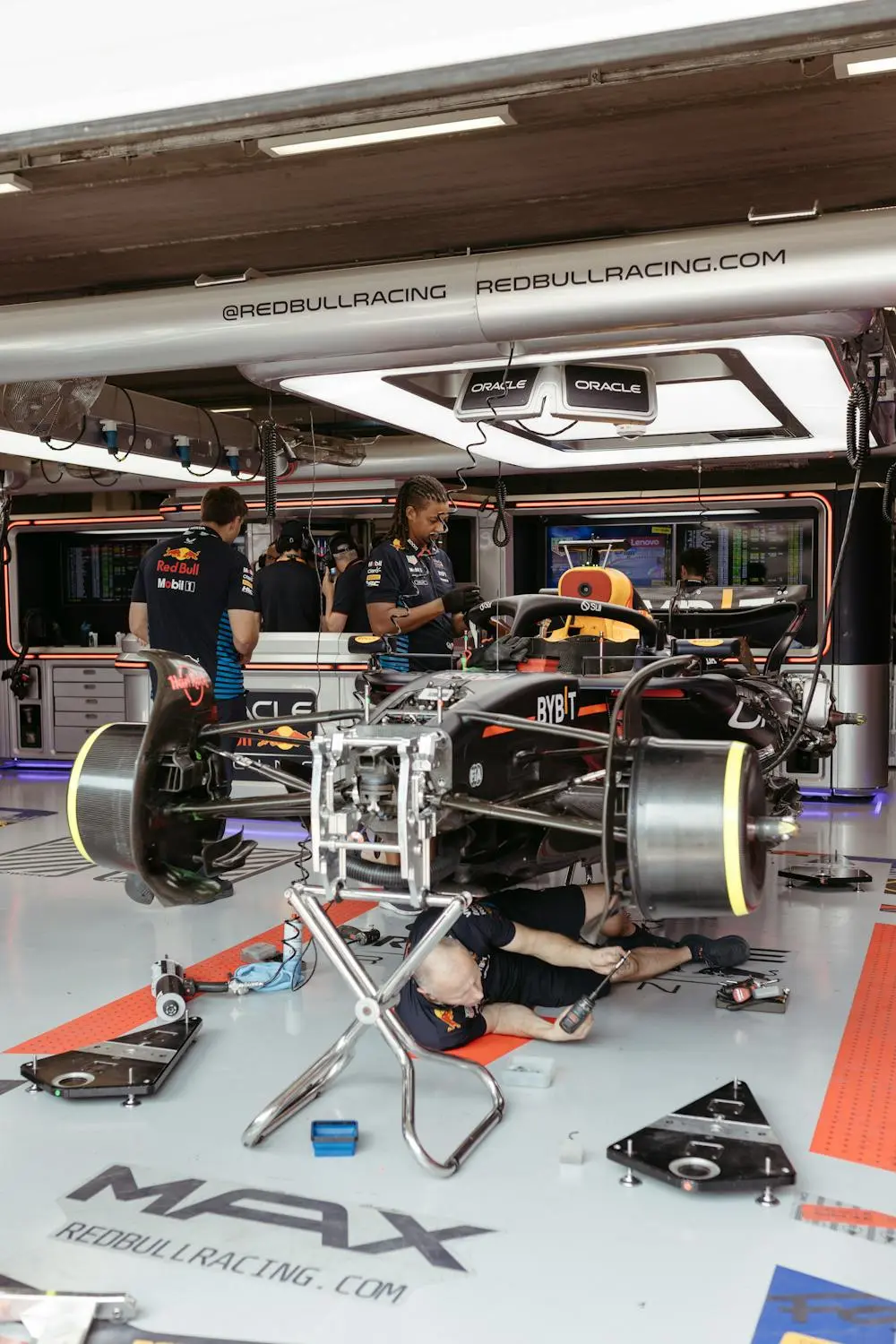
Red Bull Racing team principal Laurent Mekies has firmly pushed back against growing speculation that his outfit currently operates the most powerful and best-performing power unit in Formula 1, a denial that carries significant strategic weight as the sport prepares to enter an engine-upgrade window under the 2026 technical regulations. The comments, reported by Sky Sports F1, arrive at a pivotal moment in the championship as teams and manufacturers navigate the complex new hybrid power unit framework introduced this season — and as the allocation of upgrade tokens becomes a critical battleground in its own right.
Mekies' public rebuttal is not simply a matter of humility or media management. In the high-stakes world of 2026 Formula 1, where power unit performance is governed by strict parity-based upgrade mechanisms, denying that your engine is the class of the field is a calculated and consequential move. Understanding why requires a deeper look at how the 2026 engine regulations work, what an upgrade window means in practice, and why Red Bull's positioning in this debate matters enormously for the rest of the season.
What Laurent Mekies Actually Said — and Why It Matters
According to the Sky Sports F1 report, Mekies explicitly denied that Red Bull possesses the best power unit on the current 2026 grid. Crucially, his denial was paired with an expectation: that Red Bull should therefore be afforded the opportunity to improve their power unit during an upcoming engine-upgrade window. This is a classically astute piece of regulatory positioning. In Formula 1's 2026 framework, upgrade allocations and development freedoms are not distributed equally — they are, in part, weighted by where a manufacturer sits in the competitive order. A team or supplier that claims to be leading the power unit standings risks having its development freedoms curtailed, while those deemed to be behind are granted more latitude to close the gap.
By publicly arguing that Red Bull's Honda-derived power unit is not the benchmark, Mekies is effectively making a case before the FIA and the broader paddock that his team deserves — and indeed requires — access to that upgrade window. It is a move that blends technical honesty with regulatory strategy, and it signals that the internal picture at Red Bull may be more nuanced than the external perception suggests.
The Regulatory Logic Behind Engine Upgrade Windows in 2026
The 2026 Formula 1 season introduced the most radical overhaul of power unit regulations in over a decade. The new framework dramatically increased the role of electrical power, with the MGU-H returning in a revised form alongside a vastly more powerful MGU-K. The result is a power unit landscape in which the balance between internal combustion output and electrical deployment is more finely calibrated than ever before. Alongside these technical changes, the FIA introduced structured upgrade windows — designated periods during the season in which manufacturers can introduce homologated updates to their power units, subject to rules that account for competitive standing.
The underlying philosophy is one of controlled convergence: manufacturers who are behind should have more freedom to develop and catch up, while those who are ahead face greater restrictions. This is designed to prevent a single supplier from building an insurmountable lead through continuous development. Mekies' comments, therefore, are a direct engagement with this philosophy. By asserting that Red Bull's power unit is not the best, he is arguing that his team belongs in the category of manufacturers who should be given room to improve — not the category of manufacturers whose development must be reined in.
Perception vs. Reality: Is Red Bull's PU Actually Competitive?
The speculation that Mekies is rebutting — that Red Bull holds the best power unit — will not have emerged from nowhere. Paddock perception, lap time analysis, and the performance of Red Bull machinery across early 2026 rounds will have fed into a narrative that their power unit is at or near the top of the order. Mekies is clearly aware of that perception and has chosen to challenge it directly rather than allow it to harden into a regulatory assumption that could constrain his team's development path.
Whether or not Red Bull's power unit is objectively the strongest is a question that even the most sophisticated telemetry analysis cannot answer with complete certainty in-season, given the interplay between chassis performance, aerodynamic efficiency, fuel loads, and deployment strategies. What is clear is that Mekies believes the narrative of Red Bull dominance — at least in power unit terms — does not reflect the full picture, and that allowing it to stand unchallenged could have tangible consequences for his team's competitive trajectory.
Context and Background: Red Bull's Power Unit Journey into 2026
Red Bull's power unit situation has been one of the defining storylines of recent Formula 1 history. After the departure of Honda's formal factory involvement at the end of the 2021 season, Red Bull established Red Bull Powertrains — an in-house engine operation — to take over the intellectual property and continue running the Honda architecture. Honda subsequently re-engaged with the programme, providing technical support and, eventually, deeper involvement leading into the critical 2026 regulation change.
The transition into 2026 was therefore a moment of enormous significance for Red Bull as a power unit entity. Unlike Ferrari, Mercedes, or Renault — manufacturers with decades of Formula 1 engine development heritage — Red Bull Powertrains was, by any reasonable measure, a relatively young operation facing the most complex power unit regulations the sport had ever produced. The expectation in many quarters was that Red Bull would face a performance deficit compared to more established manufacturers in the early phase of the 2026 era.
Against that backdrop, suggestions that Red Bull is now operating the best power unit in the field represent a remarkable reversal of expectations — and one that Mekies is keen to temper. Whether driven by genuine technical modesty or regulatory self-preservation, his denial carries the weight of an organisation acutely aware of how power unit narratives can shape development freedoms for months at a time.
The 2026 grid itself has expanded the power unit narrative further. Audi's debut season — having rebranded from Sauber — adds a new manufacturer voice to the conversation, while the arrival of Cadillac as Formula 1's 11th team with Sergio Perez and Valtteri Bottas brings additional complexity to the supplier landscape. Every manufacturer is watching every other manufacturer's regulatory positioning with intense scrutiny.
Technical and Strategic Implications for the 2026 Championship
The implications of Mekies' comments extend well beyond Red Bull's internal operations. If his argument is accepted — that their power unit is not leading the field — and upgrade access is granted accordingly, the performance delta between the top teams could shift materially before the season is concluded. A meaningful power unit upgrade mid-season can translate into lap time gains of several tenths, which in a championship as competitive as 2026 represents a potentially decisive advantage.
For rival teams, particularly those whose power unit suppliers are considered to be ahead in the current pecking order, Mekies' denial creates a strategic dilemma. Accepting the framing risks legitimising Red Bull's claim for greater development freedom. Challenging it publicly risks drawing attention to their own power unit performance in ways that could restrict their own upgrade access.
Max Verstappen, now in his eleventh season with Red Bull and chasing continued championship success, will be acutely aware that power unit performance in the 2026 formula is not a secondary consideration — it is arguably the primary determinant of outright lap time. The electrical deployment systems in 2026 are so performance-critical that a deficit of even a few kilowatts in peak MGU-K output can manifest as a significant disadvantage on power-sensitive circuits. Securing upgrade access is therefore not merely a nice-to-have for Red Bull — it could be fundamental to their championship ambitions.
Key Takeaways
- Red Bull team principal Laurent Mekies has publicly denied that his team holds the best power unit in Formula 1 in 2026.
- The denial is strategically linked to an expectation that Red Bull should receive access to an upcoming engine-upgrade window under the 2026 regulatory framework.
- The 2026 power unit regulations use competitive standing to govern development freedoms, making public positioning around PU performance a regulatory tool as much as a factual statement.
- Red Bull's power unit journey — through the Red Bull Powertrains era and Honda re-engagement — makes their 2026 PU standing a particularly complex and closely watched storyline.
- Upgrade window access could carry significant championship implications for Max Verstappen and the wider Red Bull programme.
- Rival teams and manufacturers will be monitoring Red Bull's regulatory positioning carefully, as it has downstream effects on the entire competitive order.
Frequently Asked Questions
What is an engine upgrade window in F1 2026?
An engine upgrade window is a designated period within the 2026 Formula 1 season during which power unit manufacturers are permitted to introduce homologated updates to their engines. The level of development freedom available to each manufacturer is influenced by their competitive standing, with those deemed to be behind given greater latitude to improve. This mechanism is designed to promote convergence across the field and prevent any single supplier from gaining an uncatchable advantage.
Why is Laurent Mekies denying that Red Bull has the best power unit?
Mekies' denial is both a statement of his genuine technical assessment and a piece of regulatory strategy. Under the 2026 framework, manufacturers perceived to be leading in power unit performance may face greater restrictions on development. By arguing that Red Bull's PU is not the best, Mekies is making the case that his team deserves access to upgrade windows rather than being constrained as a perceived leader. It is a calculated engagement with the regulatory process.
How does Red Bull's power unit situation differ from other manufacturers in 2026?
Red Bull Powertrains is a younger operation compared to established manufacturers like Ferrari, Mercedes, and Renault, having been set up to manage the Honda-derived architecture after Honda's initial departure from the sport. The complexity of the 2026 power unit regulations — with their increased electrical performance demands — means Red Bull faced a particularly steep development curve entering this era. Honda's continued technical involvement has been a key element of their programme.
Could an upgrade window change the 2026 championship picture?
Potentially, yes. In the 2026 formula, where electrical deployment systems are critically performance-sensitive, even a modest power unit upgrade can translate into meaningful lap time gains. If Red Bull secures upgrade access and uses it effectively, it could shift the competitive balance on circuits where power unit output is most influential. The timing and scale of any upgrade would determine how significant the championship impact might be.
Conclusion
Laurent Mekies' denial that Red Bull holds the best power unit in Formula 1 is one of those statements that operates simultaneously on multiple levels — as a genuine technical claim, as a media narrative correction, and as a calculated piece of regulatory positioning ahead of an engine-upgrade window. In the intricately governed world of 2026 Formula 1 power unit development, what a team principal says in public about their engine's performance is never merely commentary. It is evidence, framing, and argument all at once.
For Red Bull, securing access to that upgrade window could prove to be one of the more consequential off-track battles of the 2026 season. With Max Verstappen and Isack Hadjar representing one of the most compelling driver pairings on the grid, the chassis and aerodynamic platform at Milton Keynes is widely regarded as highly competitive. Whether the power unit currently matches that standard — or whether Mekies' denial reflects a genuine deficit that needs to be closed — is the central question underpinning this story. As the upgrade window approaches, the answer will become significantly clearer.
In this article
Written with AI assistance. How this site works
 Canadian Grand Prix