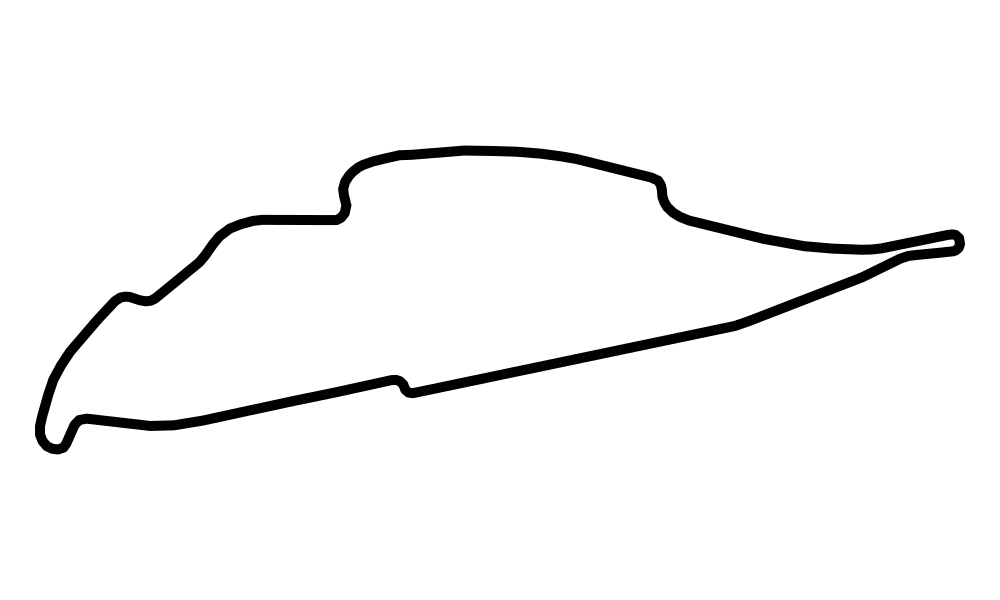
Pirelli C3 C4 C5 Compounds: Soft Trio for 19-Corner Circuit
Pirelli confirms C3, C4, and C5 — the three softest compounds — for a 19-corner, three-straight circuit in 2026. Here's what it means for race strategy.
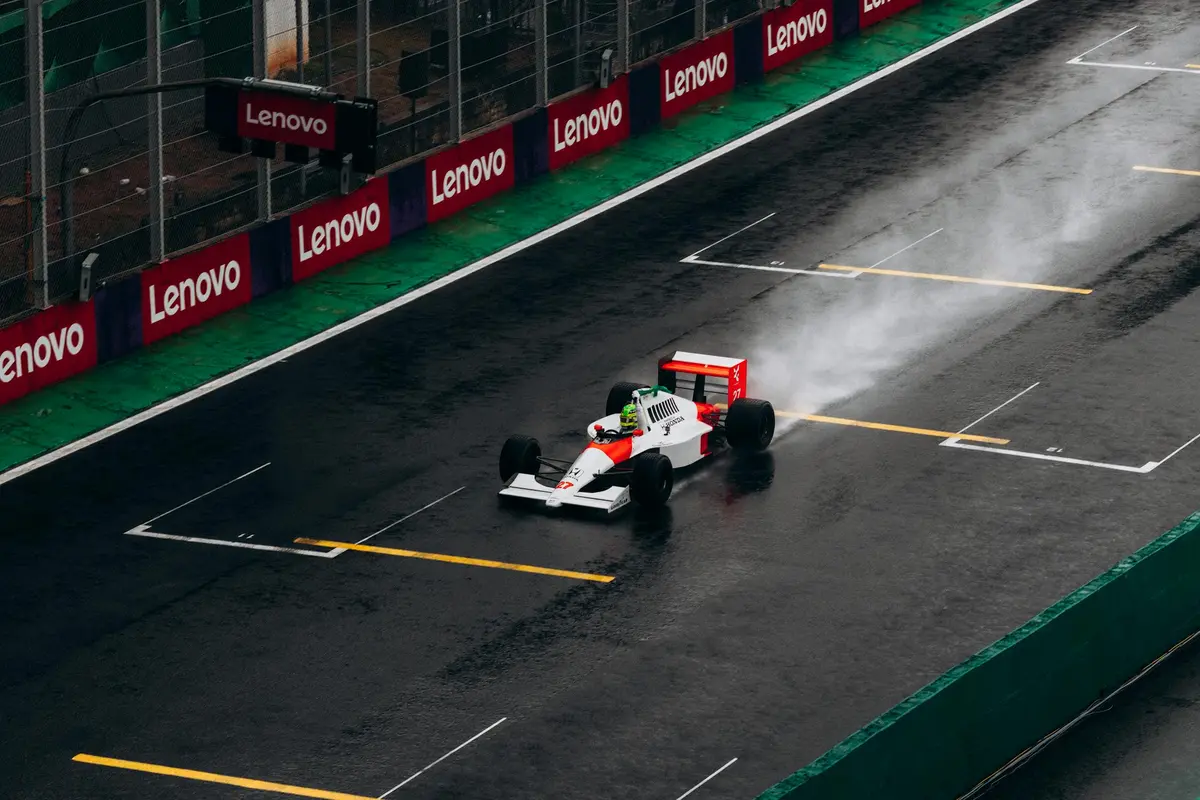
Pirelli has confirmed that teams will have access to the three softest compounds in its 2026 range — the C3, C4, and C5 — to tackle a demanding circuit characterized by 19 corners and three long straights. The selection of the softest available tires signals both a strategic and technical statement from the Italian manufacturer, setting the stage for what promises to be a fascinating tire management battle across the race weekend. In the context of Formula 1's sweeping 2026 technical regulations, tire strategy has never been more consequential, and this soft-compound triple selection invites deep analysis from engineers, strategists, and fans alike.
With the 2026 season already delivering intense on-track drama thanks to the revolutionary active aerodynamics and the new overtake boost system, understanding why Pirelli opts for its three softest compounds at a specific venue — and what that means for race strategy — is essential reading for anyone who wants to follow the championship battle with genuine insight.
Why Pirelli Selected the Softest Compounds: C3, C4, and C5 Explained
Understanding the Pirelli Compound Ladder in 2026
Pirelli's tire naming system runs from C1 (hardest, most durable) through to C5 (softest, fastest but least durable). For any given race weekend, Pirelli selects three consecutive or near-consecutive compounds from this range, assigning them the labels Hard, Medium, and Soft for that event. When Pirelli chooses C3, C4, and C5 as the trio, the C3 becomes the Hard, the C4 the Medium, and the C5 the Soft. This is the softest overall allocation possible within the current system, and it immediately tells engineers a great deal about the expected surface demands of the circuit in question.
A softest-possible allocation typically points to one or more of the following characteristics: a relatively smooth asphalt surface that generates low inherent grip through abrasion, low tire-energy inputs through corners, cooler ambient or track temperatures, or a combination of all three. When a circuit features 19 corners and three long straights — as confirmed by the source — there is also a meaningful interplay between high-speed straight-line loads and the lateral forces generated through the corner sequences. The three long straights introduce significant braking zones, which can stress tire shoulders, while 19 corners create cumulative cornering energy that builds heat across a stint.
What Three Long Straights Mean for Tire Strategy
The presence of three long straights on this circuit has layered implications for tire management that go well beyond simple top-speed considerations. First, long straights mean prolonged periods of relatively low lateral tire stress — the tires are rolling straight, not scrubbing through corners — which can actually allow rubber to cool slightly between corner sequences. This thermal cycling effect, where tires heat up through corners and cool on straights, is a critical factor in how quickly the softer compounds degrade.
Second, the three braking zones at the end of each long straight place considerable thermal load on the front tires specifically. Heavy braking from high speed causes the front tire contact patch to absorb enormous energy in a very short time, and with the C4 and C5 compounds in particular — which have softer, more heat-sensitive rubber — the risk of front tire graining or blistering in the early laps of a stint is elevated. Teams running the C5 as their race-day Soft compound will need to exercise particular caution through the opening five to seven laps of any stint that begins with a high-fuel load.
Third, and perhaps most strategically interesting in 2026, the interaction between the new active aerodynamic systems and tire behavior on long straights has introduced genuinely new variables that teams are still calibrating. The overtake boost mode — which allows drivers to temporarily increase aerodynamic efficiency on straights — alters the aero load profile on the tires in ways that older simulation models did not account for. Engineers are actively updating their tire-degradation models to reflect these new inputs.
Strategic Implications for the 2026 Grid
How the Soft Trio Reshapes Race Strategy
When all three available compounds fall on the softer end of the spectrum, the traditional strategic split between a one-stop conservative approach and a two-stop aggressive approach becomes considerably narrower. The hardest available tire — in this case the C3 — still offers meaningfully more durability than the C4 or C5, but it is not the bulletproof endurance compound that a C1 or C2 would represent. This compression of the strategic palette forces teams to think more creatively about stint lengths and compound sequencing.
Historically, a full soft allocation tends to produce racing with higher peak pace across the entire field, shorter viable stint windows, and more strategic variation — all of which are conducive to overtaking and excitement. In the context of 2026's regulations, which already introduced the overtake boost system specifically to increase on-track passing opportunities, a soft compound selection compounds (pun intended) those effects. Drivers who can nurse tires while maintaining pace relative to their rivals will have a decisive advantage, and this is exactly the kind of nuanced skill that separates elite racers from the rest.
For the frontrunners — McLaren's Lando Norris and Oscar Piastri, Ferrari's Charles Leclerc and Lewis Hamilton in his second Ferrari season, and Max Verstappen's Red Bull — tire management across qualifying simulations and race stints will likely prove a key differentiator. Teams like Audi in their debut season as a constructor, and Cadillac in their very first year in the sport, face an even steeper learning curve when working with a full soft allocation on a circuit they are still building simulation data for.
Qualifying Dynamics with C4 and C5
In qualifying, the C5 compound will be the weapon of choice for the flying lap attempts that determine grid positions. The C5's ultra-soft rubber compound generates peak grip very quickly after the out-lap warm-up process, making it ideal for the single fast lap that defines Q3 performance. However, teams must also weigh the fact that the C5 is the most sensitive compound to track temperature variations and wind conditions — factors that can make or break a lap by several tenths of a second, particularly through a 19-corner layout where small grip variations compound across each individual corner.
The C4, meanwhile, becomes the Medium for this event and will likely be the compound of choice for Q2 — teams looking to set their fastest lap on the C4 rather than burning a fresh set of C5s before the final session will be engaged in careful compound husbandry. Those who can progress through Q2 on the C4 and save an additional set of C5s for Q3 may find themselves with a strategic edge come race day, particularly if a Safety Car period opens a window for an earlier-than-planned pit stop.
Context: Pirelli's Compound Selection Philosophy in 2026
Pirelli's approach to compound selection in 2026 has been shaped by two overlapping challenges: the new aerodynamic philosophy of the cars and the continued evolution of its own tire construction technology. The 2026 cars, with their dramatically different aerodynamic concepts, generate downforce in fundamentally different ways from their predecessors — and this changes the load signatures that tires must absorb at each circuit. Pirelli spent the 2025 season gathering data from the transitional car concepts and has refined its compound recommendations accordingly going into this year.
The selection of C3 through C5 for a circuit with 19 corners and three long straights reflects Pirelli's assessment that the combination of circuit layout and expected conditions will sit at the lower end of the tire-energy spectrum for this venue. This is consistent with Pirelli's broader commitment to providing compound choices that encourage at least two strategic approaches to be viable simultaneously — ensuring that races are decided not just by outright pace but by strategic intelligence and tire management skill.
It is also worth noting that with 11 teams now on the grid following Cadillac's debut, Pirelli must produce and allocate sufficient tire sets across a larger field than in any recent season. The logistical complexity of supplying soft compound sets to 22 cars — including two brand-new constructors in Audi and Cadillac who are still building their tire feedback loops with Pirelli's engineers — adds an additional layer of organizational sophistication to what might appear, on the surface, to be a straightforward compound selection announcement.
Technical and Strategic Takeaways
- Softest possible allocation: The C3, C4, and C5 selection represents the softest three-compound combination available in Pirelli's 2026 range, indicating a circuit with relatively low tire-energy demands despite its 19-corner layout.
- Three long straights create braking stress: Heavy braking zones at the end of each straight will apply significant thermal load to front tires, making graining and blistering a risk on the C4 and C5 in early stint laps.
- Strategic window compression: With no hard-wearing C1 or C2 in the allocation, the durability gap between the three available compounds is smaller than at many other rounds, encouraging creative and varied race strategies.
- Qualifying compound management is critical: Teams that can progress through Q2 on the C4 Medium will preserve additional C5 sets for race-day strategic flexibility.
- 2026 active aero adds new variables: The overtake boost system's interaction with tire load profiles on long straights remains an area of active calibration for all teams, including new constructors Audi and Cadillac.
- Tire feedback from newer teams is limited: Both Audi and Cadillac are building their Pirelli simulation data sets from scratch, making compound selection and stint modeling more uncertain for them than for established teams.
Frequently Asked Questions
What does it mean when Pirelli selects C3, C4, and C5 for a race?
When Pirelli selects C3, C4, and C5, it means the three softest compounds in the range will be used for that event. The C3 becomes the Hard compound for that weekend, the C4 the Medium, and the C5 the Soft. This typically indicates a circuit where tire energy inputs — the combination of cornering loads, braking forces, and track surface abrasion — are expected to be on the lower end of the spectrum, requiring softer rubber to generate competitive grip levels.
How does a soft compound allocation affect race strategy in F1 2026?
A fully soft compound allocation compresses the durability gap between the available tire choices, making strategy more nuanced and potentially more variable. Stint lengths are typically shorter, pit stop timing becomes more critical, and the risk of tire degradation is higher for drivers who push aggressively early in a stint. In 2026, the interaction of the new active aerodynamic systems with tire load profiles adds further complexity that teams must model carefully.
Why do three long straights matter for tire selection and wear?
Three long straights create three significant braking zones per lap, which apply intense thermal stress to the front tires' contact patches over very short time periods. This repeated high-energy braking on soft compounds raises the risk of front tire graining or blistering, particularly with high fuel loads in the early race. Additionally, long straights provide brief periods of lower lateral tire stress between corner sequences, affecting the thermal cycling behavior of the rubber throughout a stint.
How are new teams like Audi and Cadillac affected by tire compound selection in their debut season?
New constructors face a steeper challenge with tire compound selection because their simulation models and historical data sets are limited compared to established teams. When Pirelli selects the softest available compounds, the margin for error in stint modeling is smaller, and teams without extensive Pirelli feedback data may find it harder to predict exactly when degradation will accelerate. Both Audi and Cadillac are actively building their tire performance databases throughout 2026 in collaboration with Pirelli's engineers.
Conclusion
Pirelli's decision to bring the C3, C4, and C5 compounds — the softest trio in its 2026 arsenal — for a circuit defined by 19 corners and three long straights is far more than a routine logistics announcement. It is a window into the technical DNA of the venue itself, a preview of the strategic battles that will unfold across the race weekend, and a reminder of how deeply tire management is woven into the fabric of modern Formula 1 competition.
For the established frontrunners, navigating a soft-compound weekend is a familiar challenge executed with refined tools. For newer entrants like Audi and Cadillac, it represents both a test and an opportunity — every tire stint is a data point that helps build the performance knowledge base that championship-level competitiveness ultimately requires.
As the 2026 season continues to unfold, the interplay between Pirelli's compound choices, the revolutionary active aerodynamic systems, and the evolving strategies of 11 competing teams promises to keep fans and analysts alike engaged at a level of technical depth that has rarely been matched in the sport's history. This weekend's soft allocation is, in every sense, just the beginning of a very interesting conversation.
In this article
Written with AI assistance. How this site works
 Canadian Grand Prix