Nigel Mansell: 2026 F1 Rules Produce 'Totally False' Overtakes
1992 F1 World Champion Nigel Mansell has labelled overtakes under the 2026 regulations as 'totally false,' firing the sport's most pointed criticism of the new rules.
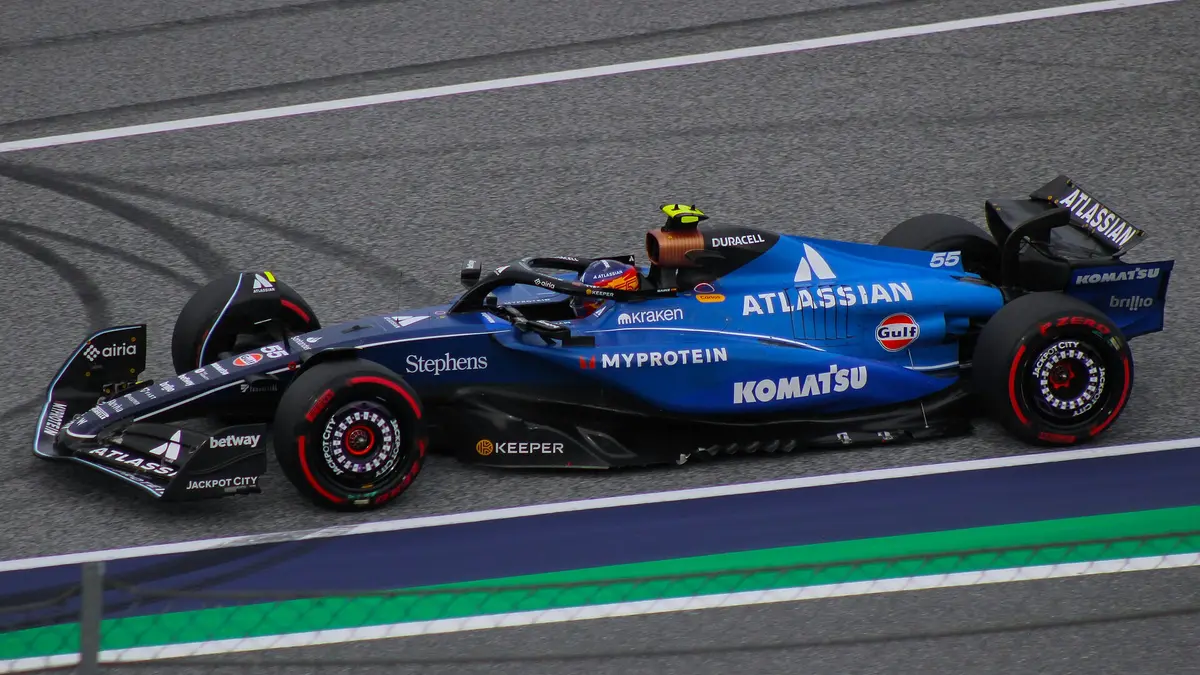
Photo: Lukas Raich / CC-BY-SA-4.0
Nigel Mansell, the 1992 Formula 1 World Champion, has issued one of the most stinging criticisms yet of Formula 1's sweeping 2026 technical regulations, declaring that the overtaking moves produced under the new ruleset are "totally false." The Briton's blunt verdict adds a significant and authoritative voice to a growing chorus of concern from within the motorsport community about whether the new era of active aerodynamics and the so-called 'overtake boost' system is genuinely improving the racing spectacle — or merely manufacturing the appearance of wheel-to-wheel action.
Mansell's comments, reported by MotorSportWeek.com, arrive at a moment when the 2026 regulations are still fresh and under intense scrutiny. For a champion who won his title in one of the most physically demanding and technically complex eras of the sport, his perspective carries considerable weight. When Nigel Mansell calls something "totally false," the paddock listens.
Mansell's 'Totally False' Verdict: What It Means for 2026 F1 Racing
The phrase "totally false" is deliberately provocative, and it gets to the philosophical heart of what Formula 1 is trying to achieve in 2026. The new regulations were designed, in part, to address the decades-long problem of cars being unable to follow each other closely in high-downforce corners due to aerodynamic turbulence — the so-called "dirty air" phenomenon. The 2026 ruleset introduces a radical active aerodynamic system, which allows drivers to reconfigure their car's aerodynamic surfaces in real time, combined with a significant boost in hybrid electrical power deployment that can be triggered in specific overtaking scenarios.
The intent was noble: create a situation where the chasing car is not disadvantaged when running in another car's wake, and provide a meaningful power differential that makes overtaking attempts more viable. However, Mansell's critique cuts directly to the philosophical counter-argument — if a pass is only possible because a system has artificially enhanced one car's straight-line speed or aerodynamic efficiency relative to another in that specific moment, is it truly a reflection of driver skill and racecraft, or is it a scripted event dressed up as competition?
This is not a trivial semantic debate. The appeal of Formula 1's greatest overtaking moments — think Mansell himself around the outside at Budapest in 1997, or the iconic wheel-to-wheel battles that define the sport's history — lies precisely in their authenticity. They were earned through bravery, precise timing, mechanical sympathy, and raw talent. If the 2026 framework removes the organic difficulty of executing a pass, some argue that what remains is theatre rather than sport.
The 2026 Active Aero and Overtake Boost System Under the Microscope
To understand Mansell's frustration, it helps to examine the specific mechanisms of the 2026 regulations that are drawing scrutiny. The new technical framework introduces what the FIA has categorised as an "active aerodynamics" philosophy, giving drivers far greater control over their car's downforce and drag profile depending on whether they are cornering or attacking on a straight. In theory, this means a trailing car can reduce its drag burden when chasing and attempt to close the gap in braking zones or under acceleration.
Layered on top of this is the revised hybrid power unit architecture, which in 2026 features a dramatically enhanced electrical component — accounting for roughly half of the total power output in certain deployment modes. The so-called 'overtake boost' leverages this electrical power reserve to give an attacking driver a temporary performance advantage, broadly analogous to the DRS (Drag Reduction System) that has divided opinion in F1 since its introduction in 2011.
The parallel with DRS is instructive, because DRS itself was always controversial for exactly the reasons Mansell now raises about the 2026 rules. Critics of DRS argued consistently that a system which provided a driver with an automatic straight-line speed advantage on designated DRS zones reduced overtaking to a near-automated highway pass, stripping away the bravery and precision that should define Formula 1 racecraft. The 2026 regulations were, in part, designed to move beyond DRS by creating a more holistic system — yet here is a 1992 World Champion arguing the new solution shares the same fundamental flaw.
Context and Background: A Legacy of Regulation Controversy
It is worth placing Mansell's comments within the broader historical context of Formula 1's perpetual struggle to balance sporting authenticity with commercial entertainment. Regulatory changes aimed at improving the show have always attracted scrutiny, and the most passionate critics tend to be those who competed in eras when overtaking was genuinely difficult and therefore genuinely dramatic when it occurred.
Mansell competed in a generation of Formula 1 defined by extreme mechanical and aerodynamic complexity, where overtaking required either a significant performance delta between cars or an exceptional act of driving bravery. His 1992 championship-winning season with Williams was built on the FW14B — a car so technically dominant that it created its own debate about whether technology was overshadowing driver skill. The irony is not lost: Mansell himself drove a car that prompted questions about technological interference in sport, yet his critique today suggests he draws a clear line between mechanical performance superiority and artificially constructed overtaking opportunities.
The 2026 grid itself is living through one of the most significant structural transformations in Formula 1's modern history. Audi has rebranded from Sauber in their debut season as a full manufacturer entry, partnering Nico Hulkenberg and Gabriel Bortoleto. Cadillac has joined as a brand new 11th team with Sergio Perez and Valtteri Bottas. Lewis Hamilton, now in his second season at Ferrari, is chasing his record-extending eighth world championship in a new regulatory environment. Max Verstappen and Red Bull, with newly promoted Isack Hadjar alongside the four-time champion, are adapting to the power unit and aerodynamic revolution. All of these storylines are unfolding against the backdrop of a regulatory framework that a legend of the sport has now publicly labelled as producing fake racing.
Technical and Strategic Implications of Mansell's Criticism
From a technical standpoint, Mansell's criticism raises important questions for the FIA and Formula 1's commercial rights holder about how the 2026 regulations are calibrated going forward. If multiple respected figures within the sport are voicing concerns about the authenticity of overtaking under the new rules, there is likely to be pressure to review the parameters of the active aero deployment windows and the overtake boost thresholds.
Strategically, the teams themselves are acutely aware of how the new overtaking mechanics affect race strategy. If an overtake can be executed relatively easily with a boost deployment, then the traditional strategic levers — undercut, overcut, tyre compound selection — may need to be amplified in importance to compensate and restore genuine unpredictability to race outcomes. Engineers across the paddock will be studying whether the racing produced under 2026 rules is creating meaningful competition or a series of foregone conclusions once a car enters an overtaking zone with energy reserves intact.
The broader reputational question for Formula 1 is also significant. The sport has invested enormously in its global growth narrative, attracting new audiences particularly in North America. Those new fans are being introduced to Formula 1 through the prism of the 2026 regulations. If the perception takes hold — validated by legends like Mansell — that the overtaking is manufactured, it risks undermining the sporting credibility that underpins the product's long-term appeal.
Key Takeaways
- Nigel Mansell, 1992 F1 World Champion, has labelled overtaking under the 2026 regulations as "totally false," one of the most direct criticisms of the new ruleset from a championship-winning driver.
- The 2026 regulations introduce active aerodynamics and an enhanced hybrid power unit featuring an 'overtake boost' mechanism, which critics argue artificially engineers passing opportunities.
- Mansell's critique echoes long-standing concerns about DRS, suggesting the 2026 system may have replicated rather than resolved the fundamental tension between artificial and authentic racing.
- The criticism arrives during one of Formula 1's most significant structural seasons, with Audi's manufacturer debut, Cadillac's entry as an 11th team, and major driver realignments all unfolding under the new framework.
- The FIA and Formula 1 management face reputational and regulatory pressure to address concerns about overtaking authenticity before they harden into mainstream narrative.
- Teams may increasingly lean on strategic complexity — pit stop timing, tyre management, energy deployment planning — to restore genuine unpredictability if the overtaking mechanics alone are perceived as too prescriptive.
Frequently Asked Questions
What exactly did Nigel Mansell say about the 2026 F1 rules?
Nigel Mansell, the 1992 Formula 1 World Champion, described the overtakes produced under the 2026 regulations as "totally false," according to a report by MotorSportWeek.com. His comments represent one of the most direct and high-profile condemnations of the new regulatory framework from a former world champion. While the full context of his remarks was not expanded in the source report, the phrase "totally false" clearly targets the authenticity of the passing moves the rules are generating.
Why are the 2026 F1 regulations so controversial?
The 2026 F1 regulations represent the most sweeping overhaul of Formula 1's technical rules in a generation, introducing active aerodynamics and a dramatically enhanced hybrid power unit architecture. While designed to improve racing by reducing the aerodynamic disadvantage suffered by trailing cars, critics argue the 'overtake boost' mechanisms artificially engineer passing opportunities rather than allowing them to emerge organically from driver skill and racecraft. This tension between manufactured entertainment and sporting authenticity sits at the core of the controversy.
How does the 2026 overtake boost system work?
The 2026 overtake boost leverages the substantially increased electrical power component of the new hybrid power unit, which contributes approximately half of the car's total power output in certain deployment scenarios. Drivers can deploy this electrical energy reserve to gain a temporary performance advantage when attacking, broadly similar in concept to the DRS system that was used in previous seasons but integrated more deeply into the car's overall aerodynamic and power management philosophy. The system's calibration — how much of an advantage it provides and in which zones — is central to the ongoing debate about whether it enhances or diminishes the quality of racing.
Has Mansell criticised F1 regulations before?
Mansell has been an outspoken commentator on Formula 1 throughout his post-racing career, frequently raising concerns about the direction of the sport's technical and sporting regulations. As a driver who competed in an era defined by raw mechanical performance and high-risk overtaking, he has consistently advocated for a form of racing that rewards driver bravery and skill above all else. His latest comments on the 2026 rules continue a pattern of candid, unfiltered assessment that has made him one of the sport's most recognisable critical voices.
Conclusion
Nigel Mansell's verdict on the 2026 Formula 1 regulations — blunt, unambiguous, and delivered with the authority of a world champion — cuts through the technical complexity of the debate and asks a simple question: is what we are watching real? "Totally false" is not the language of nuanced regulatory critique; it is the language of a driver who believes the soul of competition is being compromised.
Whether or not one agrees with Mansell's assessment, his intervention matters because it amplifies a concern that has been circulating in less prominent forms since the 2026 regulations were first published. The FIA and Formula 1 have an opportunity — and arguably an obligation — to respond to this criticism not defensively, but analytically, with data on whether the overtaking produced in 2026 is genuinely improving the racing product or simply inflating the headline statistics.
For the drivers, engineers, and teams currently navigating the 2026 era — from Hamilton's championship pursuit at Ferrari to Verstappen's defence with Red Bull, from Audi's manufacturer ambitions to Cadillac's debut season — the regulations are the shared canvas on which their season is being painted. If that canvas is perceived as artificial by the legends who came before them, the sport's leadership must take that seriously. The authenticity of Formula 1's competition is not a secondary concern. It is the entire point.
In this article
Written with AI assistance. How this site works
 Canadian Grand Prix