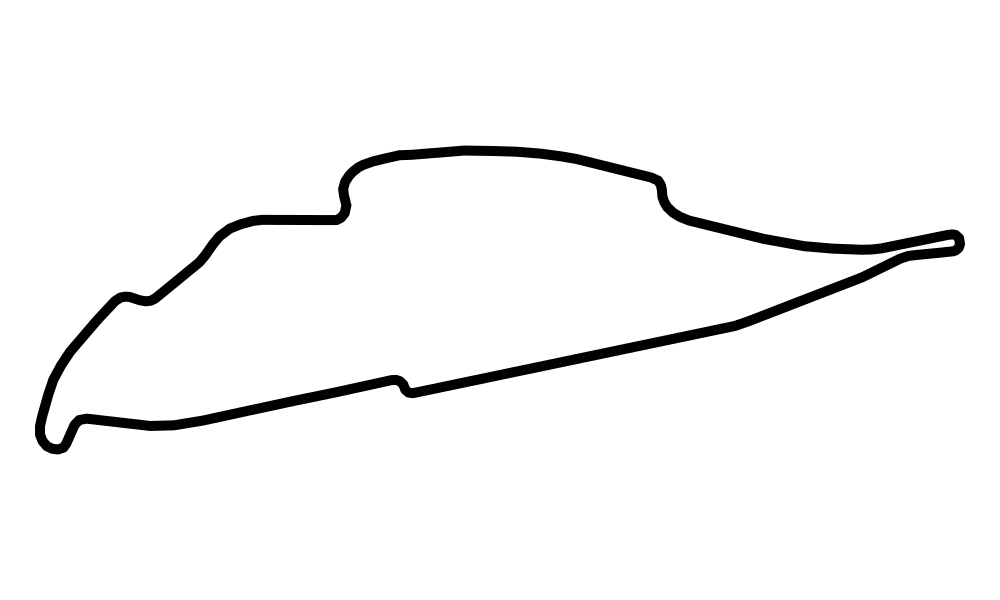
Miami F1 Tyre Behaviour: Pirelli's 2026 Circuit Analysis
Pirelli's 2026 Miami circuit analysis reveals predictable tyre behaviour and low degradation despite the street-style layout — reshaping race strategy for every team.
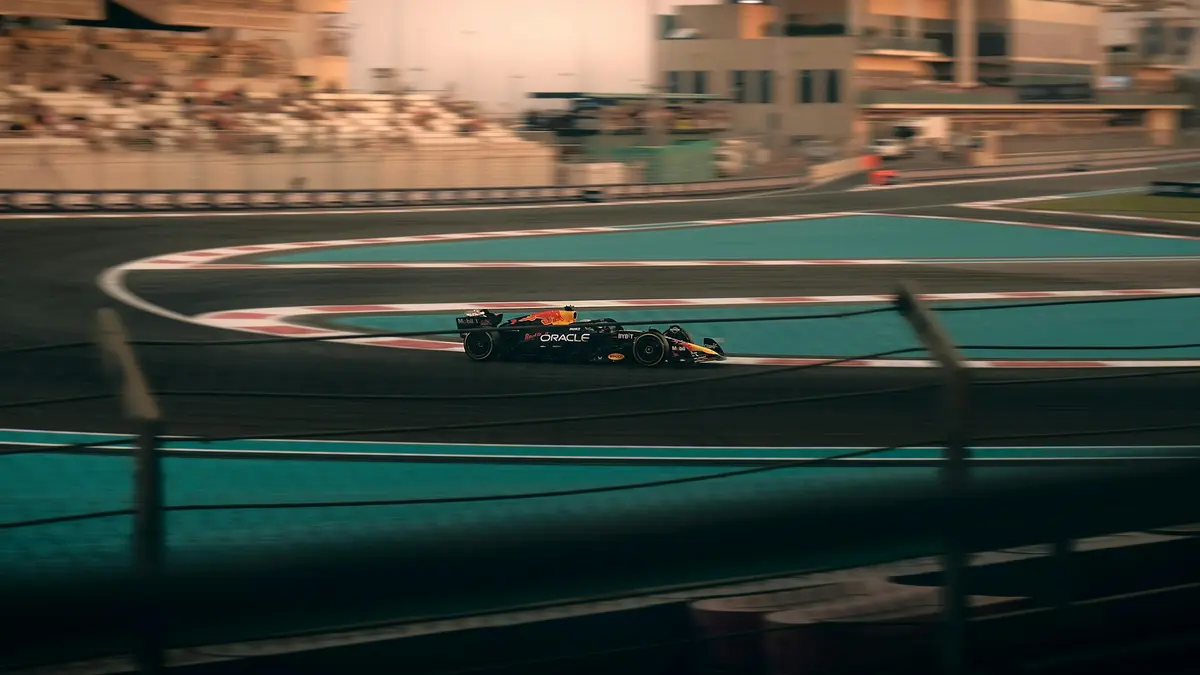
When Pirelli publishes a circuit analysis ahead of a Formula 1 race weekend, the paddock pays close attention. The Italian tyre manufacturer's assessment of the Miami International Autodrome for the 2026 season paints a fascinating picture: despite its street-style configuration — complete with tight chicanes, abrupt transitions, and concrete barriers lining much of the layout — the circuit produces surprisingly predictable tyre behaviour and notably limited degradation. That combination of characteristics makes Miami a genuinely unique proposition on the 2026 F1 calendar, and understanding Miami F1 tyre behaviour is essential for grasping how race strategy will unfold under the sport's sweeping new technical regulations.
In an era defined by the 2026 active aerodynamics package, revised power unit architecture, and the overtake boost system reshaping on-track dynamics across every circuit, the relative stability of tyre behaviour at Miami takes on even greater strategic significance. Teams must reconcile a predictable tyre window with an unpredictable aerodynamic environment — a challenge that is both intellectually demanding and tactically rewarding.
Pirelli's Miami Circuit Assessment: What the Data Shows
Pirelli's analysis identifies the Miami International Autodrome as a circuit that, on the surface, carries all the hallmarks of a tyre-punishing street track. The barriers are close, the kerbs are aggressive in places, and the surface — while not as abrasive as some traditional venues — presents its own set of challenges. Yet the conclusion Pirelli draws is counterintuitive: Miami F1 tyre behaviour trends toward predictability rather than volatility.
What drives this? Several interrelated factors come into play. First, the circuit's layout features a relatively modest number of high-energy, lateral-load corners compared to venues like Suzuka or Silverstone. The slow-to-medium speed nature of many Miami corners means peak tyre stress is distributed more gradually, rather than arriving in sudden, destructive spikes. This allows the tyre's thermal core to build consistently rather than oscillating between overheating and cooling — a pattern that typically accelerates surface wear and unpredictable graining.
Second, the smooth, semi-permanent surface that characterises purpose-built street circuits like Miami tends to produce lower abrasion levels than traditional racing circuits with rough asphalt. Lower abrasion directly translates to reduced physical tread wear, which in turn reduces the severity of degradation across a stint. This is a nuanced distinction: drivers may still experience tyre performance drop-off as grip levels reduce, but the rate and predictability of that drop-off is far more manageable.
Limited Degradation and Its Strategic Implications
Limited degradation at Miami means that a driver on a used set of tyres does not fall off a cliff in the final laps of a stint the way they might at a circuit like Barcelona or Bahrain under high temperatures. The lap time delta between a fresh tyre and an aged one, while still present, compresses — meaning the reward for an early pit stop is reduced, and the penalty for staying out longer is less severe.
In practical strategy terms, this creates a genuine dilemma for every team's race engineer. An aggressive one-stop strategy becomes viable — potentially even optimal — because the tyres simply do not degrade fast enough to force a second visit to the pit lane. Conversely, a two-stop strategy offers the benefit of track position flexibility and fresher rubber for the attack phase, but risks surrendering net time through additional stationary time. With the 2026 overtake boost system providing drivers with additional deployable energy for passing moves, the value of track position at Miami may be slightly diminished compared to previous seasons, nudging strategists back toward considering tyre longevity over pit cycle aggression.
Street-Style Configuration vs. Street-Level Behaviour
One of the most analytically interesting aspects of Pirelli's Miami assessment is the explicit contrast it draws between the circuit's appearance and its behaviour. A street-style configuration typically signals danger to tyre engineers: unpredictable surface evolution, high barrier proximity encouraging conservative driving that keeps tyres in narrow temperature windows, and the ever-present risk of debris contaminating the racing line. Miami ticks several of those visual boxes.
And yet, the Miami International Autodrome was designed from the outset with racing performance in mind, built around the Hard Rock Stadium complex as a semi-permanent facility rather than a truly improvised street circuit in the Monaco or Baku mould. That purpose-built DNA expresses itself in the tyre data: the surface evolution across a race weekend at Miami tends to follow a predictable arc, with rubber laid down during practice sessions producing a cleaner, grippier racing line that degrades tyres more evenly as the weekend progresses. By race day, the track is in a well-understood state — a luxury teams simply do not have at traditional street venues.
Thermal Management in the Miami Heat
Any discussion of Miami F1 tyre behaviour must account for the ambient conditions that define the event. Miami's spring weather delivers high humidity alongside elevated ambient temperatures, and the combination of track surface temperature and air temperature means tyre thermal management remains a live concern even when degradation rates are low. Overheating the surface layer — particularly on the soft compound — can produce blistering rather than the gradual wear that characterises a well-managed stint. Pirelli's compounds are selected accordingly, and the predictability of the thermal window at Miami is partly a function of careful compound specification choices.
For the 2026 field, the new power unit regulations — incorporating greater electrical energy deployment — introduce an additional variable into tyre management. The overtake boost system, for instance, delivers a surge of power that loads the rear tyres more aggressively during deployment phases. In low-degradation environments like Miami, drivers may feel emboldened to use the boost system more freely, knowing the tyre penalty is limited — but repeated aggressive deployment cycles can still accumulate thermal stress that undermines the otherwise benign degradation profile the circuit naturally offers.
Context: Miami on the 2026 F1 Calendar
The Miami Grand Prix has established itself as one of the marquee events on the modern Formula 1 calendar since its introduction, combining a vibrant cultural backdrop with a genuinely competitive racing format. The circuit's design philosophy — maximising overtaking opportunities while retaining the visual drama of a street-adjacent layout — has made it a favourite with broadcasters and fans alike. The addition of the Sprint format in certain recent seasons has added further complexity to tyre strategy across the full race weekend, though the specific format applicable to the 2026 Miami round is governed by the FIA's calendar arrangements for this season.
From a competitive standpoint, Miami has historically rewarded teams with strong straight-line efficiency and effective tyre management over single-lap pace. The 2026 regulations have reshuffled the competitive order across the grid, with Cadillac making their Formula 1 debut and Audi completing their first full campaign under the new identity. For new constructors managing limited data sets on tyre behaviour at specific circuits, Pirelli's public circuit analyses provide an invaluable baseline — and Miami's predictable profile arguably lowers the information barrier for newcomers relative to more volatile circuits.
Established front-runners at McLaren, Ferrari, Red Bull, and Mercedes will use the known tyre behaviour window to fine-tune their 2026 active aerodynamics settings for maximum race pace, knowing that tyre risk is not the primary variable to manage. For teams like Aston Martin, Alpine, and Racing Bulls, the predictable tyre window offers an opportunity to execute clean, well-rehearsed strategy without being ambushed by unexpected degradation.
Technical and Strategic Implications for Race Day
Pirelli's characterisation of Miami as a circuit with predictable tyre behaviour and limited degradation carries several concrete technical implications for how teams will approach race day in 2026.
Compound selection will likely cluster around the medium and hard compounds for the race, with the soft potentially reserved for qualifying where its single-lap advantage is greatest. The limited degradation profile means the medium compound can go longer than at more aggressive venues, supporting a viable one-stop window.
Undercut and overcut potential is reduced at Miami relative to high-degradation circuits. When fresh tyres do not deliver a dramatically faster lap time relative to used rubber, the undercut — pitting first to gain track position through pace advantage — loses some of its potency. Teams may find the overcut, staying out longer to benefit from rivals' pit stop loss, equally valid.
Safety Car influence remains the wildcard. At any circuit with limited degradation, the Virtual Safety Car or full Safety Car effectively eliminates the tyre argument for pit strategy and reduces the race to a track position exercise. Teams will keep a safety car trigger as a primary contingency in their pre-race models.
- Miami International Autodrome produces predictable, low-degradation tyre behaviour despite its street-style configuration.
- The circuit's purpose-built surface evolves consistently across the race weekend, unlike improvised street circuits.
- Limited degradation favours one-stop strategies but compresses the tyre performance delta, reducing undercut value.
- High ambient temperatures and humidity require careful thermal management even when physical wear rates are low.
- The 2026 overtake boost system adds a new tyre loading variable that drivers must manage within Miami's otherwise benign degradation window.
- New constructors (Cadillac, Audi) benefit from Pirelli's predictable Miami profile as they build circuit-specific data sets in 2026.
Frequently Asked Questions
Why does Miami produce predictable tyre behaviour despite being a street-style circuit?
The Miami International Autodrome was purpose-built as a semi-permanent facility rather than a temporary street circuit, giving it a more consistent and predictable surface evolution profile. Its layout features relatively few extreme high-lateral-load corners, which limits the peak stress spikes that typically cause erratic tyre behaviour. Pirelli's analysis confirms this makes Miami's tyre window more manageable than its street-circuit classification might suggest.
How does limited tyre degradation affect F1 race strategy at Miami?
Low degradation compresses the lap time delta between fresh and used tyres, making one-stop strategies viable and reducing the reward for aggressive early pit stops. The undercut loses potency because a driver on fresh rubber does not immediately gap their competitors on older tyres. Teams must balance stint length optimisation against the track position risks posed by Safety Car periods.
How do the 2026 F1 regulations interact with Miami's tyre characteristics?
The 2026 active aerodynamics package and overtake boost system introduce new rear tyre loading patterns, particularly during high-energy deployment phases. While Miami's low-degradation profile gives drivers more freedom to use boost aggressively, repeated deployment cycles can accumulate thermal stress. Teams will model their boost usage strategy alongside tyre thermal limits to avoid compromising the otherwise benign degradation window.
Which tyre compounds are most likely to feature at the Miami Grand Prix?
Based on the low-degradation characteristics identified in Pirelli's analysis, the medium and hard compounds are expected to be the primary race compounds, supporting longer stints and one-stop viability. The soft compound is likely to be prioritised for qualifying, where its single-lap performance advantage is most valuable. Pirelli's specific compound nomination for each event is confirmed separately by the manufacturer ahead of each race weekend.
Conclusion
Pirelli's assessment of Miami F1 tyre behaviour at the Miami International Autodrome delivers a clear and strategically significant message: this is a circuit where tyre management, while never trivial in Formula 1, operates within a well-defined and predictable window. Limited degradation and consistent thermal behaviour mean race strategy will be shaped more by track position dynamics, safety car timing, and the 2026 overtake boost system than by tyre cliff management.
For teams navigating the complexities of the 2026 season — new power units, active aerodynamics, a restructured grid, and two brand-new constructors in Cadillac and Audi — Miami offers a degree of strategic clarity that more volatile circuits do not. The ability to model tyre behaviour with confidence frees engineers to focus their attention on aerodynamic setup optimisation and energy deployment calibration under the new regulations.
Ultimately, it is a reminder that in Formula 1, circuit knowledge is a form of competitive advantage. Pirelli's detailed circuit analyses level the information playing field — but it is the teams who best translate that predictability into race-day execution who will leave Miami with the points.
In this article
Written with AI assistance. How this site works
 Canadian Grand Prix