James Vowles Reveals Why He Chose Williams Over Three F1 Rivals
James Vowles has revealed he turned down three rival F1 teams before choosing Williams — a decision that looks increasingly prescient as the 2026 era unfolds.
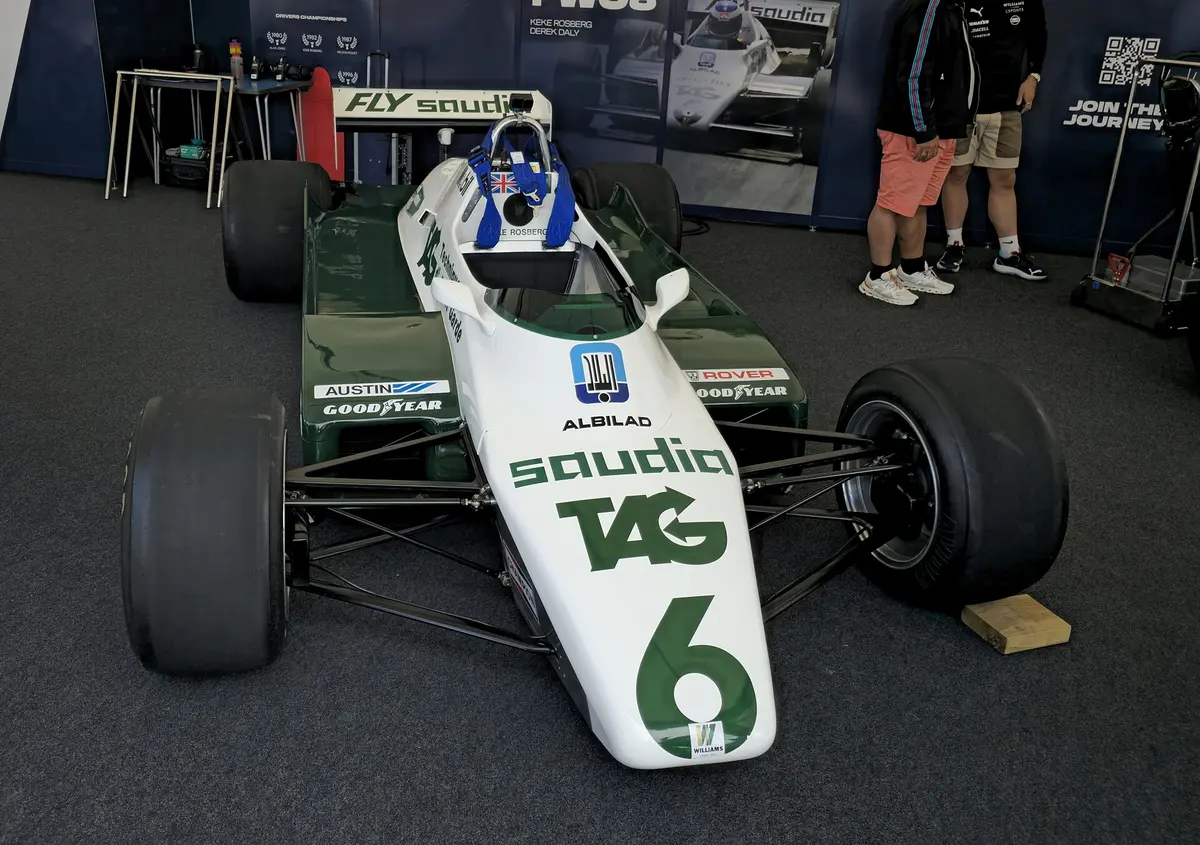
Photo: Calreyn88 / CC-BY-SA-4.0
In one of the most revealing leadership admissions in recent Formula 1 history, James Vowles has opened up about the pivotal career decision that brought him to Williams Racing — confirming that he turned down as many as three rival F1 teams to take the Grove-based outfit's top job. The disclosure adds remarkable depth to an already compelling narrative: a highly regarded strategist, long considered one of the sharpest minds at Mercedes, walked away from arguably safer, more immediately competitive opportunities to take on what many observers considered the sport's most daunting rebuild project. Understanding why Vowles chose Williams tells us as much about the man himself as it does about the broader ambitions of a team determined to return to the front of the Formula 1 grid.
As Williams navigates the transformative 2026 regulation era — arguably the most seismic technical reset in a generation — Vowles's decision to plant his flag at Grove rather than with an established frontrunner looks increasingly like a calculated, long-term bet on legacy rather than short-term glory. The question that grips the paddock is simple: what did he see in Williams that three other teams could not offer?
The Decision That Defined a Career: Vowles and the Williams Opportunity
Three Rivals, One Choice
The revelation that Vowles spurned as many as three other F1 teams before committing to Williams is significant on multiple levels. It dispels any notion that his appointment was a default option or a lack of alternatives. Vowles was clearly a sought-after commodity in the team principal marketplace — a reflection of the reputation he had built during his long tenure at Mercedes, where he served as Chief Strategist and played an integral role in one of the most dominant eras the sport has ever seen. His fingerprints were on countless race wins and championship campaigns across the hybrid era, giving him a strategic pedigree that very few individuals in the paddock could rival.
The fact that rival teams were competing for his signature underlines something important: team principal appointments at the highest level of motorsport are rarely straightforward. They require a candidate who can bridge the technical, commercial, and human elements of running an F1 outfit simultaneously. Vowles, who had spent years operating at the intersection of all three disciplines at Brackley, clearly fit that profile in the eyes of multiple organisations. Yet he chose Williams — and his explanation of that choice reveals a leader drawn not to comfort, but to challenge and the opportunity to leave an enduring imprint on the sport.
The Lure of Building Something Lasting
At the heart of Vowles's reasoning, as he has described it, appears to be a fundamental desire to build rather than merely maintain. Joining a team that is already competitive carries its own pressures, but the ceiling of achievement is, in many ways, pre-defined. You are inheriting infrastructure, culture, and expectations already baked into the organisation. Williams, by contrast, presented Vowles with a blank canvas of sorts — a historic team with the raw material of a great legacy, the backing of Dorilton Capital, and a genuine need for transformational leadership rather than incremental management.
This is an important distinction for anyone trying to understand the Vowles philosophy. The Williams name carries enormous weight in Formula 1 — nine Constructors' Championships between 1980 and 1997, making them the second-most successful constructor in the sport's history at that time, and a roll call of legendary drivers who competed in Grove-built machinery. That heritage is not a burden to Vowles; it appears to be the very fuel that drives his ambition. Rebuilding a team of that stature, returning it to genuine competitiveness, represents a professional achievement that no amount of championship victories with an already-dominant outfit could replicate.
Context and Background: Who Is James Vowles?
From Brackley to Grove
James Vowles joined Williams as Team Principal in February 2023, becoming only the third Team Principal in the team's history at that point — a remarkable statistic that underlines just how stable and tradition-bound Williams's leadership structure had always been. He arrived from Mercedes, where he had spent the majority of his career developing into one of the most respected strategic minds in the paddock. His appointment filled the vacancy left by Jost Capito and immediately sent a signal to the wider F1 community: Williams under Dorilton Capital was serious about its rebuilding mission.
At Mercedes, Vowles had operated in an environment of near-constant success. The Silver Arrows dominated the turbo-hybrid era with an intensity that few teams in any sport have matched across any comparable period. Working within that kind of winning culture inevitably shapes a person — but it also, for someone of Vowles's evident ambition, may eventually create a hunger for something more personally definitive. Winning as part of a machine that was already finely calibrated is one thing. Designing and building that machine from the ground up is quite another.
The timing of his move was also noteworthy. Vowles arrived at Williams at a point when the team was clearly in transition — competitive on some weekends, but nowhere near the points-scoring consistency required to climb the Constructors' standings with any reliability. The infrastructure gap between Williams and the frontrunners was significant, and everyone in the paddock knew it. Vowles knew it too — and chose Williams anyway. That context makes his recent admission about turning down three rival teams all the more striking.
Williams in the 2026 Era
The 2026 season represents a genuine inflection point for Williams and, in many respects, a vindication of the timeline Vowles has been building toward since his arrival. The sweeping regulation changes — encompassing radical aerodynamic philosophy shifts, new power unit regulations, and the introduction of active aero concepts — have levelled the playing field in ways that give every team a theoretical shot at redefining their competitive position. For a team like Williams, which has been investing heavily in personnel, infrastructure, and culture under Vowles's stewardship, this reset is precisely the kind of opportunity that a long-term builder craves.
It is worth noting that Vowles has never framed his Williams project as a quick fix. From his earliest public statements after arriving at Grove, he consistently spoke in multi-year timelines and structural change rather than immediate results. That approach requires patience from ownership, belief from drivers and staff, and — perhaps most critically — a leader willing to absorb short-term criticism in service of long-term progress. The 2026 regulations represent the first major external catalyst that could accelerate that timeline in Williams's favour.
Strategic and Leadership Implications for 2026
Vowles's admission that he turned down three other teams is not merely an interesting biographical footnote — it carries real strategic implications for how the paddock views Williams's trajectory. When a highly credentialed operator actively chooses a rebuilding project over ostensibly more attractive alternatives, it sends a message to potential partners, sponsors, and future recruits. It says: this team has something worth believing in.
In the hyper-competitive world of F1 talent acquisition — where engineers, aerodynamicists, and senior technical staff are constantly being courted by multiple teams — the identity and reputation of the team principal matters enormously. Vowles's profile, and the story of his deliberate choice to back Williams, functions as a recruitment narrative in its own right. If a strategist of his standing chose Grove over three rivals, prospective employees and commercial partners are inevitably prompted to ask why — and the answer, invariably, points back to long-term potential and genuine ambition.
As the 2026 season unfolds under entirely new technical regulations, the degree to which Williams has closed the gap to the midfield and beyond will serve as the most concrete measure of whether Vowles's instincts were correct. The foundations he has laid since February 2023 are now being tested at the highest level — and the entire paddock is watching.
Key Takeaways
- Vowles turned down three rival F1 teams before accepting the Williams Team Principal role, confirming he was a highly sought-after leadership candidate.
- He joined Williams in February 2023, becoming only the third Team Principal in the team's history at that time.
- His decision was driven by the desire to build, not merely manage — Williams offered a transformational challenge that established frontrunners could not.
- Williams's nine Constructors' Championships (1980–1997) represent a historic legacy that Vowles has cited as central to the appeal of the Grove project.
- The 2026 regulation reset is the first major external opportunity to accelerate Williams's rebuild and validate Vowles's long-term vision.
- The admission strengthens Williams's standing as a genuine long-term project, with implications for recruitment, sponsorship, and paddock perception in the current season.
Frequently Asked Questions
When did James Vowles become Williams Team Principal?
James Vowles officially joined Williams Racing as Team Principal on 20 February 2023, following the departure of Jost Capito. His appointment made him only the third Team Principal in Williams's history at that point — a reflection of just how rare leadership changes have been at the Grove-based outfit.
Why did James Vowles choose Williams over other F1 teams?
According to Vowles himself, the decision centred on the unique opportunity Williams presented to build something genuinely transformational rather than maintain an already-competitive operation. The historic weight of the Williams name — nine Constructors' Championships — and the challenge of returning the team to the front of the grid appear to have been defining factors in his reasoning.
How many F1 teams did James Vowles turn down before choosing Williams?
Vowles has described turning down as many as three rival F1 teams before accepting the Williams role, as reported by Motorsport Week. This confirms that he was actively pursued by multiple organisations and had genuine alternatives available to him before committing to the Grove project.
What is James Vowles's background before Williams?
Before joining Williams, Vowles spent his career at Mercedes, where he rose to become the team's Chief Strategist. He was a key figure in Mercedes's era of dominance in the turbo-hybrid regulations and earned a reputation as one of the most technically and strategically astute minds in the paddock before making the move to a team principal role.
Conclusion: A Bet on Legacy in the 2026 Era
The story of James Vowles choosing Williams over three rival F1 teams is, at its core, a story about what motivates elite leaders at the very highest level of sport. It is not always the path of least resistance or the route most likely to deliver immediate silverware. Sometimes, the most compelling choice is the one that carries the greatest risk — and the greatest potential for a lasting legacy.
As Williams operates through the upheaval of the 2026 regulation era, competing against established powers like McLaren, Ferrari, Red Bull, and Mercedes alongside new forces such as Audi and the Cadillac operation, Vowles's decision to back Grove over more conventionally attractive alternatives will continue to define the narrative around the team. The foundations have been laid. The regulations have reset. And the man who turned down three F1 rivals to build something truly enduring is now in the middle of the most important season of his team principal career.
Whether Williams emerges from 2026 as a genuine midfield force — or something even more — will tell us everything about whether Vowles's instincts were right. But the fact that he made the choice he did, in full knowledge of his alternatives, speaks volumes about the clarity of his vision from the very beginning.
Written with AI assistance. How this site works
 Canadian Grand Prix