Honda Lowers Aston Martin Expectations for Miami F1 2026
Honda's Trackside General Manager Shintaro Orihara has lowered expectations for immediate Aston Martin progress as F1 returns in Miami in 2026.
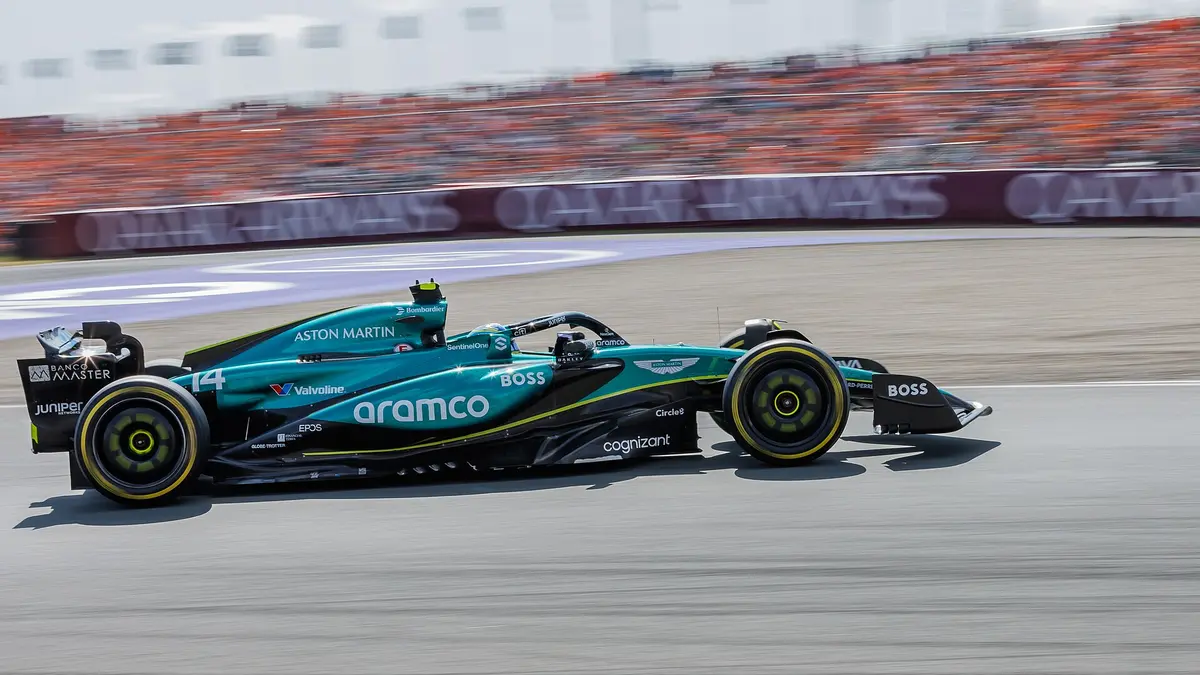
Honda's Trackside General Manager Shintaro Orihara has urged caution ahead of Formula 1's return in Miami, explicitly lowering expectations for any immediate signs of progress from Aston Martin. The measured remarks from Honda's senior technical representative signal that the Silverstone-based outfit and its power unit partner are taking a grounded, realistic approach to one of the most scrutinised stretches of the 2026 F1 season — a campaign already defined by sweeping regulation changes, intense inter-team competition, and enormous pressure on every constructor to find performance gains at speed. Orihara's comments serve as a rare moment of public honesty in a sport that frequently trades in carefully managed optimism, and they carry significant weight given Honda's central role in Aston Martin's technical architecture.
For Aston Martin and Honda alike, the Miami Grand Prix weekend represents a high-profile stage on which progress — or the lack of it — will be observed closely by fans, analysts, and rival teams. With Orihara choosing transparency over spin, the question now is what lies beneath those tempered expectations and what it means for the partnership's trajectory through the remainder of 2026.
What Orihara's Comments Really Mean for Aston Martin in Miami
When a senior Honda representative publicly lowers expectations ahead of a race weekend, it is not an act of pessimism — it is a form of technical communication. Shintaro Orihara's decision to temper enthusiasm for Aston Martin's performance in Miami suggests that the team is managing a complex set of challenges that are unlikely to yield visible, lap-time-translatable results in the short term. In the context of the 2026 season, this is both understandable and significant.
The 2026 regulations represent the most comprehensive overhaul Formula 1 has seen in years. New power unit specifications, revised aerodynamic philosophies including active aero systems and the reintroduction of an overtake boost mechanism, alongside substantially altered car architecture, mean that every team is effectively operating with machinery that requires weeks — if not months — of correlation work between simulation data and on-track behaviour. For a partnership like Honda and Aston Martin, where the integration of power unit and chassis development is a precise and iterative process, translating upgrade packages into actual performance at the circuit is never a guaranteed or linear progression.
Orihara's caution likely reflects one or more of the following realities: the team may be introducing developments in Miami that require several race weekends of data collection before their benefit becomes measurable; the power unit and chassis may still be in a correlation phase where engineers are reconciling wind tunnel and CFD outputs with real-world performance; or broader competitiveness concerns in a midfield that has grown increasingly compressed under the new 2026 technical framework. None of these scenarios is alarming in isolation — but together, they paint a picture of a team that is being methodical rather than reactive.
Honda and Aston Martin: A Partnership Under the Microscope
The Honda–Aston Martin technical partnership entered 2026 as one of the sport's most closely watched collaborations. Honda, supplying power units to Aston Martin as their works partner, carries the legacy of its previous Formula 1 eras — including its successful partnership with Red Bull Racing — and the immense expectation that its involvement at the highest level should deliver championship-calibre performance. Aston Martin, for their part, have invested heavily in their Silverstone campus, building one of the most advanced F1 facilities in the paddock and assembling a technical team capable of fighting at the front of the grid.
Fernando Alonso continues to represent the team's most experienced campaigner. The two-time World Champion's ability to extract performance from machinery that is not necessarily at its peak is well-documented and remains one of Aston Martin's most valuable assets during periods where the car is not delivering its full theoretical potential. Lance Stroll, as the team's second driver, provides a consistent data point across race weekends. Together, they give Aston Martin a dual-driver feedback loop that is crucial when a team is trying to understand and resolve complex technical issues.
For Honda, the pressure is equally real. As a manufacturer competing in the new 2026 power unit formula — which places renewed emphasis on the electrical deployment systems and the interplay between the internal combustion engine and energy recovery — any gap in performance relative to rivals like Mercedes, Ferrari, or Renault is immediately quantifiable in lap time. Orihara's measured communication style suggests Honda is prioritising process and long-term development philosophy over short-term optics.
The 2026 Miami Grand Prix Context: Why This Weekend Matters
Miami has established itself as one of Formula 1's most commercially vibrant and technically demanding events on the calendar. The Hard Rock Stadium circuit, with its mix of high-speed sections, tight chicanes, and a layout that has historically placed significant demands on power unit deployment and tyre management, provides a comprehensive test of a car's all-round competence. Under the 2026 technical regulations, the active aerodynamic systems — which allow drivers to modulate drag and downforce levels more dynamically than previous DRS configurations — add another layer of strategic and technical complexity that teams are still fully calibrating.
The fact that Honda's Trackside General Manager felt it necessary to issue a public statement managing expectations ahead of Miami underlines how significant the weekend is perceived to be within the Aston Martin camp. In a field where McLaren's Lando Norris and Oscar Piastri have established themselves as frontrunners, where Lewis Hamilton continues to bed into life at Ferrari in his second season with the Scuderia, and where Max Verstappen and Red Bull remain formidable competitors, any team outside the top tier must carefully manage both internal and external narratives around progress.
Aston Martin's position in the competitive order has made Honda's statement particularly resonant. The team arrived in 2026 with high hopes that the new regulations could serve as a leveller — an opportunity to close the gap to the front-running constructors with a combination of superior facilities, a world-class technical team, and a competitive Honda power unit. That the expectation dial is now being reset ahead of Miami is a signal that the levelling effect of the new rules has not yet manifested in the way Aston Martin might have hoped.
Technical and Strategic Implications for the Remainder of 2026
Honda's measured stance carries clear implications for how Aston Martin will approach the upcoming race weekends. Rather than chasing single-race performance with aggressive setup changes, the team appears to be on a longer development arc — one that prioritises understanding their 2026 package comprehensively before committing to major aerodynamic or mechanical direction changes. This is strategically sound: teams that change too much too quickly in response to disappointing results often end up losing their development thread entirely.
The 2026 technical regulations also introduce new dynamics around token-based development restrictions and the timing of upgrade packages, meaning that Aston Martin and Honda must be highly deliberate about when and where they deploy performance-critical updates. A cautious statement from Orihara may also be a strategic signal to internal stakeholders — engineers, performance staff, and leadership — that the process must be trusted even when results are not immediately forthcoming.
For the broader Honda–Aston Martin trajectory, the remainder of the 2026 season will be a defining test. The mid-season development race, traditionally accelerating after the summer break, will be the real proving ground for whether the foundations being laid now — in circuits like Miami — translate into genuine competitiveness in the second half of the year.
Key Takeaways
- Honda Trackside General Manager Shintaro Orihara has publicly lowered expectations for immediate Aston Martin progress in Miami, signalling a methodical, long-term development approach.
- The 2026 season's sweeping regulation changes — including active aero systems and new power unit specifications — have created a complex performance correlation environment for all teams.
- Aston Martin's partnership with Honda as works power unit supplier is one of the sport's most scrutinised collaborations, carrying high expectations from both sides.
- Fernando Alonso's experience and ability to extract performance from a car not at peak level remains Aston Martin's key on-track asset during this development phase.
- The Miami Grand Prix weekend is a high-profile test of Aston Martin's 2026 package under demanding circuit conditions and intense competitive scrutiny.
- A patient, data-led development philosophy appears to be the chosen path for Honda and Aston Martin, prioritising long-term gains over short-term results.
Frequently Asked Questions
Why has Honda lowered expectations for Aston Martin at the Miami Grand Prix?
Honda's Trackside General Manager Shintaro Orihara issued a cautious public statement ahead of Formula 1's return in Miami, indicating that immediate performance progress should not be expected from Aston Martin. This reflects the complex development challenges inherent in the 2026 season's new technical regulations, where correlating simulation data with real-world performance takes time. It is a transparent, measured approach designed to set realistic benchmarks for the team's development arc.
What role does Honda play in Aston Martin's 2026 Formula 1 campaign?
Honda serves as Aston Martin's works power unit partner in 2026, supplying engines and working in close technical collaboration with the Silverstone-based constructor. The partnership is one of the most high-profile in the paddock, with Honda's involvement spanning both power unit hardware and the integrated development philosophy that shapes how Aston Martin approaches performance gains. Honda's trackside representation, led by figures like Orihara, plays a direct role in managing the team's technical direction at race weekends.
How do the 2026 F1 regulations affect Aston Martin's ability to find performance quickly?
The 2026 Formula 1 technical regulations introduced substantial changes, including active aerodynamic systems, new power unit specifications with revised energy recovery architecture, and an overtake boost mechanism. These changes require teams to conduct extensive correlation work between wind tunnel, CFD, and on-track data before upgrade packages yield clear performance benefits. For a team like Aston Martin, which is working to close the gap to the front-runners, this makes rapid, visible progress more challenging in the early part of the season.
What are Aston Martin's realistic prospects for the second half of the 2026 season?
While Honda's statement cautions against expecting immediate progress in Miami, the team's long-term prospects remain tied to the quality of their Silverstone technical facility, their driver lineup of Fernando Alonso and Lance Stroll, and the continued development of the Honda power unit. Teams that invest in deep technical understanding in the early part of a new regulatory cycle often find that their work pays dividends in the second half of the season, when the development race accelerates and accumulated data translates into meaningful performance steps.
Conclusion
Shintaro Orihara's candid assessment ahead of the Miami Grand Prix weekend is more than a headline — it is a window into the complex realities of competing in the most technically demanding iteration of Formula 1 in a generation. The 2026 season has reset the competitive order, challenged every team's development model, and demanded a level of patience and precision that does not always sit comfortably with the sport's demand for instant results.
For Aston Martin and Honda, the path forward in 2026 is one of careful, deliberate iteration. The foundations being laid at circuits like Miami — through data collection, power unit integration work, and aerodynamic correlation — are the building blocks of future competitiveness. Orihara's decision to lower expectations publicly is, paradoxically, a mark of confidence: confidence that the team's process is sound, and that honesty now serves the partnership better than unfulfilled optimism. The Miami Grand Prix weekend will not define Aston Martin's 2026 season, but how the team responds to its challenges will say a great deal about their long-term potential under the new era of Formula 1.
In this article
Written with AI assistance. How this site works
 Canadian Grand Prix