Franco Colapinto Argentina Show Run: F1 Returns to 600,000 Fans
Franco Colapinto made history as Formula 1 returned to Argentina via a stunning show run witnessed by an estimated 600,000 fans in an unprecedented display of national passion.
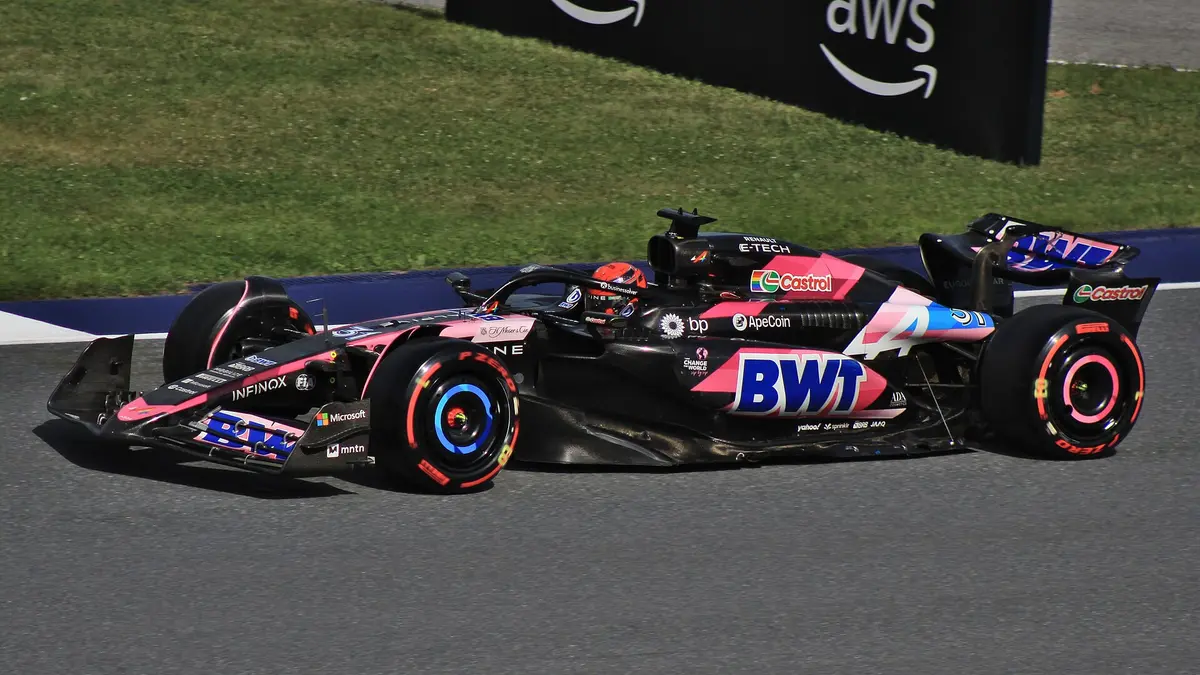
Photo: Lukas Raich / CC-BY-SA-4.0
On a Sunday that will be remembered in Argentine sporting history, the unmistakable sound of a Formula 1 engine echoed across Buenos Aires as Franco Colapinto completed a landmark show run in front of an estimated crowd of 600,000 people. The event marked the return of Formula 1 to Argentina — a nation that had been absent from the sport's calendar for decades — and it did so with a roar that matched the sheer scale of the occasion. For Colapinto, Alpine's current driver and the first Argentine on the F1 grid in many years, this was more than a demonstration run. It was a homecoming of historic proportions, a moment that fused national pride, sporting legacy, and the relentless global growth of Formula 1 into a single, unforgettable spectacle.
The crowd figure alone — 600,000 — places this event among the most attended single-day motorsport gatherings in living memory, anywhere in the world. It underscores not only the passion Argentina holds for its sporting heroes, but the enormous commercial and cultural opportunity that a return of F1 to South America's southern cone represents. This was no quiet test or promotional drive in an empty carpark. This was Formula 1 at its most visceral and its most human.
Franco Colapinto Makes History in Buenos Aires
Franco Colapinto's show run in Argentina was described by observers as historic, and by any reasonable measure that description is entirely justified. Argentina has not been part of the Formula 1 World Championship calendar for an extended period, and the nation's last era of meaningful F1 representation traces back to the legendary careers of drivers from a very different generation of the sport. Colapinto's emergence on the 2026 grid with Alpine has reignited a national conversation about Argentina's place in the upper echelons of motorsport, and Sunday's show run crystallised that sentiment in spectacular fashion.
Colapinto currently races alongside Pierre Gasly at Alpine, a team that has undergone significant restructuring and renewed ambition heading into the 2026 regulatory era. The new technical regulations — featuring the sport's most radical aerodynamic overhaul in years, including the reintroduction of active aerodynamics and the so-called overtake boost system — have reset the competitive order across the entire grid. In that context, Colapinto's presence on the 2026 grid carries additional weight: he is not merely a promising talent making up the numbers, but a driver competing under a genuinely open regulatory framework where the traditional pecking order is far from guaranteed.
For the 600,000 fans who gathered to witness the show run, the technical details of the 2026 regulations were likely secondary to the raw, emotional experience of seeing an Argentine driver pilot an F1 car on home soil. The sound of the power unit — a defining sensory marker of Formula 1's identity — reportedly moved many in the crowd. There is something primally compelling about the noise of an F1 car at full throttle, and in a country starved of that experience for so long, its return carried an amplified emotional charge.
Why 600,000 Attendees Is a Watershed Moment for F1 in South America
The attendance figure of 600,000 is extraordinary by any global sporting benchmark. To place it in context: major F1 Grands Prix regularly draw weekend crowds in the range of 200,000 to 400,000 across three days of racing, practice, and qualifying. A single-day show run attracting 600,000 spectators is, by those standards, a staggering demonstration of latent demand.
Formula 1's commercial strategy under Liberty Media has placed heavy emphasis on expanding the sport's footprint into new and returning markets, with events in Las Vegas, Miami, and the ongoing investment in existing circuits all reflecting that philosophy. The Argentine show run, and the unprecedented public response it generated, will inevitably be scrutinised by F1's commercial rights holders as evidence that a return of the Argentine Grand Prix to the World Championship calendar deserves serious consideration.
South America as a whole retains a deeply passionate motorsport culture. Brazil's São Paulo Grand Prix at Interlagos remains one of the most atmospheric events on the current calendar, consistently producing scenes of raw fan emotion that few other venues can match. An Argentine Grand Prix — potentially at a revamped Buenos Aires circuit — would add a second South American crown jewel to the championship, creating a genuine regional cluster of events that would resonate powerfully with a continental fanbase of hundreds of millions.
The Colapinto Effect: A Nation Reconnects With Formula 1
It would be difficult to overstate the role that Colapinto himself has played in reigniting Argentine interest in Formula 1. The sport operates, in many markets, through the lens of a national hero: a local driver who provides a relatable focal point through which millions of fans engage with what can otherwise seem like a distant, ultra-elite world. Argentina experienced this dynamic acutely during the careers of its previous F1 standard-bearers, and it is experiencing it again now with Colapinto.
His promotion to Alpine for the 2026 season brought him to a team with genuine resources and a competitive development programme. Racing alongside the experienced Pierre Gasly, Colapinto has both a strong benchmark to measure himself against and a teammate capable of helping develop the car effectively. The 2026 season, with its new regulations levelling the playing field to a degree rarely seen in modern F1, represents an exceptional opportunity for a driver of Colapinto's profile to make a significant impression on the World Championship standings.
The Buenos Aires show run, in this context, is not merely a promotional event. It is a statement of intent — from F1, from Alpine, and from Colapinto himself — that Argentina is once again a country to be taken seriously in the global narrative of the sport.
Technical and Strategic Implications of the Argentine Show Run
From a purely technical perspective, show runs of this nature serve multiple functions beyond simple crowd engagement. They allow teams to gather data on car behaviour in varied environmental and surface conditions, test logistics in unfamiliar settings, and assess the operational demands of running an F1 car in a non-standard location. For Alpine's engineering team, the Buenos Aires event will have yielded useful real-world data points, even if the primary purpose was clearly promotional and cultural.
The strategic implications, however, are perhaps more significant. By aligning themselves so publicly with the Argentine market — through Colapinto and through this show run — Alpine have positioned themselves as the team most associated with a country that now has a very real prospect of rejoining the F1 calendar. Should an Argentine Grand Prix materialise in the coming seasons, Alpine's brand recognition in that market would already be firmly established, providing a meaningful commercial advantage in terms of local sponsorship, fan engagement, and media exposure.
More broadly, the event reinforces a pattern that has been visible across the 2026 season so far: Formula 1 is operating with an acute awareness of its own cultural power and is actively deploying that power to expand its global audience. The new regulations, designed to produce closer racing and more overtaking opportunities through the active aero and overtake boost systems, are intended to make the on-track product more compelling. Events like the Argentine show run ensure that the off-track narrative remains equally powerful.
Key Takeaways
- Franco Colapinto completed a historic Formula 1 show run in Argentina on Sunday, marking the sport's return to the country and drawing an estimated 600,000 spectators.
- The 600,000 attendance figure is one of the largest ever recorded for a single-day motorsport event and reflects enormous latent demand for F1 in Argentina.
- Colapinto, currently racing for Alpine alongside Pierre Gasly in the 2026 season, is the first Argentine driver on the F1 grid in many years and has single-handedly reignited national interest in the sport.
- The show run is likely to intensify commercial and political discussions around a potential return of the Argentine Grand Prix to the Formula 1 World Championship calendar.
- Alpine stand to benefit significantly from their association with Colapinto and the Argentine market, particularly if a Grand Prix is added to the calendar in the near future.
- The event underscores Formula 1's broader 2026 strategy of leveraging national hero narratives and cultural moments to grow its global audience in parallel with the new regulatory era.
Frequently Asked Questions
What was Franco Colapinto's Argentina show run?
Franco Colapinto performed a Formula 1 show run in Argentina on Sunday, becoming the catalyst for the sport's return to his home nation. The event drew an estimated crowd of 600,000 people, making it one of the most attended single-day motorsport spectacles in recent memory. It was described as historic, as it marked F1's return to Argentina after a prolonged absence from the country.
How many people attended Franco Colapinto's F1 show run in Argentina?
According to reports from the event, the crowd was estimated at 600,000 people. This figure is exceptional even by the standards of full Formula 1 Grand Prix weekends, which typically draw between 200,000 and 400,000 fans across multiple days. The turnout is widely seen as a powerful indicator of Argentina's appetite for a return of F1 racing to its calendar.
Which team does Franco Colapinto drive for in the 2026 F1 season?
Franco Colapinto races for Alpine in the 2026 Formula 1 World Championship, partnering with Pierre Gasly. Alpine is one of several teams navigating the entirely new 2026 technical regulations, which introduced active aerodynamics and an overtake boost system as part of the sport's most comprehensive rule overhaul in years. Colapinto's place on the grid has been a significant factor in the revival of Argentine interest in Formula 1.
Could Argentina get a Formula 1 Grand Prix back on the calendar?
The show run and its extraordinary 600,000-strong attendance will inevitably fuel discussions between Formula 1's commercial rights holders and Argentine authorities about restoring the Argentine Grand Prix to the World Championship calendar. While no official announcement has been made, the scale of public interest demonstrated on Sunday represents a compelling commercial case. Formula 1 under Liberty Media has shown a consistent appetite for expanding into markets where passionate fanbases exist.
Conclusion
Franco Colapinto's Argentina show run was, by any measure, a watershed moment — for the driver, for Alpine, for Formula 1, and for an entire nation that has waited a long time to hear that sound again. The estimated 600,000 fans who gathered to witness the event did not merely attend a promotional demonstration. They participated in a piece of sporting history, one that may well come to be seen as the catalyst for Argentina's formal return to the Formula 1 World Championship calendar.
In the broader context of the 2026 season — a year already defined by radical new regulations, a reshuffled grid featuring Audi's competitive debut and Cadillac's arrival as the eleventh team, and a genuinely open championship fight — the Buenos Aires show run stands as a reminder of what Formula 1 can mean beyond lap times and constructors' points. It is a sport capable of stopping a city in its tracks, of drawing 600,000 people into the streets, and of making a young driver from Argentina feel the full, overwhelming weight of a nation's hope and pride.
Colapinto carries that weight into every race of the 2026 season. On Sunday, for one extraordinary afternoon in Buenos Aires, the whole of Argentina carried it with him.
In this article
Written with AI assistance. How this site works
 Canadian Grand Prix