Ferrari Macarena Wing Returns in Monza Filming Day Test
Ferrari's 'Macarena' wing has made its return, confirmed by footage from a filming day test session at Monza, raising major technical and regulatory questions for 2026.
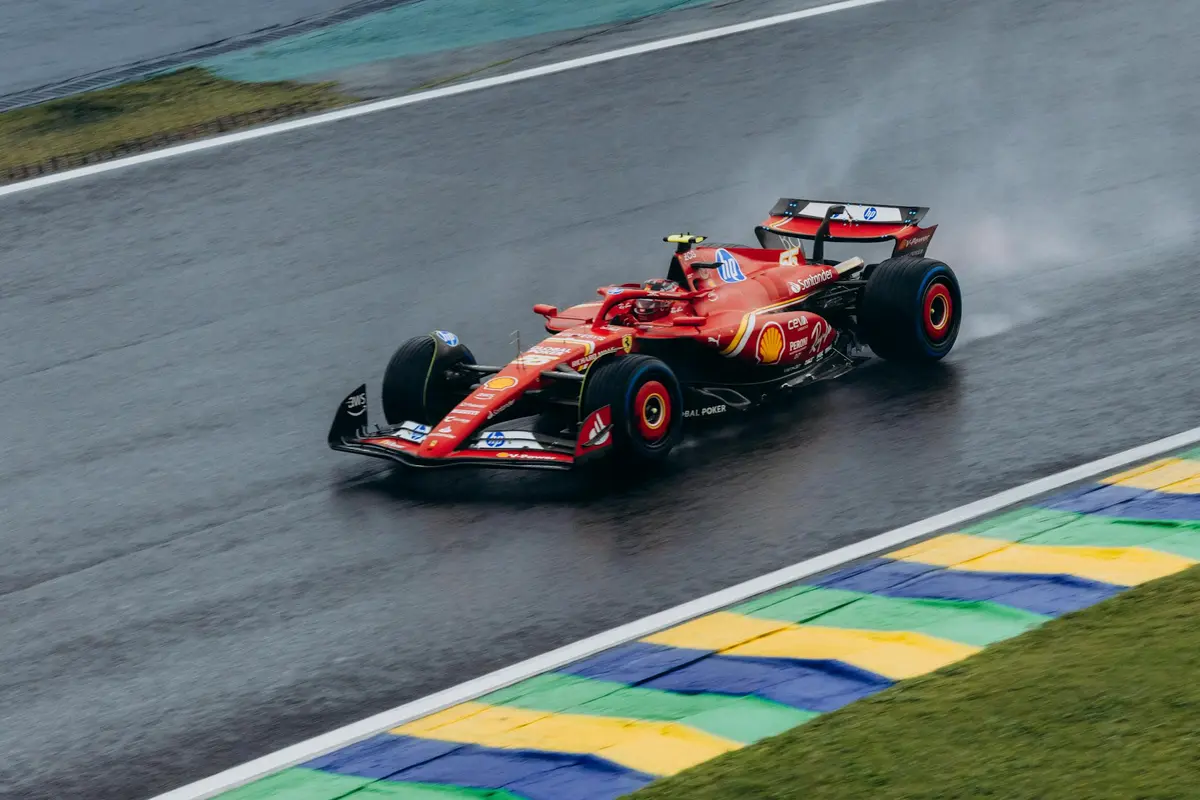
Ferrari has confirmed the return of one of Formula 1's most talked-about aerodynamic innovations: the so-called 'Macarena' wing, which was spotted and verified through footage captured during a filming day test session at the iconic Autodromo Nazionale Monza. The online footage left little room for doubt, showing Ferrari's distinctive rear-wing concept in action on one of the sport's fastest and most celebrated circuits. In a 2026 season already defined by sweeping regulatory overhaul — including the introduction of active aerodynamics and the overtake boost system — Ferrari's decision to revisit and refine this unorthodox wing design signals that the Scuderia is leaving no stone unturned in its quest for a competitive edge.
The 'Macarena' wing, so named for the animated, side-to-side motion it exhibits under specific aerodynamic conditions, has previously generated considerable debate within the paddock and among technical observers. Its reappearance at Monza — a low-downforce, high-speed venue where aerodynamic efficiency is paramount — carries significant implications for Ferrari's 2026 development direction and raises important questions about how the concept interacts with the sport's new technical framework.
What Is the Ferrari 'Macarena' Wing?
The 'Macarena' wing is Ferrari's internally developed rear-wing concept that exhibits a distinctive oscillating or flexing behaviour when subjected to high-speed airflow. The name is a tongue-in-cheek reference to the iconic 1990s dance move, reflecting the lateral, rhythmic motion observers noted in the wing's elements during on-track running. Unlike a conventional rigid rear wing, the 'Macarena' design appears to exploit the natural flex characteristics of composite materials to achieve aerodynamic benefits that a static wing simply cannot replicate.
In broad terms, a wing that can passively adapt its shape under load offers the tantalising possibility of delivering high downforce at lower speeds — aiding mechanical grip and cornering stability — while simultaneously reducing drag on the straights as aerodynamic forces cause the wing to flex and shed resistance. This passive adaptation, if legal and effective, represents a meaningful performance gain without requiring the driver to make an active adjustment, functioning almost as a mechanical precursor to the active aerodynamic systems now mandated under the 2026 regulations.
Why Monza? The Strategic Logic of the Venue Choice
Monza is no coincidental choice for such a test. The Temple of Speed, as it is affectionately known, demands the lowest downforce configurations of any circuit on the Formula 1 calendar. Teams arrive at Monza stripping their cars of aerodynamic appendages wherever possible, prioritising straight-line speed over cornering grip. The long Kemmel-style straights — including the famous Rettifilo Tribune straight and the run from Lesmo to the Ascari chicanes — punish any aerodynamic inefficiency brutally.
By testing the 'Macarena' wing at Monza during a filming day, Ferrari's engineers gain access to precisely the kind of high-speed, sustained airflow loading that would most clearly reveal the wing's flex characteristics and their aerodynamic consequences. Filming days, which are governed by strict FIA regulations limiting the kilometres teams can cover and requiring the use of demonstration or approved tyres in some configurations, still provide invaluable real-world data that no wind tunnel or computational fluid dynamics simulation can fully replicate.
The choice of a filming day, rather than a conventional test session, also suggests Ferrari may be keen to evaluate this concept in a relatively low-profile setting before committing to it for a race weekend, giving the aerodynamicists time to correlate their wind tunnel and CFD models with actual on-track behaviour at a circuit where aero loads are uniquely challenging.
Technical and Regulatory Implications in 2026
Active Aero and the 'Macarena' in Context
The 2026 season introduced the most significant technical overhaul the sport has seen in several years, with active aerodynamics now forming a central pillar of the new regulations. Teams are permitted to actively alter the configuration of certain aerodynamic surfaces to manage drag and downforce — a principle not entirely dissimilar to what the 'Macarena' wing attempts to achieve passively. This parallel is not lost on technical observers.
There is a meaningful distinction, however, between a wing that is actively controlled by the driver or a systems computer — as the 2026 regulations permit — and one that passively flexes in response to aerodynamic loading. Passive flex-wing designs occupy a complex regulatory grey area that has historically drawn the attention of the FIA's technical department. The sport's technical regulations require that aerodynamic components remain 'rigidly secured' to the bodywork and do not 'deflect' under normal aerodynamic loads beyond defined parameters. Whether the 'Macarena' wing's behaviour falls within or outside those parameters is a question that will inevitably attract scrutiny.
Ferrari's decision to test the concept openly — in footage that subsequently appeared online — suggests the team may be either confident in the legality of the design or deliberately transparent in order to pre-empt any allegation of concealment. Either interpretation speaks to the high stakes surrounding this development.
Performance Potential on High-Speed Circuits
If the 'Macarena' wing proves both legal and effective, the performance implications for Ferrari in 2026 could be substantial. On circuits where drag reduction is a primary concern — Monza, Baku, and the high-speed sectors of circuits like Silverstone and Spa-Francorchamps — a rear wing that passively sheds drag while maintaining adequate downforce in slower sections would offer a tangible lap-time benefit. Given the intensely competitive nature of the 2026 grid, where McLaren, Red Bull, and Mercedes are all developing their own aerodynamic philosophies under the new ruleset, any incremental gain Ferrari can secure is meaningful.
Lewis Hamilton, now in his second year with Ferrari following his high-profile switch ahead of the 2025 season, brings with him a wealth of experience in exploiting aerodynamic characteristics across a variety of circuits. His feedback — alongside that of Charles Leclerc, one of the most technically articulate drivers on the current grid — will be invaluable to Ferrari's engineers as they evaluate whether the 'Macarena' wing's real-world performance matches its theoretical promise.
The Broader Development Race in 2026
Ferrari's willingness to revisit and refine the 'Macarena' wing concept is best understood within the broader context of the 2026 development race. The introduction of new power unit regulations, alongside the active aerodynamics framework and the overtake boost system — which allows drivers to deploy an additional power increment to facilitate overtaking — has effectively reset the competitive order. Teams that were dominant under the previous regulations cannot assume their advantages will carry over, and those who were previously mid-field contenders have seized the opportunity to close the gap.
For Ferrari, the stakes are particularly high. Charles Leclerc has come agonisingly close to title contention in recent seasons, and the arrival of Hamilton — a seven-time world champion with an unparalleled understanding of what a championship-winning car requires — has raised expectations at Maranello to an extraordinary level. The pressure to deliver a genuinely competitive package in 2026 is immense, and unconventional aerodynamic concepts like the 'Macarena' wing represent exactly the kind of lateral thinking that can separate a front-running team from a championship-winning one.
Monza's role as a testing ground here is symbolically apt as well. It was at Monza that Ferrari has historically celebrated some of its most emotionally charged victories, and the tifosi — the passionate, devoted fans who pack the grandstands at the Italian Grand Prix each year — demand nothing less than a Ferrari capable of fighting for wins. Testing an innovative aerodynamic concept at their spiritual home reflects the seriousness with which the team is approaching its 2026 campaign.
Key Takeaways
- Ferrari has confirmed the return of its 'Macarena' wing concept, with footage from a filming day test session at Monza providing definitive visual evidence.
- The 'Macarena' wing is characterised by its oscillating flex behaviour under high-speed aerodynamic loading, potentially offering passive drag reduction benefits on power circuits.
- Monza was selected as the test venue due to its uniquely demanding high-speed aerodynamic environment, making it the ideal circuit to evaluate the wing's flex characteristics.
- The concept occupies a potentially complex regulatory space, with passive flex-wing designs historically subject to close FIA scrutiny under the technical regulations.
- In the context of the 2026 active aerodynamics regulations, the 'Macarena' wing's passive approach offers a philosophically distinct but thematically related performance strategy.
- The development underscores Ferrari's commitment to unconventional technical exploration as the team pushes to establish itself as a genuine 2026 championship contender.
Frequently Asked Questions
What is the Ferrari 'Macarena' wing and why is it called that?
The Ferrari 'Macarena' wing is a rear-wing design that exhibits a distinctive oscillating or flexing motion when subjected to high-speed aerodynamic forces. It takes its name from the famous 1990s dance, referencing the rhythmic lateral movement observers noticed in the wing's elements during on-track running. The concept is designed to passively adapt its aerodynamic profile under load, potentially reducing drag at high speeds while maintaining downforce at lower speeds.
Is the Ferrari 'Macarena' wing legal under F1 regulations?
The legality of passive flex-wing designs is one of Formula 1's most persistent and complex regulatory debates. The FIA's technical regulations require aerodynamic components to remain rigidly secured and not deflect beyond defined tolerances under aerodynamic loading. Whether the 'Macarena' wing's behaviour falls within those parameters has not been publicly confirmed, and its reappearance in 2026 testing is likely to attract renewed regulatory scrutiny from the FIA and rival teams.
Why did Ferrari test the 'Macarena' wing at Monza specifically?
Monza is Formula 1's quintessential high-speed, low-downforce circuit, demanding the most aerodynamically efficient — and least drag-inducing — configurations of any venue on the calendar. Testing a wing concept designed to reduce drag under high aerodynamic loading at Monza gives Ferrari the most revealing possible data on how the wing behaves in the conditions where it would theoretically deliver the greatest performance benefit. The circuit's long, fast straights subject the wing to sustained, intense aerodynamic forces ideal for evaluating flex characteristics.
How does the 'Macarena' wing relate to 2026's active aerodynamics regulations?
The 2026 technical regulations introduced active aerodynamics, allowing teams to electronically or mechanically alter wing configurations to manage drag and downforce. The 'Macarena' wing attempts to achieve a somewhat analogous outcome through passive means — exploiting the natural flex of composite materials rather than an active control system. While the two approaches are technically distinct, they share the underlying performance objective of optimising the drag-downforce balance across a lap, making the 'Macarena' concept an intriguing counterpart to the active systems now at the heart of 2026 F1 car design.
Conclusion
Ferrari's confirmation of the 'Macarena' wing's return — documented by footage from a filming day test at Monza — is one of the more technically fascinating stories to emerge from the 2026 Formula 1 season so far. It speaks to the relentless innovation that defines the sport's elite teams and to Ferrari's determination to explore every available avenue in pursuit of performance. Whether the concept ultimately proves legal, effective, and race-worthy remains to be seen, but its appearance at Monza is a clear signal that the Scuderia is thinking creatively under the new regulatory framework.
In a season already defined by radical technical change — active aerodynamics, new power unit architectures, the overtake boost system — the 'Macarena' wing serves as a reminder that some of the most intriguing ideas in Formula 1 engineering are rooted not in digital control systems but in the fundamental physics of how materials behave under load. For Ferrari fans and technical enthusiasts alike, this is a development well worth watching as the 2026 campaign unfolds.
Written with AI assistance. How this site works
 Canadian Grand Prix