F1 2026 Closing Speed Rules: Why Suzuka Changed Everything
A Suzuka near-miss between Bearman and Colapinto triggered last week's F1 2026 closing speed regulation changes. Here's why it matters.
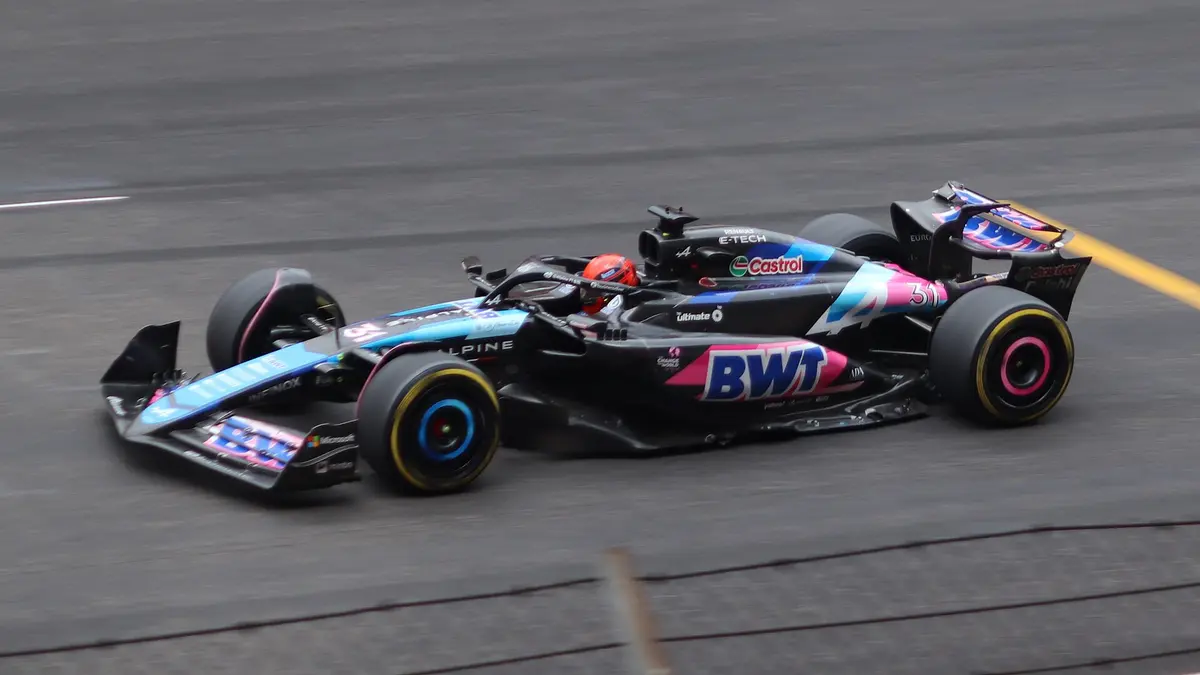
Photo: Liauzh / CC-BY-SA-4.0
When Formula 1's rule-makers sit down to address safety concerns, the catalyst is rarely abstract. It is almost always a specific, visceral moment on track that transforms a theoretical risk into an undeniable regulatory priority. In 2026, that moment came at Suzuka, where a frightening near-miss between TGR Haas's Oliver Bearman and Alpine's Franco Colapinto thrust the issue of F1 2026 closing speed dangers into the sharpest possible focus — and directly influenced a package of regulation changes agreed by the sport's stakeholders last week.
The incident, which saw Bearman forced to take evasive action to avoid Colapinto's Alpine before spinning into a heavy barrier impact, encapsulated everything that makes closing speeds one of the most technically and humanly complex safety challenges in modern Formula 1. Understanding why these speeds occur, what the new regulations target, and what the implications are for the 2026 grid requires a deep dive into the physics, the politics, and the precedents that brought the sport to this point.
The Suzuka Incident: A Catalyst for Change
The near-miss at Suzuka between Oliver Bearman and Franco Colapinto is the kind of event that Formula 1's safety community studies intensively. Closing speed incidents — where one car approaches another at a velocity far in excess of what either driver expects — are particularly dangerous because they compress reaction time to an almost impossible minimum. A driver travelling at reduced speed, perhaps on a slow lap, an out-lap on fresh tyres, or while nursing a damaged car, can appear from virtually nowhere in the mirrors of the approaching driver, who may be at near-maximum velocity.
Bearman's evasive action at Suzuka was instinctive and, by all accounts, swift — but the subsequent spin and heavy impact with the barrier underscored that even a successful avoidance manoeuvre carries its own serious risks. The forces involved in a high-speed barrier strike are not trivial, and the 2026 car structures, while benefiting from years of progressive Halo and chassis development, are not indestructible.
What made the Suzuka moment particularly resonant for the FIA and Formula 1's sporting bodies was its clarity. This was not a marginal case, not an incident that required slow-motion replays to decode. It was an unambiguous illustration of a systemic problem — and it arrived at a time when the sport was already engaged in broader discussions about the 2026 regulatory framework.
Understanding Closing Speeds in the 2026 Regulatory Context
Why 2026 Rules Create Specific Closing Speed Risks
The 2026 Formula 1 regulations represent the most sweeping technical overhaul the sport has seen in years, introducing a fundamentally new power unit architecture with a significantly increased electrical component, as well as radical aerodynamic philosophy built around active aero systems and the so-called "overtake boost" mechanism. While these changes are designed to produce closer racing and more sustainable power units, they carry an inherent and much-discussed side effect: dramatic speed differentials between cars in different modes.
The F1 2026 closing speed problem is, in large part, a consequence of the new active aerodynamic systems. Cars running in low-drag qualifying trim or deploying maximum electrical overtake boost can achieve speeds that diverge sharply from cars in high-downforce defensive configurations or those conserving battery charge. When a car in full attack mode catches a car in a radically different aero state, the closing speed can be extraordinary — far beyond what would have been typical under the previous ground-effect regulations.
Additionally, the increased electrical power deployment in 2026 means that straightline speed differentials between a fully charged, fully boosted car and one that is managing its energy carefully can be larger than at any previous point in the hybrid era. This is not a flaw so much as a feature — the overtake boost is specifically designed to aid passing — but its interaction with track positioning, yellow flag zones, and pit lane exits creates genuine hazards that the sport has had to confront.
What the Agreed Regulatory Package Targets
The package of changes agreed last week represents a considered, multi-pronged response to the closing speed challenge. While the full technical detail of the agreed measures extends beyond what has been confirmed in the source reporting, the direction of travel is clear: the sport's governing bodies sought to establish boundaries around the conditions under which maximum speed differentials can occur, particularly in proximity to slower-moving traffic, yellow flag zones, and circuit sections with limited visibility.
Key areas under examination include the management of active aero deployment in specific track zones, protocols governing overtake boost activation relative to yellow flag or safety car conditions, and the broader question of how cars communicate their speed state to drivers in close proximity. The Suzuka incident, in which Bearman had little or no meaningful warning of Colapinto's reduced-speed Alpine, highlighted that driver awareness systems — both onboard and through marshalling — need to evolve alongside the performance envelope of the cars themselves.
Context and Background: Closing Speed as a Recurring Challenge
The problem of dangerous closing speeds is far from new to Formula 1, but the specific character of the risk evolves with each regulatory era. In the turbo hybrid era that preceded 2026, the primary closing speed concerns centred on energy deployment zones, DRS activation, and the interaction between cars exiting pit lanes and those at full race pace on the main straight. Safety Car restart procedures were refined repeatedly to address the risk of the pack bunching and then accelerating into variable-speed traffic.
The introduction of the Halo in 2018 dramatically changed the injury profile of cockpit-level impacts, but it did not address the kinetic energy problem inherent in very high closing-speed collisions. Subsequent seasons saw continued refinement of Virtual Safety Car protocols, delta time management systems, and increasingly sophisticated track-side marshalling with improved communication to race control.
The 2026 era arrives with additional complexity because the performance gap between a car in maximum attack mode and one in a passive or charging state is, by the design philosophy of the regulations, intended to be larger than before. The overtake boost mechanism — which allows a following car to deploy additional electrical power to facilitate passing — was explicitly conceived as a tool for bridging performance gaps on track. Its interaction with the F1 2026 closing speed problem is therefore not incidental but structural, and the regulatory response must be correspondingly sophisticated.
Bearman, in his second season with TGR Haas after graduating from the Ferrari Driver Academy pathway, and Colapinto, who joined Alpine for the 2025 season and continues in his role in 2026, are both drivers on steep learning curves with the new machinery. That two relatively inexperienced drivers were involved in the Suzuka incident is not coincidental — navigating the speed differentials of the 2026 cars places particular demands on situational awareness that experience helps to calibrate.
Technical and Strategic Implications for Teams
For the ten constructors — and the new entrants Cadillac, in their debut season — the regulatory changes to closing speed management carry direct strategic consequences. Teams have invested heavily in modelling the deployment windows of their overtake boost systems, optimising the precise moments on each circuit when maximum electrical attack delivers the greatest performance advantage. Any restrictions on that deployment window, particularly in proximity to flagged zones or slow-moving traffic, will require recalibration of race strategy models and driver briefings.
The active aero systems that are central to the 2026 technical regulations are extraordinarily complex, and their interaction with speed differential protocols will require new software logic — governing when a car transitions from low-drag to high-downforce configuration must now account not only for lap time optimisation but for the proximity and speed of surrounding traffic. This is a non-trivial engineering challenge, and one that will likely differentiate teams in terms of implementation quality over the course of the season.
From a driver coaching perspective, the Suzuka incident also reinforces the importance of updated awareness protocols for all drivers regarding the visibility and communication challenges specific to the 2026 car package. Mirrors, onboard warning systems, and radio communication from race engineers about traffic ahead all become more critical when closing speeds can be extreme.
Key Takeaways
- A dangerous near-miss between Oliver Bearman and Franco Colapinto at Suzuka directly catalysed last week's agreement on F1 2026 closing speed regulation changes.
- The 2026 active aero systems and overtake boost mechanism create structurally larger speed differentials between cars than previous regulatory eras, amplifying closing speed risks.
- The agreed package of regulatory changes targets the conditions under which maximum speed differentials can occur, particularly near slower-moving traffic, yellow flag zones, and low-visibility circuit sections.
- Teams will need to recalibrate race strategy models and active aero deployment logic to comply with the new protocols, creating a genuine engineering and strategic challenge.
- The incident underscores that safety regulation in Formula 1 must evolve in parallel with performance regulation — not as an afterthought, but as a co-designed element of any major rules change.
- Driver awareness and onboard communication systems will likely receive increased scrutiny and development investment following the Suzuka incident.
Frequently Asked Questions
What caused the dangerous closing speed incident at Suzuka in 2026?
The incident at Suzuka involved Oliver Bearman of TGR Haas being forced to take evasive action to avoid Franco Colapinto's Alpine, which was travelling at a significantly lower speed. The closing speed — the rate at which Bearman's car was approaching Colapinto's — was high enough to leave Bearman with minimal reaction time. The evasive action caused Bearman to spin and hit the barrier heavily.
Why are closing speeds a particular concern under the 2026 F1 regulations?
The 2026 regulations introduce active aerodynamic systems and an overtake boost mechanism that can create very large speed differentials between cars in different performance modes. A car deploying maximum electrical boost in low-drag configuration can close on a car in a passive, high-downforce, or energy-conserving state at speeds that exceed those typical of previous regulatory eras. This structural feature of the new rules requires specific safety protocols to manage safely.
What changes were agreed in the 2026 regulatory package regarding closing speeds?
A package of regulation changes was agreed last week with the specific aim of addressing the closing speed problem highlighted at Suzuka. The measures focus on getting a grip on the conditions under which dangerously high closing velocities can occur, particularly in relation to slower-moving traffic and flag zones. Full technical details of all measures are still emerging, but the direction is clearly toward restricting maximum-attack deployment in proximity to at-risk situations.
Who are Oliver Bearman and Franco Colapinto on the 2026 grid?
Oliver Bearman races for TGR Haas in 2026 alongside Esteban Ocon, having graduated through the Ferrari Driver Academy pathway. Franco Colapinto races for Alpine in 2026 alongside Pierre Gasly, having joined the team for the 2025 season. Both are among the younger drivers on the current grid, making their experience of the 2026 car's performance envelope an ongoing developmental process.
Conclusion
The regulation changes agreed in response to the Suzuka closing speed incident represent Formula 1 at something close to its regulatory best: a real-world safety event prompting a swift, considered, and technically grounded response. The sport has always evolved through a combination of ambition and consequence — the ambition to produce faster, more spectacular racing, and the consequential responsibility to ensure that speed is managed within boundaries that protect everyone on and near the circuit.
The F1 2026 closing speed challenge is inseparable from the broader character of the new regulations. Active aero, overtake boost, and the dramatic energy deployment architecture of the 2026 power units are features, not bugs — they are the tools through which Formula 1 intends to produce the closest, most exciting racing in a generation. But those tools carry responsibilities, and the Suzuka incident between Bearman and Colapinto was an unambiguous reminder that performance and safety must be engineered together, not in sequence.
As teams digest the agreed regulatory package and begin integrating its requirements into their strategy models and software architectures, the wider lesson of Suzuka should remain in sharp focus: in an era of unprecedented speed differentials, awareness, communication, and proportionate regulation are not constraints on great racing — they are its foundation.
In this article
Written with AI assistance. How this site works
 Canadian Grand Prix