Bearman 'He Saw Me Coming' Quote Sparks F1 Driver Safety Debate
Oliver Bearman's accusation — 'He saw me coming and moved' — has thrust driver safety to the forefront of F1's ongoing 2026 rules discussions.
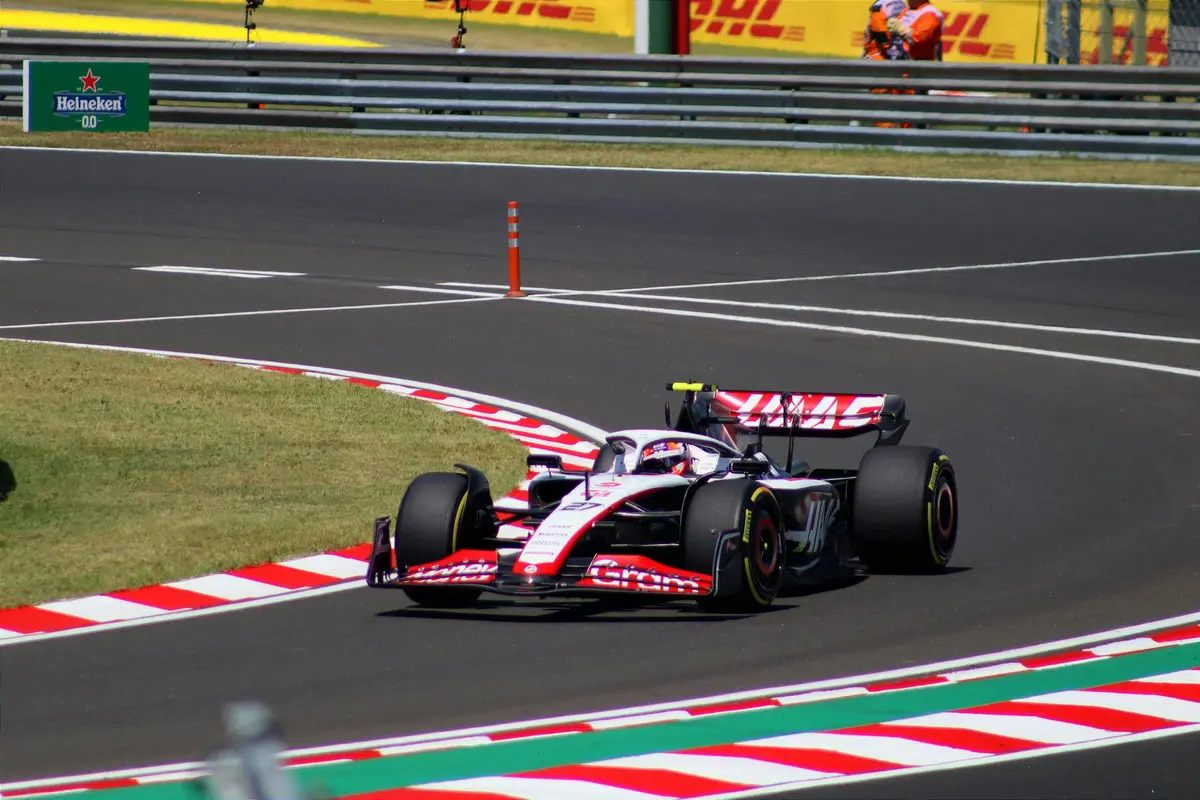
Oliver Bearman's pointed post-incident remark — "He saw me coming and moved" — has ignited a fierce conversation about driver safety in Formula 1, arriving at a particularly sensitive moment as stakeholders continue active discussions around the sport's evolving 2026 regulatory framework. The TGR Haas driver's candid accusation places deliberate defensive movement squarely in the crosshairs of the FIA's ongoing rules dialogue, and the timing could hardly be more consequential.
What Did Oliver Bearman Actually Say — And Why Does It Matter?
Bearman's allegation is precise and damning in equal measure. By stating that the rival driver "saw me coming and moved," the young Briton is not merely complaining about a racing incident — he is making a clear claim of intentionality. In the language of F1 stewards and the FIA's Sporting Regulations, that distinction is everything. A driver reacting to a car they had not seen is a racing incident. A driver who observes an approaching car and then moves into its trajectory enters far murkier, and potentially more dangerous, regulatory territory.
This matters acutely in 2026 because the new generation of cars — featuring the sport's most significant regulatory overhaul in recent memory, including active aerodynamics and the revised overtake boost system — are reshaping how drivers attack and defend through corners and on straights. The dynamic between attacker and defender has shifted. Active aero management means closing speeds and braking windows are evolving rapidly, and defenders who once had a clear spatial reference point for where a rival could be now operate in a subtly different environment. Bearman's complaint, therefore, is not simply a personal grievance; it is a symptom of a broader adaptation challenge facing every driver on the 2026 grid.
For Bearman himself, now in his first full season alongside Esteban Ocon at TGR Haas, establishing his credentials as a measured and credible voice in these discussions matters professionally. His willingness to speak plainly rather than resort to diplomatic deflection signals a driver confident enough in his own perception of events to put his reputation behind the claim.
Driver Safety at the Top of the Agenda: The 2026 Regulatory Context
The source text notes explicitly that Bearman's clash has put driver safety at the top of the agenda as 2026 rules talks continue. This framing is significant. It suggests that the incident has filtered upward from a race-weekend talking point into the formal regulatory conversation between teams, the FIA, and the Formula One Group.
The 2026 season introduced sweeping changes: a new power unit formula with a dramatically altered hybrid architecture, active aerodynamics that allow drivers to adjust downforce levels dynamically, and a revised overtake boost mechanism designed to promote more wheel-to-wheel racing. While the intention behind these regulations is to produce more overtaking opportunities and closer competition, a natural side effect is that cars are more frequently occupying overlapping track positions — precisely the scenario that makes late defensive moves so hazardous.
The FIA's ongoing rules dialogue is therefore navigating a difficult balance. Tighter restrictions on defensive manoeuvres could protect drivers but may sanitise hard racing. Leaving the current language unchanged risks escalating the frequency and severity of incidents of the kind Bearman described. With the full grid of 22 drivers — spanning veterans like Fernando Alonso and Lewis Hamilton in his second year at Ferrari to rookies such as Arvid Lindblad at Racing Bulls — adapting simultaneously to the same new technical regulations, the potential for misjudgement is elevated across the board.
The Precedent Problem: How F1 Defines a Legal Defensive Move
Under the FIA's current Sporting Regulations, a driver is permitted one change of direction to defend their position. Any subsequent change, or a move made so late that the attacking driver cannot reasonably avoid a collision, is considered a breach. In practice, stewards must determine whether a driver had awareness of the car behind them — which is exactly the subjective core of Bearman's allegation.
Data available to stewards — telemetry, steering angle traces, onboard cameras, and radar positioning — can often answer that question with reasonable precision. But the speed at which modern F1 decisions must be rendered, and the inherent difficulty of proving intent rather than negligence, means that outcomes are rarely universally accepted. Bearman's public statement applies additional pressure on the stewards and the FIA to respond visibly and consistently.
Broader Implications for the 2026 Driver Safety Debate
What Bearman's comments ultimately underscore is that the 2026 regulatory reset — ambitious and largely well-received in technical terms — has not automatically resolved the sport's oldest on-track tensions. Active aerodynamics change the physics; they do not change human instinct. Drivers under pressure will continue to defend aggressively, and their rivals will continue to probe for gaps. The question the FIA must answer in its ongoing rules talks is whether the existing framework governing defensive driving is fit for the specific new dangers that 2026's car characteristics introduce.
Teams and drivers' representatives within the Grand Prix Drivers' Association (GPDA) are likely to seize on Bearman's incident as a case study demanding clearer guidance. Whether that results in amended sporting regulations, strengthened stewards' briefing notes, or simply renewed emphasis on existing rules remains to be seen — but the conversation has unquestionably been elevated.
Key Takeaways
- Oliver Bearman alleged his clash involved intentional defensive movement, stating: "He saw me coming and moved."
- The incident has formally elevated driver safety within the ongoing 2026 rules discussions.
- The 2026 car regulations — featuring active aerodynamics and the overtake boost system — create new spatial dynamics that intensify attacker-defender risk.
- Under FIA Sporting Regulations, a deliberate late defensive move into an approaching car is treated more seriously than an accidental racing incident.
- Bearman's public stance adds pressure on stewards and the FIA to deliver visible, consistent regulatory responses.
- The GPDA and teams are expected to use this incident to push for clearer guidance on defensive driving in the 2026 framework.
Frequently Asked Questions
What did Oliver Bearman say about his on-track clash in 2026?
Bearman stated, "He saw me coming and moved," directly accusing his rival of intentionally moving into his line after becoming aware of his approach — a claim that distinguishes the incident from a simple racing accident and raises questions of regulatory compliance under FIA Sporting Regulations.
How does the 2026 F1 regulatory overhaul affect driver safety in defensive situations?
The 2026 regulations introduced active aerodynamics and a revised overtake boost system, altering the closing speeds and spatial awareness context for both attacking and defending drivers. These changes mean that established intuitions about safe defensive positioning are being recalibrated, increasing the risk of misjudgement in wheel-to-wheel situations.
What are the FIA rules on defensive driving moves in Formula 1?
The FIA's Sporting Regulations permit a driver one change of direction to defend their position. A second change of direction, or a late move made after the driver has clearly seen an approaching rival, is prohibited and can result in a penalty. Proving awareness — as Bearman's statement implies — is central to how stewards evaluate such incidents.
Conclusion
Oliver Bearman's four-word accusation carries weight well beyond any individual race result. By framing his clash as a matter of deliberate intent rather than misjudgement, the TGR Haas driver has handed the FIA and the broader F1 community a pointed challenge: ensure that the 2026 regulatory revolution, impressive in its technical ambition, is matched by equally robust and clearly communicated rules governing how drivers compete wheel-to-wheel. The ongoing rules talks now have a human, high-stakes case study to anchor their deliberations — and driver safety is, rightfully, at the very top of the agenda.
In this article
Written with AI assistance. How this site works
 Canadian Grand Prix