Alpine F1 Buy-Out Rumors Grow as Renault Reshuffles CFO
Renault Group's appointment of M&A specialist Guillaume Rossi as Alpine F1's CFO has intensified buy-out speculation around the French constructor in 2026.
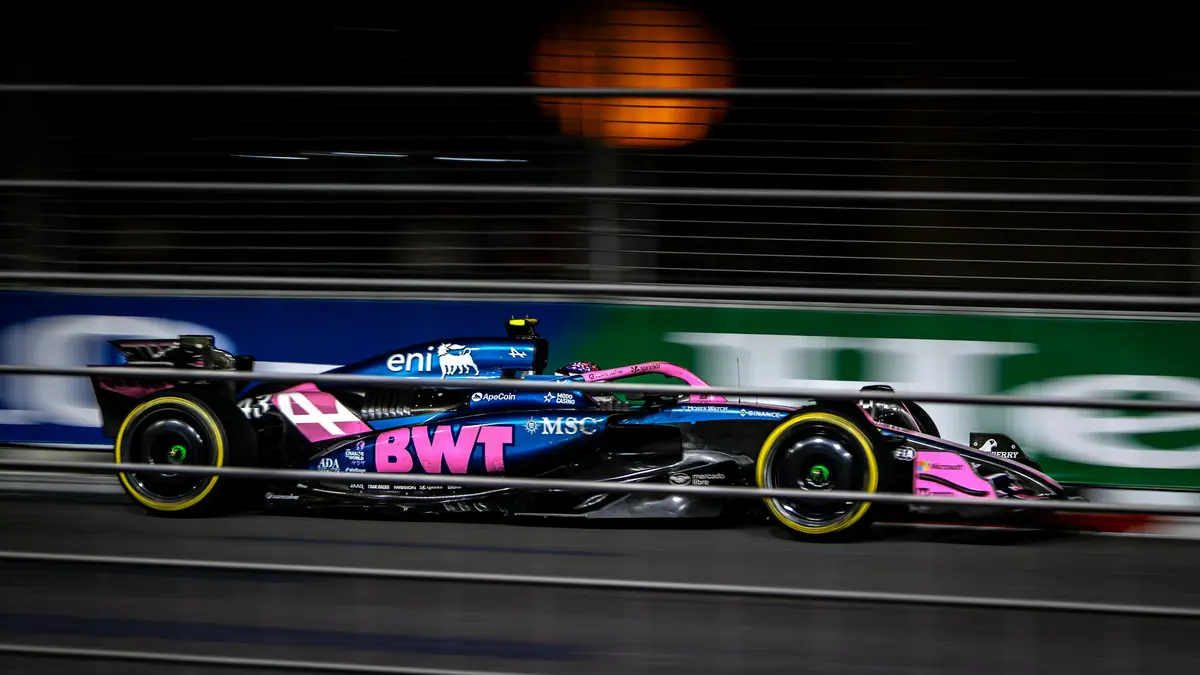
The Alpine F1 team is once again at the centre of paddock speculation after Renault Group made a significant internal management move that has set rumour mills turning at full speed. The French automotive giant has appointed Guillaume Rossi — its Head of Mergers and Acquisitions — as Alpine's new Chief Financial Officer. The appointment is not a routine finance reshuffle; the specific background of the incoming CFO has prompted serious questions about whether a partial or full buy-out of the Alpine F1 operation is now a genuine and imminent possibility.
Who Is Guillaume Rossi and Why Does His Background Matter?
Guillaume Rossi's move from Renault Group's Head of Mergers and Acquisitions to Alpine's CFO is the detail that has analysts and F1 insiders sitting up straight. In the corporate world, a mergers and acquisitions specialist is not typically deployed to manage day-to-day financial operations. Their expertise lies in structuring deals, valuing assets, and navigating the complex legal and financial terrain of ownership transitions. Placing such a figure at the top of Alpine's financial structure strongly implies that Renault Group is actively preparing the team — either its books, its valuation, or its corporate structure — for a potential transaction.
Whether that transaction would constitute a full sale of the Alpine F1 team, the introduction of a major external investor, or a partial stake sale remains publicly unconfirmed. However, the optics of the appointment are difficult to interpret in any other way. A head of M&A does not typically step into a CFO role to oversee routine budget cycles and supplier contracts. The move signals that Alpine's financial architecture is being prepared for scrutiny — most likely from prospective buyers or partners conducting due diligence.
Alpine F1 in 2026: A Team at a Crossroads
The timing of this management reshuffle is significant. The 2026 Formula 1 season represents one of the most disruptive regulatory overhauls in the sport's modern history, with entirely new power unit regulations, revised aerodynamic philosophies including active aero systems, and an overtake boost mechanism now in effect. For a team like Alpine — which competes with its own Renault-derived power unit heritage — the transition to the new regulations presents both opportunity and enormous financial pressure.
In the current 2026 grid, Alpine fields Pierre Gasly and Franco Colapinto as its driver pairing. The team has invested heavily in infrastructure and personnel over recent seasons, yet it has consistently found itself operating in the competitive midfield without securing the step forward into the top tier that its resources and ambitions would suggest. That competitive plateau, combined with the escalating costs of the new technical era, makes the financial sustainability question an urgent one for Renault Group's board.
Renault has faced broader corporate pressures in recent years, and its commitment to funding a full factory F1 operation — with its own power unit programme and chassis development — represents one of the most expensive line items in the group's motorsport portfolio. It is within this context that the Rossi appointment carries its greatest weight.
The Buy-Out Landscape: Who Could Be Interested in Alpine F1?
Speculation around Alpine F1 ownership is not new. The team has previously been linked with interest from American investors and private equity groups, reflecting a wider trend of institutional money flowing into Formula 1 since Liberty Media's stewardship of the sport elevated its commercial and media profile globally. The success of the Netflix Drive to Survive series and the sport's growing fanbase in the United States — underscored by new teams like Cadillac joining the grid in 2026 — have made F1 franchises increasingly attractive assets.
A buy-out scenario for Alpine could take several forms. A majority stake sale would transfer operational control to a new ownership group while potentially retaining Renault branding or a minority share. Alternatively, a full divestiture would see Renault exit F1 entirely, with the team either rebranded or restructured under new ownership. A third pathway — the injection of a significant minority investor — would bring fresh capital without Renault relinquishing control, though this model would require a robust governance framework given F1's commercial complexities.
Key Considerations for Any Prospective Deal
- Power unit supply: Alpine's relationship with its engine programme would need to be clearly defined in any ownership transition, particularly under the new 2026 power unit regulations.
- Concorde Agreement obligations: Any new ownership group would inherit Alpine's existing commercial rights and obligations under the current Concorde Agreement framework.
- Factory and infrastructure assets: Alpine's Enstone and Viry-Châtillon facilities represent substantial physical assets that would factor heavily into any valuation.
- Driver contracts: The status of Pierre Gasly and Franco Colapinto's contracts would be a key element of any transition planning.
- Brand identity: Whether the Alpine name — borrowed from Renault's sports car sub-brand — would survive a change of ownership is a significant commercial and legal question.
What This Means for the 2026 F1 Season
From a sporting perspective, the management reshuffle and its associated speculation add a layer of uncertainty to Alpine's 2026 campaign. Personnel stability and clear strategic direction are prerequisites for competitive performance in Formula 1 at the highest level. If key technical and commercial staff become distracted by — or anxious about — ownership uncertainty, performance on track can suffer. History offers cautionary examples: ownership transitions or protracted sale processes have derailed midfield teams before.
However, there is also an optimistic reading. Fresh ownership and fresh capital, if delivered efficiently, could unlock investment that Renault has been unwilling or unable to commit in recent seasons. A well-resourced Alpine F1 team, with clear strategic ownership and modern infrastructure, could theoretically compete more aggressively in the new regulatory era.
Key Takeaways
- Renault Group has appointed Guillaume Rossi, its Head of Mergers and Acquisitions, as Alpine F1's new CFO.
- Rossi's M&A background has amplified speculation that a buy-out or significant ownership change at Alpine F1 is being actively prepared.
- The appointment comes during the 2026 season — a major regulatory transition year that has increased financial pressures across the grid.
- No buyer, investor, or deal structure has been officially confirmed at this stage.
- Alpine's Enstone and Viry-Châtillon assets, power unit programme, and Concorde Agreement rights would all be central to any valuation or transaction.
- Pierre Gasly and Franco Colapinto continue as Alpine's driver pairing amid the off-track uncertainty.
Frequently Asked Questions
Why does Guillaume Rossi's appointment suggest an Alpine F1 buy-out?
Rossi's role at Renault Group prior to this appointment was Head of Mergers and Acquisitions — a highly specialised corporate function focused on structuring and executing ownership transactions. Appointing him as Alpine's CFO suggests that the team's finances are being structured or prepared for an external transaction, such as a stake sale, majority buy-out, or investor injection, rather than simply for routine financial management.
What would happen to Alpine's power unit programme in a buy-out scenario?
This is one of the most complex questions surrounding any potential Alpine F1 ownership change. Renault's power unit operations, historically based at Viry-Châtillon, represent a separate but intertwined asset. Any deal would need to clearly define whether new owners would continue developing the power unit in-house, switch to a customer supply arrangement, or negotiate an ongoing supply deal with Renault itself — particularly relevant given the entirely new 2026 F1 power unit regulations now in force.
Who are Alpine F1's current drivers in 2026?
Alpine is fielding Pierre Gasly and Franco Colapinto as its driver pairing for the 2026 Formula 1 season. Both drivers remain under contract with the team, and any ownership transition would need to account for their existing agreements.
Conclusion
The appointment of a mergers and acquisitions specialist as Alpine F1's CFO is precisely the kind of corporate signal that the sport's most attentive observers are trained to notice. While Renault Group has made no formal announcement about a sale or investment process, the logic of the appointment is hard to dismiss. In 2026 — a season already defined by transformation both on and off the track — Alpine may be on the cusp of the most significant ownership change in its short but turbulent history as a Formula 1 constructor. The paddock will be watching closely.
In this article
Written with AI assistance. How this site works
 Canadian Grand Prix